






Shad Migration, Life Cycle, and Fishing Facts
Shad are fascinating migratory fish known for their long ocean journeys and seasonal return to freshwater rivers. These silvery fish belong to the herring family and are famous for both their ecological importance and food value. Found mainly in the Atlantic Ocean and connected rivers, Shad are strong swimmers and play a key role in aquatic ecosystems. Let’s explore interesting Shad facts, Shad habitat, Shad diet, and much more in this colourful learning guide.
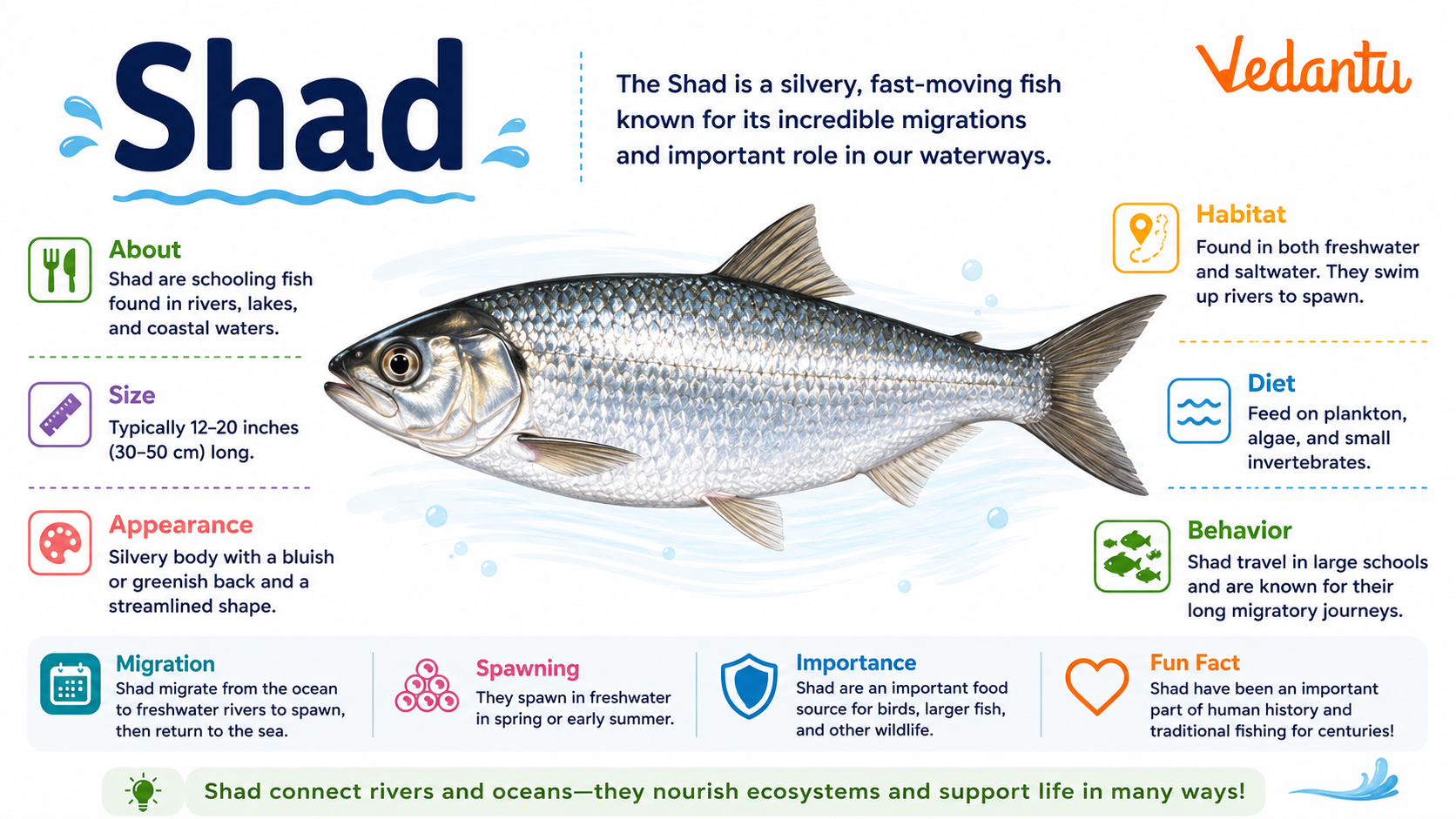
Quick Facts About Shad
| Feature | Details |
|---|---|
| Common Name | Shad |
| Scientific Name | Alosa species (e.g., Alosa sapidissima) |
| Animal Group | Fish |
| Type | Anadromous (migrates from sea to freshwater) |
| Size | 30–75 cm |
| Weight | 1–5 kg |
| Lifespan | 5–7 years |
| Habitat | Atlantic Ocean and freshwater rivers |
| Diet | Plankton, small fish, crustaceans |
| Conservation Status | Varies by species |
Appearance and Physical Characteristics
- Streamlined, torpedo-shaped body for fast swimming.
- Shiny silver scales that reflect light underwater.
- Forked tail helps in powerful movement.
- Single dorsal fin and small mouth.
- Some species have a dark spot behind the gills.
Shad Habitat and Distribution
- Spend most of their adult life in the Atlantic Ocean.
- Migrate to freshwater rivers to lay eggs.
- Commonly found along the east coast of North America.
- Prefer cool to moderately warm water.
- Often travel hundreds of kilometres upstream.
Shad Diet and Feeding Habits
- Plankton
- Small fish
- Crustaceans
- Filter feeders when young
- Active hunters as adults
- Feed mostly in ocean waters
Shad are important mid-level predators in the food chain. They eat smaller organisms and are also eaten by bigger fish, birds, and marine mammals.
Behaviour and Lifestyle
- Travel in large schools for safety.
- Strong swimmers during migration season.
- Return to the same river where they were born.
- More active during spawning season.
Shad Life Cycle
- Egg Stage: Eggs are laid in freshwater rivers.
- Larva Stage: Hatch within days and drift downstream.
- Juvenile Stage: Grow in rivers before moving to the sea.
- Adult Stage: Live in the ocean and return to rivers to reproduce.
What Makes Shad Special?
Importance and Role in Nature
- Provide food for larger fish, birds, and mammals.
- Support commercial and recreational fisheries.
- Help transfer nutrients from oceans to rivers.
- Indicate the health of aquatic ecosystems.
Amazing Shad Facts
Fun Facts for Kids
- Shad are silver like shiny coins underwater.
- They swim together in big groups called schools.
- They travel from salty ocean water to fresh river water.
- Baby Shad grow up in rivers before heading to the sea.
- They are super swimmers against strong currents.
FAQs on Shad Fish: Habitat, Diet, and Migration Explained
1. What is a Shad fish?
Shad is a type of silvery fish that lives in the ocean but swims into rivers to lay eggs.
- It belongs to the herring family.
- Shad are known as migratory fish because they travel long distances.
- They are found in North America and parts of Europe.
- Common species include the American shad and Alosa species.
2. Where do Shad fish live?
Shad fish live in the ocean but migrate to freshwater rivers to reproduce.
- They spend most of their adult life in the Atlantic Ocean.
- They swim into rivers and streams during spawning season.
- This movement between saltwater and freshwater is called anadromous migration.
3. Why do Shad swim upstream?
Shad swim upstream to lay their eggs in freshwater rivers.
- This process is called spawning.
- Freshwater rivers provide safer places for baby fish.
- After laying eggs, many adult shad return to the ocean habitat.
4. What do Shad fish eat?
Shad fish eat tiny plants and animals found in the water.
- They feed on plankton.
- They also eat small crustaceans and fish larvae.
- Young shad mainly eat microscopic organisms in rivers.
5. How big can a Shad grow?
American shad can grow quite large compared to other herring species.
- They can reach up to 30 inches (76 cm) long.
- Some weigh as much as 12 pounds (5.4 kg).
- Females are usually larger than males.
6. Are Shad important to people?
Shad fish are important for food, fishing, and the ecosystem.
- They are valued in commercial fishing and local markets.
- Shad support recreational fishing activities.
- They are a food source for birds, seals, and larger fish.
7. What are the different types of Shad?
There are several species of shad found around the world.
- American shad (Alosa sapidissima)
- Hickory shad
- Alabama shad
- European shad
8. Are Shad endangered?
Some shad populations have decreased due to environmental problems.
- Dams block their migration routes.
- Water pollution harms their habitats.
- Overfishing has reduced numbers in certain areas.
9. How long do Shad fish live?
Shad fish can live for several years in the wild.
- Most live between 5 to 7 years.
- They may spawn multiple times during their lifetime.
- Survival depends on predators and environmental conditions.
10. What makes Shad different from other fish?
Shad are unique because of their long migrations and life cycle.
- They are anadromous fish that travel between ocean and rivers.
- They have shiny, silver bodies like herring.
- Their seasonal river runs are important natural events.
