






Where Do Sea Snakes Live, What Do They Eat, and Are They Dangerous to Humans?
Sea snakes are fascinating marine reptiles that spend most or all of their lives in the ocean. Unlike land snakes, they are specially adapted for swimming and surviving in salty water. These snakes are known for their strong venom, paddle-shaped tails, and ability to hold their breath underwater. Sea snake facts reveal how perfectly they are designed for life in warm tropical seas, making them one of the most unique reptiles on Earth.
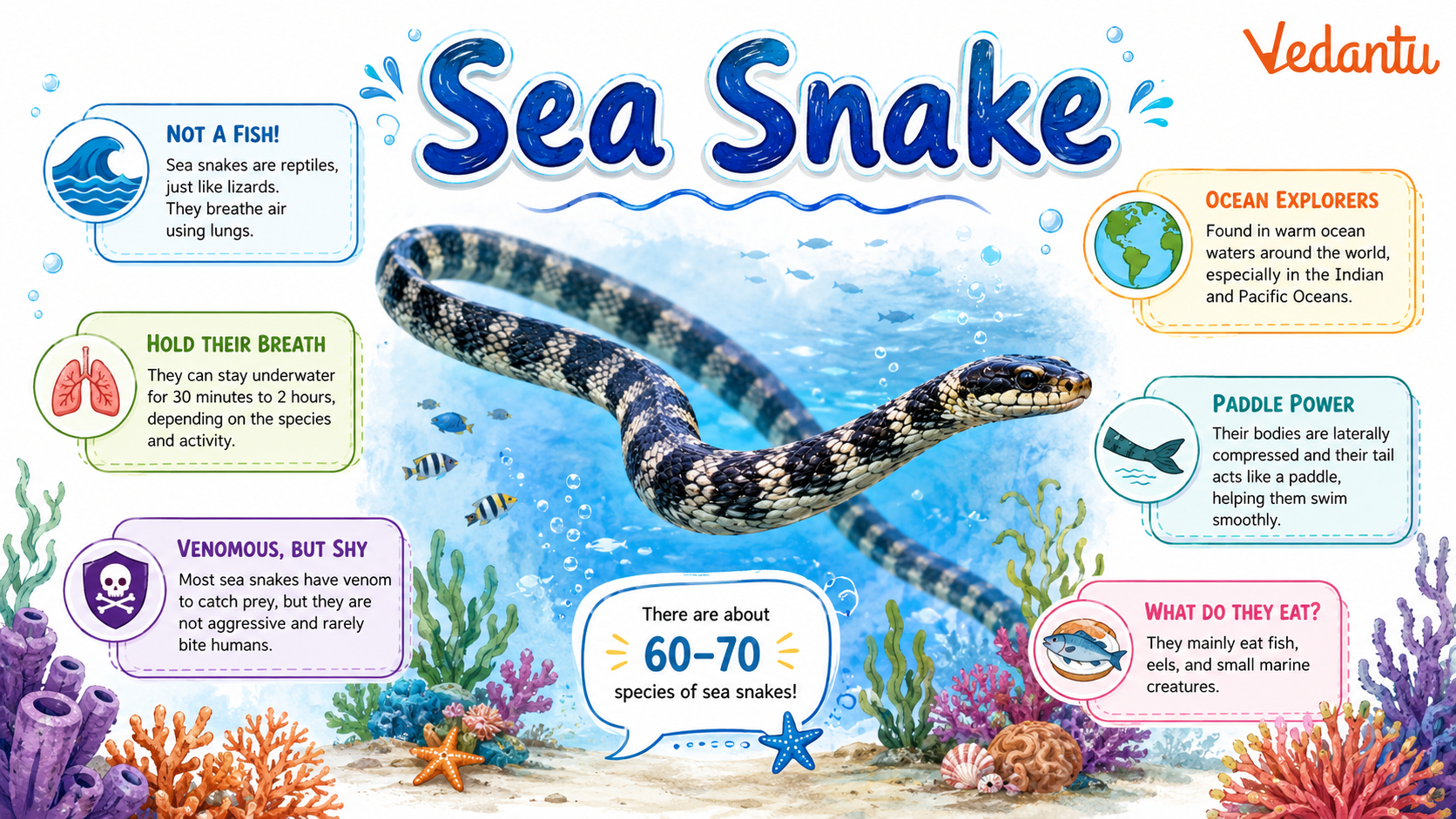
Quick Facts About Sea Snake
| Feature | Details |
|---|---|
| Common Name | Sea Snake |
| Animal Group | Reptile |
| Scientific Subfamily | Hydrophiinae |
| Habitat | Warm tropical oceans |
| Diet | Fish and fish eggs |
| Lifespan | Up to 10 years (varies by species) |
| Movement | Swimming using flattened tail |
| Special Feature | Highly venomous bite |
| Conservation Status | Mostly Least Concern (some species threatened) |
Appearance and Physical Characteristics
- Long, slender body with smooth scales.
- Flattened, paddle-like tail for swimming.
- Small head with short fangs.
- Nostrils placed on top with special valves to keep water out.
- Colours include grey, blue, yellow, black, or banded patterns.
- Most species grow between 1 to 1.5 metres long.
Sea Snake Habitat and Distribution
- Found mainly in the Indian Ocean and Pacific Ocean.
- Common near Australia, Southeast Asia, and coastal India.
- Prefer warm tropical and subtropical waters.
- Often live near coral reefs, shallow coastal waters, and estuaries.
Diet and Feeding Habits
- Sea snake diet mainly includes small fish and fish eggs.
- Some species eat eels and crustaceans.
- They are carnivores.
- Use venom to paralyse prey quickly.
- Swallow prey whole.
Behaviour and Lifestyle
Sea Snake Life Cycle
- Mating: Usually happens in warm waters.
- Birth: Most sea snakes give birth to live young in water.
- Young Ones: Baby sea snakes are fully independent from birth.
- Adult Stage: They grow quickly and begin hunting small fish.
What Makes Sea Snake Special?
Types and Diversity
There are more than 60 species of sea snakes. They are divided into two main groups:
- True Sea Snakes: Spend their entire life in water.
- Sea Kraits: Can move on land and lay eggs on shore.
Importance and Role in Nature
Amazing Sea Snake Facts
- Some sea snakes have venom more powerful than many land snakes.
- They must breathe air like all reptiles.
- They can dive up to 100 metres deep.
- Sea snakes rarely bite humans.
- Their scales are smoother than most land snakes.
- They shed their skin regularly as they grow.
Fun Facts for Kids
FAQs on Sea Snake: Fascinating Facts About These Venomous Ocean Reptiles
1. What is a sea snake?
A sea snake is a venomous marine reptile that lives mostly in warm ocean waters.
- Belongs to the Elapidae family (same as cobras)
- Has a flat, paddle-like tail for swimming
- Breathes air but spends most of its life in the sea
- Found mainly in the Indian Ocean and Pacific Ocean
2. Are sea snakes poisonous or venomous?
Sea snakes are venomous, meaning they inject venom through their fangs.
- They use venom to catch fish and eels
- Most species are highly venomous
- Bites to humans are rare
- They are generally shy and avoid people
3. Where do sea snakes live?
Sea snakes live in warm, tropical ocean waters near coasts and coral reefs.
- Common in the Indian Ocean
- Found in the Pacific Ocean
- Live around coral reefs and shallow seas
- Rarely found in the Atlantic Ocean
4. How do sea snakes breathe underwater?
Sea snakes breathe air using lungs but can stay underwater for a long time.
- They come to the surface to breathe
- Can hold their breath for up to 2 hours
- Absorb a small amount of oxygen through their skin
- Have special nostrils that close underwater
5. What do sea snakes eat?
Sea snakes mainly eat small fish and other sea animals.
- Feed on fish and eels
- Use venom to paralyze prey
- Swallow food whole
- Some species specialize in fish eggs
6. Are sea snakes dangerous to humans?
Sea snakes are highly venomous but rarely attack humans.
- Most bites happen when handled or disturbed
- They are calm and non-aggressive
- Venom can affect muscles and breathing
- Serious bites are uncommon
7. How are sea snakes different from land snakes?
Sea snakes have special adaptations that help them live in the ocean.
- Flattened tail for swimming
- Salt glands to remove extra salt
- Smooth scales for moving in water
- Cannot move well on land
8. Do sea snakes lay eggs?
Most sea snakes give birth to live young instead of laying eggs.
- Babies are born alive in the water
- Fully independent at birth
- Few species lay eggs on land
- Young sea snakes can swim right away
9. How long do sea snakes live?
Sea snakes can live for many years in the wild.
- Average lifespan is about 10 years
- Some species may live longer
- Life span depends on predators and environment
- Sharks and large fish are natural predators
10. Why are sea snakes important to the ocean ecosystem?
Sea snakes play an important role in keeping the marine ecosystem balanced.
- Control fish and eel populations
- Serve as prey for larger marine animals
- Help maintain healthy coral reef systems
- Are indicators of ocean health
