






What Is a Sea Pen? Habitat, Bioluminescence, and Survival Facts
A Sea Pen may look like a colourful underwater feather, but it is actually a fascinating marine animal. Found deep in the ocean, Sea Pens are soft corals that live attached to the sea floor. They glow in the dark, sway with ocean currents, and form colonies made up of many tiny animals working together. Learning about Sea Pen facts, habitat, diet, and life cycle helps us understand the mysterious world of the deep sea.
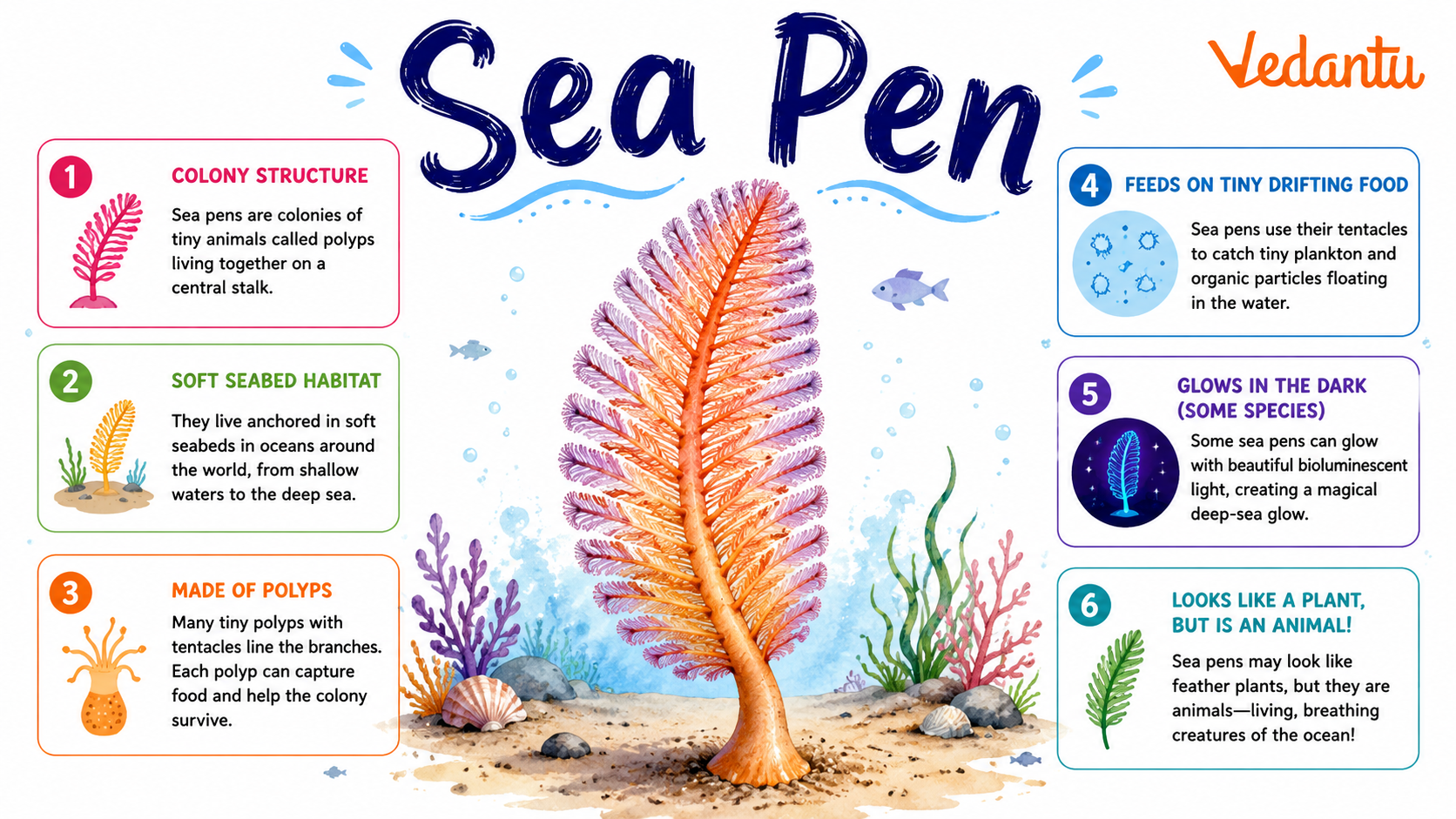
Quick Facts About Sea Pen
| Feature | Details |
|---|---|
| Common Name | Sea Pen |
| Scientific Order | Pennatulacea |
| Animal Group | Cnidarian (related to jellyfish and corals) |
| Size | Up to 2 metres in some species |
| Habitat | Sea floor, sandy or muddy ocean beds |
| Diet | Plankton and tiny organic particles |
| Special Feature | Glows in the dark (bioluminescence) |
| Movement | Mostly fixed in one place |
Appearance and Physical Characteristics
- Body Shape: Long central stalk with feather-like branches.
- Colour: Pink, orange, red, yellow, or purple.
- Texture: Soft and flexible body.
- Colony Animal: Made up of many tiny polyps working together.
- Anchoring Bulb: A bulb-like base keeps it fixed in sand or mud.
Sea Pen Habitat and Distribution
- Found in the Atlantic, Pacific, and Indian Oceans.
- Lives on sandy or muddy sea floors.
- Can survive in deep-sea regions thousands of metres below the surface.
- Prefers calm areas where it can anchor safely.
Some species live close to shore, while others are found in deep, dark ocean zones where sunlight does not reach.
Sea Pen Diet and Feeding Habits
- Feeds on plankton.
- Eats small organic particles floating in water.
- Uses tentacles to capture food.
- Each polyp helps in catching and digesting food.
Sea Pens are carnivorous in nature, but they eat extremely small prey. Their tentacles contain stinging cells to trap food.
Behaviour and Lifestyle
- Mostly stationary and attached to the sea floor.
- Sways gently with ocean currents.
- Can withdraw into the sand if disturbed.
- Glows when touched or threatened.
- Functions as a colony with shared tasks.
Sea Pen Life Cycle
- Egg and Sperm Release: Adults release eggs and sperm into the water.
- Larva Stage: Fertilised eggs develop into tiny free-swimming larvae.
- Settlement: Larvae settle on the sea floor.
- Colony Formation: The first polyp grows and forms more polyps.
- Adult Colony: Fully developed feather-like Sea Pen appears.
The Sea Pen life cycle shows how a single tiny larva can grow into a large glowing colony.
What Makes Sea Pen Special?
Importance and Role in Nature
Amazing Sea Pen Facts
- Some Sea Pens can grow up to 2 metres tall.
- They glow when touched or disturbed.
- They belong to the same group as jellyfish.
- They have existed for millions of years.
- Different polyps in the colony perform different tasks.
- They can slowly inflate or deflate their bodies.
- Over 300 species of Sea Pens are known.
Interesting Facts About Sea Pen
Fun Facts for Kids
- A Sea Pen looks like a glowing underwater feather.
- It is actually a group of tiny animals living together.
- It can glow in the dark ocean!
- It does not swim like fish.
- It lives standing upright in the sand.
FAQs on Sea Pen: A Complete Guide to This Unique Marine Animal
1. What is a Sea Pen?
Sea pens are soft, glowing marine animals that live on the ocean floor and look like colorful feathers or quill pens.
- They are a type of coral found in deep and shallow seas.
- Belong to the group called Cnidarians, related to jellyfish and sea anemones.
- Have a central stalk with tiny feeding polyps attached.
- Often glow through bioluminescence when touched.
2. Why are sea pens called sea pens?
Sea pens are named after old-fashioned feather pens because they look like quills sticking upright in the sand.
- Their shape is long and feather-like.
- They anchor into the seabed like a pen in an ink pot.
- Their side branches resemble pen feathers.
- This unique shape makes them easy to recognize among marine invertebrates.
3. Where do sea pens live?
Sea pens live on sandy or muddy ocean floors around the world.
- Found in shallow coastal waters and deep oceans.
- Common in the Atlantic, Pacific, and Indian Oceans.
- Prefer soft seabeds where they can anchor their base.
- Often live in colonies forming underwater “sea pen fields.”
4. Are sea pens plants or animals?
Sea pens are animals, not plants, even though they look like underwater flowers.
- They are classified as marine invertebrates.
- Belong to the coral group within Cnidaria.
- Catch tiny food particles using tentacles.
- Cannot make their own food like plants do.
5. What do sea pens eat?
Sea pens eat tiny floating organisms from the water.
- Feed on plankton and microscopic particles.
- Use tentacled polyps to trap food.
- Rely on ocean currents to bring food close.
- Help maintain balance in the marine ecosystem.
6. How do sea pens glow?
Sea pens glow through bioluminescence, a natural light-producing reaction inside their bodies.
- They flash greenish or bluish light when disturbed.
- The glow may scare away predators.
- Light is produced by special chemical reactions.
- This makes them fascinating deep-sea creatures.
7. How do sea pens reproduce?
Sea pens reproduce both sexually and asexually to grow new colonies.
- Release eggs and sperm into the water.
- Larvae float before settling on the seabed.
- Can grow new polyps from the main stalk.
- Form large groups called colonies.
8. Are sea pens dangerous to humans?
Sea pens are not dangerous to humans and are generally harmless.
- Do not attack people.
- Have mild stinging cells like other cnidarians.
- Rarely cause irritation.
- Mostly live deep underwater away from swimmers.
9. How do sea pens protect themselves?
Sea pens protect themselves using special survival strategies in the ocean.
- Glow through bioluminescence to startle predators.
- Quickly retract into the sand when threatened.
- Have stinging cells called nematocysts.
- Blend into the seabed environment.
10. Why are sea pens important to the ocean?
Sea pens are important because they support ocean life and healthy marine habitats.
- Provide shelter for small fish and crustaceans.
- Help recycle nutrients in the seabed.
- Are part of the benthic ecosystem.
- Indicate the health of marine environments.
