






Sea Eagle Habitat, Diet, Lifespan, and Hunting Behavior
The Sea Eagle is a powerful bird of prey known for its sharp eyesight, strong wings, and excellent fishing skills. Found near oceans, rivers, and lakes, sea eagles are top predators in their habitat. These majestic birds are often seen soaring high above water before diving down to catch fish. Learning about Sea Eagle facts, habitat, diet, and characteristics helps us understand why they are called the rulers of the coastal skies.
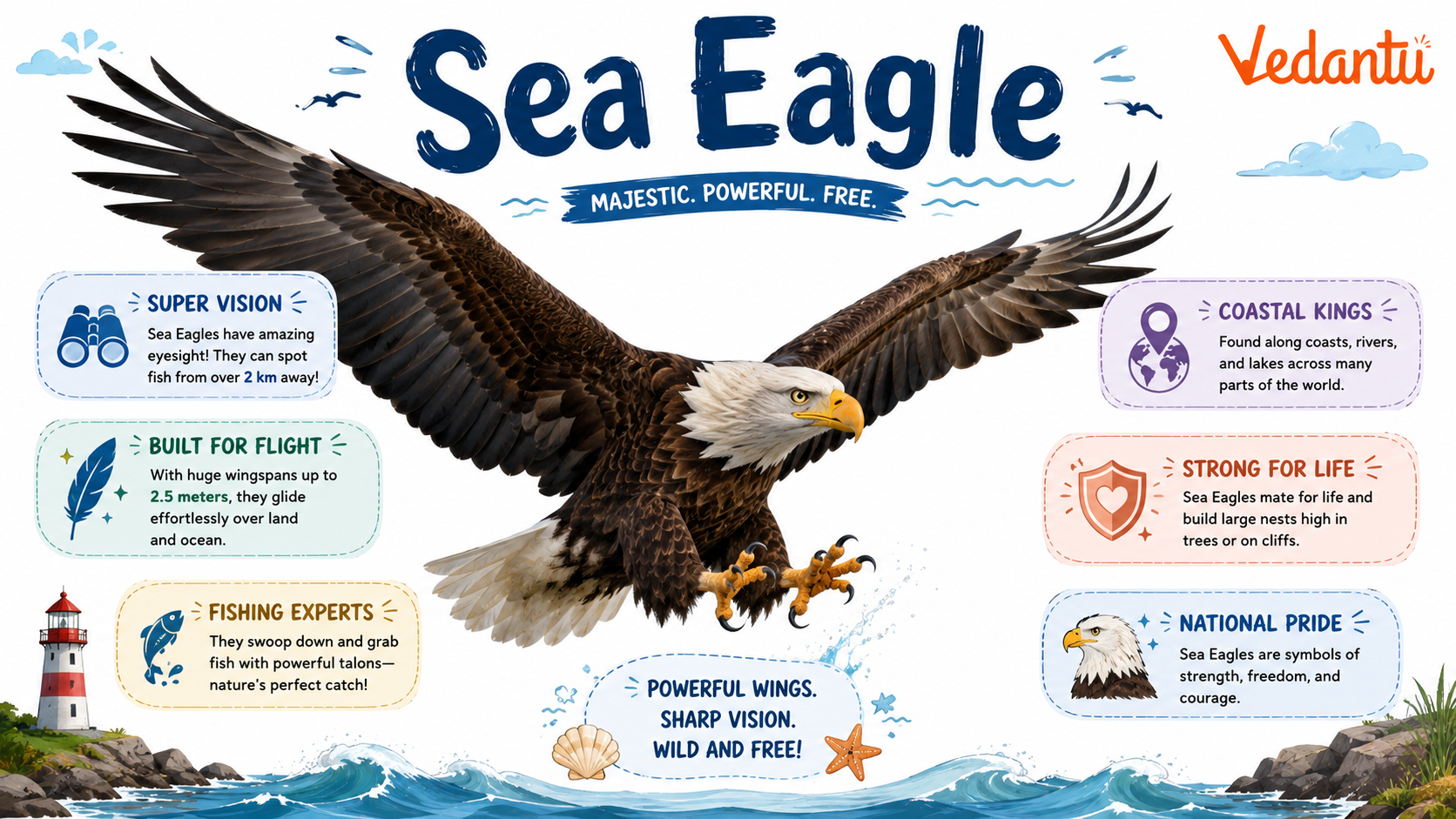
Quick Facts About Sea Eagle
| Feature | Details |
|---|---|
| Common Name | Sea Eagle |
| Scientific Group | Genus Haliaeetus |
| Animal Group | Bird (Bird of Prey) |
| Size | 70–105 cm (varies by species) |
| Wingspan | Up to 2.5 metres |
| Weight | 3–7 kg |
| Lifespan | 20–30 years in the wild |
| Diet | Fish, birds, small mammals |
| Habitat | Coasts, rivers, lakes, wetlands |
| Conservation Status | Varies by species (Some are Least Concern) |
Appearance and Physical Characteristics
- Large and strong body with broad wings.
- Sharp, hooked beak for tearing meat.
- Strong yellow talons to catch slippery fish.
- Powerful legs for gripping prey.
- Colours range from brown to white, depending on species.
Sea Eagle characteristics include excellent eyesight, which helps them spot fish from high in the sky. Some species, like the Bald Eagle, have a white head and tail, while others are mostly brown.
Habitat and Distribution
- Lives near oceans, seas, rivers, and large lakes.
- Found in North America, Europe, Asia, Africa, and Australia.
- Prefers tall trees or cliffs near water for nesting.
- Builds huge nests called eyries.
The Sea Eagle habitat always includes water because fish are its main food source. They choose safe, high places to watch over their territory.
Diet and Feeding Habits
The Sea Eagle diet mainly consists of fish. It flies low over water and quickly dives to catch prey with its sharp claws.
Behaviour and Lifestyle
- Usually seen alone or in pairs.
- Very territorial and protects its nest area.
- Active during the day (diurnal).
- Soars high using warm air currents.
- Some species migrate during winter.
Life Cycle of a Sea Eagle
- Egg Stage: Female lays 1–3 eggs in a large nest.
- Hatching: Eggs hatch after about 35–45 days.
- Chick Stage: Chicks are fed by both parents.
- Fledgling: Young birds learn to fly after 10–12 weeks.
- Adult Stage: Reach maturity in about 4–5 years.
The Sea Eagle life cycle shows strong parental care. Both parents help raise and protect the chicks.
Flight Adaptations
- Long, broad wings for powerful soaring.
- Lightweight but strong bones.
- Large chest muscles for strong wing beats.
- Wide tail helps in steering during flight.
These adaptations allow sea eagles to glide for long distances without flapping their wings too much.
What Makes Sea Eagle Special?
Importance and Role in Nature
- Keeps fish populations balanced.
- Removes weak or sick animals from the ecosystem.
- Acts as an indicator of clean water and healthy habitats.
Amazing Sea Eagle Facts
Fun Facts for Kids
- Sea Eagles love living near water.
- They have super sharp claws.
- They glide smoothly in the sky.
- Baby sea eagles are called chicks.
- They are sometimes called fish eagles.
FAQs on Sea Eagle: Powerful Coastal Bird of Prey
1. What is a Sea Eagle?
A Sea Eagle is a large bird of prey that lives near oceans, rivers, and lakes and feeds mainly on fish.
- Scientific group: Genus Haliaeetus
- Also called: fish eagle, sea hawk
- Diet: Mostly fish and water animals
- Habitat: Coastal areas and large water bodies
- Family: Accipitridae (eagle family)
2. Where do Sea Eagles live?
Sea Eagles live near large water bodies across many parts of the world.
- Continents: Asia, Europe, Africa, Australia, and North America
- Common habitats: Coasts, rivers, lakes, wetlands
- Famous species: Bald Eagle (USA), White-tailed Eagle (Europe)
- Nesting spots: Tall trees or cliffs near water
3. What do Sea Eagles eat?
Sea Eagles mainly eat fish and other small water animals.
- Main food: Freshwater and saltwater fish
- Other prey: Ducks, seabirds, small mammals
- Hunting style: Snatch fish with sharp talons
- Scavenging: Sometimes eat dead animals
4. How big is a Sea Eagle?
Sea Eagles are among the largest eagles in the world.
- Wingspan: Up to 2.5 meters (8 feet) in some species
- Weight: 3 to 9 kilograms depending on species
- Females: Usually larger than males
- Example: Steller’s Sea Eagle is one of the heaviest
5. How do Sea Eagles catch fish?
Sea Eagles catch fish by swooping down and grabbing them with strong claws.
- Sharp talons: Curved claws to grip slippery fish
- Excellent eyesight: Spot fish from high in the sky
- Powerful wings: Lift heavy prey from water
- Quick dive: Fast and accurate hunting movement
6. Are Sea Eagles endangered?
Some Sea Eagle species were once endangered, but many are now protected.
- Past threats: Pollution, hunting, habitat loss
- Famous case: Bald Eagle recovered after pesticide ban
- Current status: Varies by species
- Protection: Wildlife laws and conservation programs
7. What is the difference between a Sea Eagle and a Bald Eagle?
A Bald Eagle is actually a type of Sea Eagle found in North America.
- Sea Eagle: Group name for fish-eating eagles
- Bald Eagle: Specific species (Haliaeetus leucocephalus)
- White head: Adult Bald Eagles have white head and tail
- Symbol: National bird of the United States
8. How long do Sea Eagles live?
Sea Eagles can live for many years, especially in safe environments.
- Wild lifespan: 20 to 30 years
- In captivity: Sometimes over 40 years
- Threats: Accidents, lack of food, pollution
- Slow maturity: Take several years to become adults
9. How do Sea Eagles build their nests?
Sea Eagles build very large nests called eyries in tall places.
- Location: Tall trees or cliff edges
- Materials: Sticks, branches, grass
- Size: Can weigh hundreds of kilograms
- Reuse: Add new sticks every year
10. Why are Sea Eagles important to the environment?
Sea Eagles help keep ecosystems healthy by controlling animal populations.
- Top predator: Maintain balance in food chains
- Clean-up role: Eat dead fish and animals
- Indicator species: Show the health of water environments
- Biodiversity: Support balanced wildlife systems
