






What Are Sardines? Diet, Lifecycle, Habitat, and Nutritional Value Explained
Sardines are small, shiny fish that swim together in huge groups in oceans around the world. Even though they are tiny, they play a very big role in marine ecosystems. Sardine facts show that these fish are fast swimmers, important food for many sea animals, and even helpful for humans. Let us explore sardine habitat, sardine diet, sardine characteristics, and many interesting facts about this fascinating ocean fish.
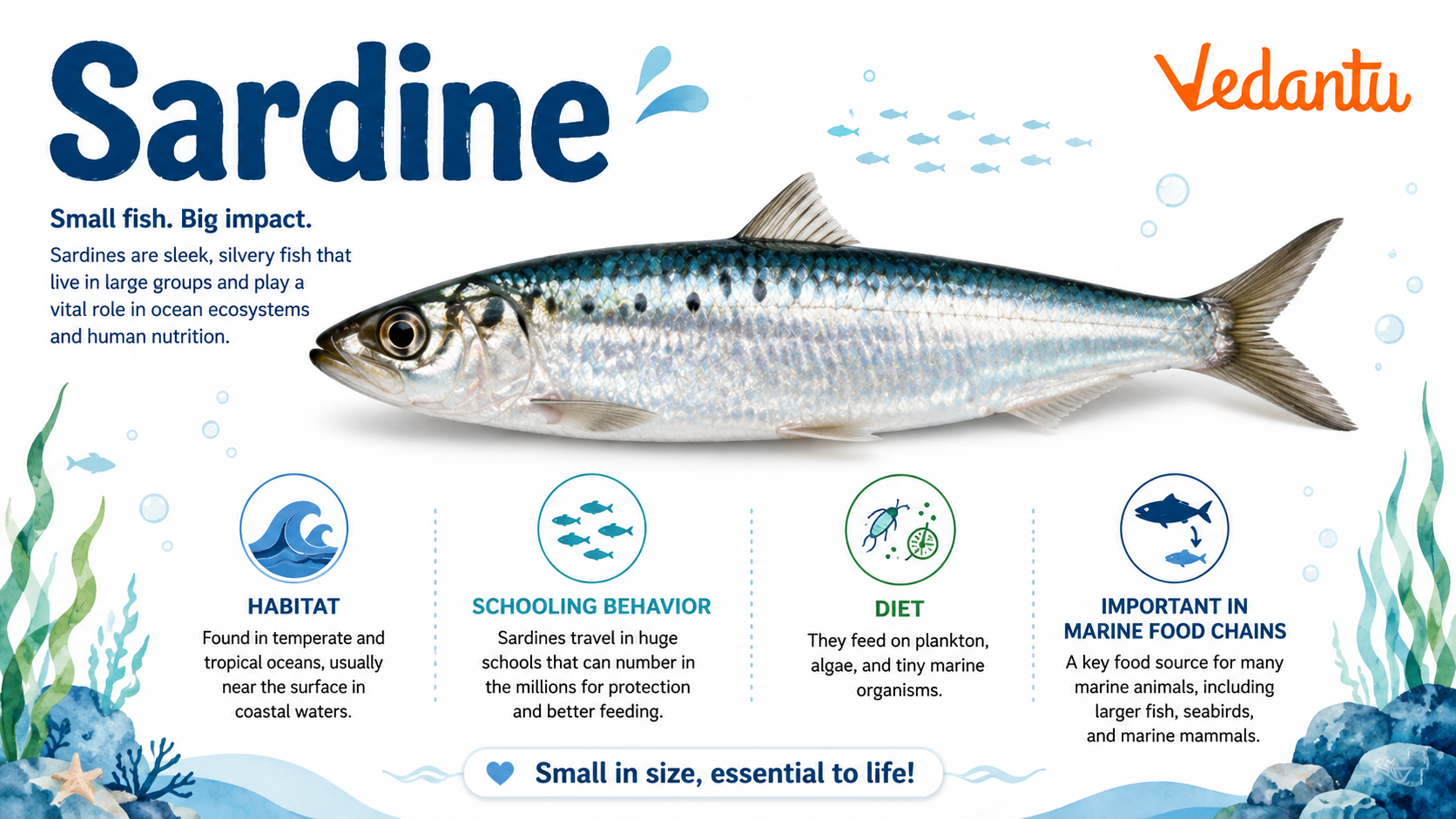
Quick Facts About Sardine
| Feature | Details |
|---|---|
| Common Name | Sardine |
| Scientific Group | Family Clupeidae |
| Animal Group | Fish |
| Size | 15–25 cm long |
| Habitat | Oceans and coastal waters |
| Diet | Plankton |
| Lifespan | Up to 5–8 years |
| Movement | Fast swimmers in large schools |
Appearance and Physical Characteristics
- Small and slender body shape
- Silvery sides with a bluish or greenish back
- Forked tail for fast swimming
- Soft fins and smooth scales
- Large eyes compared to body size
Sardine Habitat and Distribution
- Found in the Atlantic, Pacific, and Indian Oceans
- Prefer warm and temperate waters
- Usually swim near the surface
- Stay close to coastal regions
Sardines often move in huge groups called schools. This helps them stay safe from predators and find food easily.
Sardine Diet and Feeding Habits
- Eat tiny plants and animals called plankton
- Swim with open mouths to filter food from water
- Feed mostly near the water surface
In the food chain, sardines are very important. They eat small organisms and are eaten by larger fish, seabirds, dolphins, and whales.
Behaviour and Lifestyle
- Live in very large groups called schools
- Swim in synchronized patterns
- Active during the day
- Migrate to different areas for breeding
Sardine Life Cycle
- Egg Stage: Female sardines lay thousands of tiny eggs in water.
- Larva Stage: Eggs hatch into tiny transparent larvae.
- Juvenile Stage: Young fish grow and begin swimming in small groups.
- Adult Stage: Fully grown sardines join large schools and reproduce.
The sardine life cycle is fast, which helps maintain their large population in oceans.
What Makes Sardines Special?
Importance and Role in Nature
Amazing Sardine Facts
- Sardines can form schools containing millions of fish.
- The “sardine run” in South Africa is one of the biggest marine events in the world.
- They can swim quickly to escape predators.
- Sardines communicate through movement and body signals.
- They are rich in omega-3 fatty acids.
- Their name comes from the island of Sardinia.
Interesting Facts About Sardine
- They have excellent hearing to detect predators.
- Their population size can change depending on ocean temperature.
- They play a major role in marine biodiversity.
- Many cultures include sardines in traditional dishes.
Fun Facts for Kids
FAQs on Sardine Fish: Fascinating Facts, Habitat, and Health Benefits
1. What is a sardine?
A sardine is a small, oily fish that lives in the ocean and is often eaten by people around the world.
- Sardines belong to the herring family.
- They are small, silver-colored fish.
- They usually swim in large groups called schools.
- Common types include pilchards and brislings.
2. Where do sardines live?
Sardines live in warm and cool oceans around the world, especially near coastlines.
- Found in the Atlantic Ocean and Mediterranean Sea.
- Also live in the Pacific Ocean.
- Prefer shallow waters near shores.
- Swim together in large schools for safety.
3. Why do sardines swim in schools?
Sardines swim in large schools to protect themselves from predators.
- Safety in numbers helps confuse predators like tuna and sharks.
- Makes it harder for birds like seagulls to catch them.
- Helps them find food more easily.
- Improves teamwork during long migrations.
4. Are sardines healthy to eat?
Yes, sardines are very healthy because they are packed with important nutrients.
- Rich in Omega-3 fatty acids for heart health.
- High in protein for growing muscles.
- Contain calcium for strong bones.
- Good source of vitamin D and vitamin B12.
5. How are sardines caught?
Sardines are usually caught using large fishing nets in the ocean.
- Fishermen use purse seine nets to catch whole schools.
- Sometimes caught with trawl nets.
- Fishing often happens at night when sardines come near the surface.
- After catching, they are quickly canned or frozen.
6. What do sardines eat?
Sardines eat tiny ocean plants and animals called plankton.
- Feed mainly on phytoplankton (tiny plants).
- Also eat zooplankton (tiny sea animals).
- Use special gill filters to catch food from water.
- Are an important part of the marine food chain.
7. How big do sardines grow?
Sardines are small fish that usually grow up to about 6 to 12 inches long.
- Most sardines are about the size of a hand.
- They have slim, shiny silver bodies.
- Some species stay smaller than others.
- Their small size makes them easy prey for bigger fish.
8. Why are sardines often sold in cans?
Sardines are often canned to keep them fresh and safe to eat for a long time.
- Canned in oil, water, or tomato sauce.
- Canning preserves nutrients like Omega-3s.
- Makes them easy to store and transport.
- Ready-to-eat seafood option.
9. What animals eat sardines?
Many ocean animals eat sardines because they are an important food source.
- Large fish like tuna and mackerel.
- Sea mammals such as dolphins and seals.
- Ocean birds like pelicans and gulls.
- Even humans catch and eat sardines.
10. Are sardines good for the environment?
Sardines can be an environmentally friendly seafood choice when caught responsibly.
- They grow and reproduce quickly.
- Usually lower in mercury than large fish.
- Require less feed compared to farmed fish.
- Sustainable fishing protects sardine populations.
