






Sandpiper Habitat, Diet, Migration Patterns, and Fun Facts
Sandpipers are small to medium-sized shorebirds often seen running quickly along beaches and wetlands. They are famous for their slim bodies, long legs, and thin beaks that help them search for food in sand and mud. These birds are excellent migrants and travel thousands of kilometres every year. Learning about Sandpiper habitat, diet, characteristics, and life cycle helps us understand how important they are to coastal ecosystems around the world.
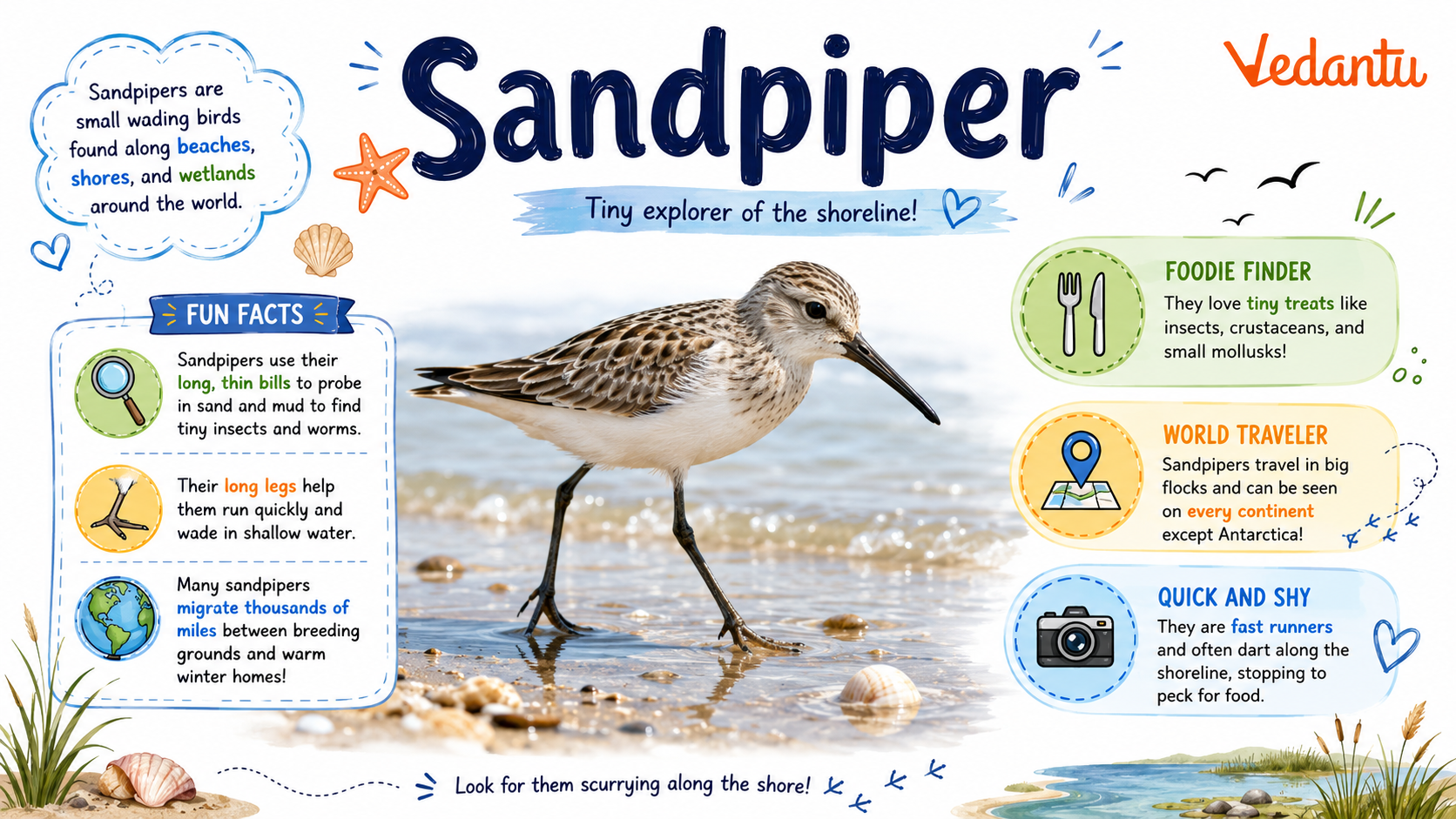
Quick Facts About Sandpiper
| Feature | Details |
|---|---|
| Common Name | Sandpiper |
| Animal Group | Bird |
| Scientific Family | Scolopacidae |
| Size | 15–30 cm (varies by species) |
| Weight | 20–200 grams |
| Habitat | Beaches, mudflats, wetlands, lakesides |
| Diet | Insects, worms, small crustaceans |
| Lifespan | 5–15 years (depending on species) |
| Conservation Status | Varies by species (many are stable, some threatened) |
Appearance and Physical Characteristics
- Slim, lightweight body for quick movement.
- Long legs for walking in shallow water.
- Thin, pointed beak for probing sand and mud.
- Brown, grey, or white feathers for camouflage.
- Some species have streaks or spotted patterns.
Sandpiper Habitat and Distribution
- Sea beaches and sandy shores
- Riverbanks and lake edges
- Mudflats and marshlands
- Arctic tundra during breeding season
Sandpiper Diet and Feeding Habits
Behaviour and Lifestyle
- Often seen running in groups along the shoreline.
- Many species are highly migratory.
- Active during the day (diurnal).
- Use quick movements to avoid waves and predators.
- Communicate with soft whistles and chirping calls.
Life Cycle of a Sandpiper
- Egg Stage: Female lays 3–4 eggs in a shallow ground nest.
- Incubation: Both parents may help keep eggs warm.
- Chick Stage: Chicks hatch covered in soft feathers and can walk within hours.
- Growing Up: Young birds learn to find food quickly.
- Adult Stage: They migrate and reproduce each year.
Flight Adaptations
- Long, pointed wings for fast and steady flight.
- Lightweight body reduces energy use.
- Strong chest muscles for long-distance travel.
- Some species migrate over 10,000 km each year.
What Makes Sandpipers Special?
Importance and Role in Nature
- Control insect and small invertebrate populations.
- Act as indicators of wetland health.
- Provide food for predators like hawks and foxes.
- Help scientists study climate change through migration patterns.
Amazing Sandpiper Facts
Fun Facts for Kids
- Sandpipers look like they are dancing when they run from waves.
- They leave tiny footprints on the beach.
- Some make a soft “peep-peep” sound.
- They can sleep while standing on one leg.
- Many travel across countries without getting lost.
FAQs on Sandpiper Bird: Identification, Behavior, and Coastal Life
1. What is a Sandpiper?
A Sandpiper is a small wading bird that lives near water and is known for running quickly along beaches and shorelines.
- Sandpipers belong to the bird family Scolopacidae
- They are often seen at beaches, lakes, rivers, wetlands, and mudflats
- They have long legs and thin bills for finding food
- They are part of a group called shorebirds or wading birds
People also ask: Are sandpipers seabirds? Sandpipers are mainly shorebirds but can live near both fresh and salt water.
2. Where do Sandpipers live?
Sandpipers live near water habitats around the world, especially along coasts and wetlands.
- Found on every continent except Antarctica
- Live near oceans, lakes, rivers, marshes, and mudflats
- Some species breed in the Arctic tundra
- Migrate to warmer regions during winter
People also search: sandpiper habitat, shorebird homes, where do sandpipers migrate.
3. What do Sandpipers eat?
Sandpipers eat small insects, worms, and tiny sea creatures found in sand and mud.
- Insects and insect larvae
- Worms and small crustaceans
- Mollusks like tiny clams
- Sometimes small seeds and plants
They use their long, sensitive beaks to probe into sand. People also ask: How do sandpipers find food? They poke and feel for prey under the surface.
4. Why do Sandpipers run along the beach?
Sandpipers run along the beach to catch food as waves move in and out.
- They chase the water to find tiny sea animals
- Run away quickly when waves come in
- Move in groups called flocks
- Their fast legs help them avoid predators
This behavior is common in species like the Sanderling, a type of sandpiper.
5. Are Sandpipers migratory birds?
Yes, many Sandpipers are migratory birds that travel long distances each year.
- Fly thousands of kilometers between breeding and wintering grounds
- Often breed in the Arctic
- Spend winters in Africa, South America, or southern Asia
- Travel in large flocks for safety
People also ask: How far can sandpipers fly? Some species travel over 10,000 km during migration.
6. What do Sandpipers look like?
Sandpipers are small birds with slim bodies, long legs, and pointed wings.
- Usually brown, gray, or white feathers for camouflage
- Thin, straight or slightly curved bills
- Medium to long legs for wading in water
- Size ranges from sparrow-sized to larger species
People also search: sandpiper size, sandpiper bird identification, small brown shorebird.
7. How do Sandpipers protect themselves from predators?
Sandpipers protect themselves by blending in and flying away quickly.
- Their brown and gray feathers provide natural camouflage
- Fly in fast-moving flocks to confuse predators
- Make alarm calls to warn other birds
- Nest in hidden ground spots
Common predators include hawks, foxes, and larger birds.
8. How do Sandpipers build their nests?
Sandpipers build simple nests on the ground, often hidden in grass or sand.
- Create shallow dips called scrapes
- Line nests with grass, leaves, or small stones
- Lay about 3–4 eggs
- Both parents may help care for chicks
People also ask: Do sandpipers nest in trees? No, they usually nest on the ground.
9. What is the lifespan of a Sandpiper?
Most Sandpipers live between 5 to 15 years in the wild, depending on the species.
- Lifespan varies by species and environment
- Migration dangers can affect survival
- Protected habitats increase lifespan
- Some banded birds have lived over 20 years
People also search: sandpiper life cycle, how long do shorebirds live.
10. Are Sandpipers endangered?
Some Sandpiper species are threatened due to habitat loss and climate change.
- Loss of wetlands and coastal habitats
- Pollution and human disturbance
- Climate change affecting migration routes
- Conservation efforts protect important shorelines
People also ask: How can we help sandpipers? Protect beaches, reduce pollution, and support wildlife conservation programs.
