






Where Do Raccoon Dogs Live and What Do They Eat in the Wild?
The Raccoon Dog is one of the most unusual mammals in the world. Even though it looks like a raccoon, it actually belongs to the dog family! Native to East Asia, this small wild animal is known for its thick fur, masked face, and clever survival skills. From forests to wetlands, the Raccoon Dog habitat is full of variety. Let’s explore amazing Raccoon Dog facts, characteristics, diet, life cycle, and importance in nature.
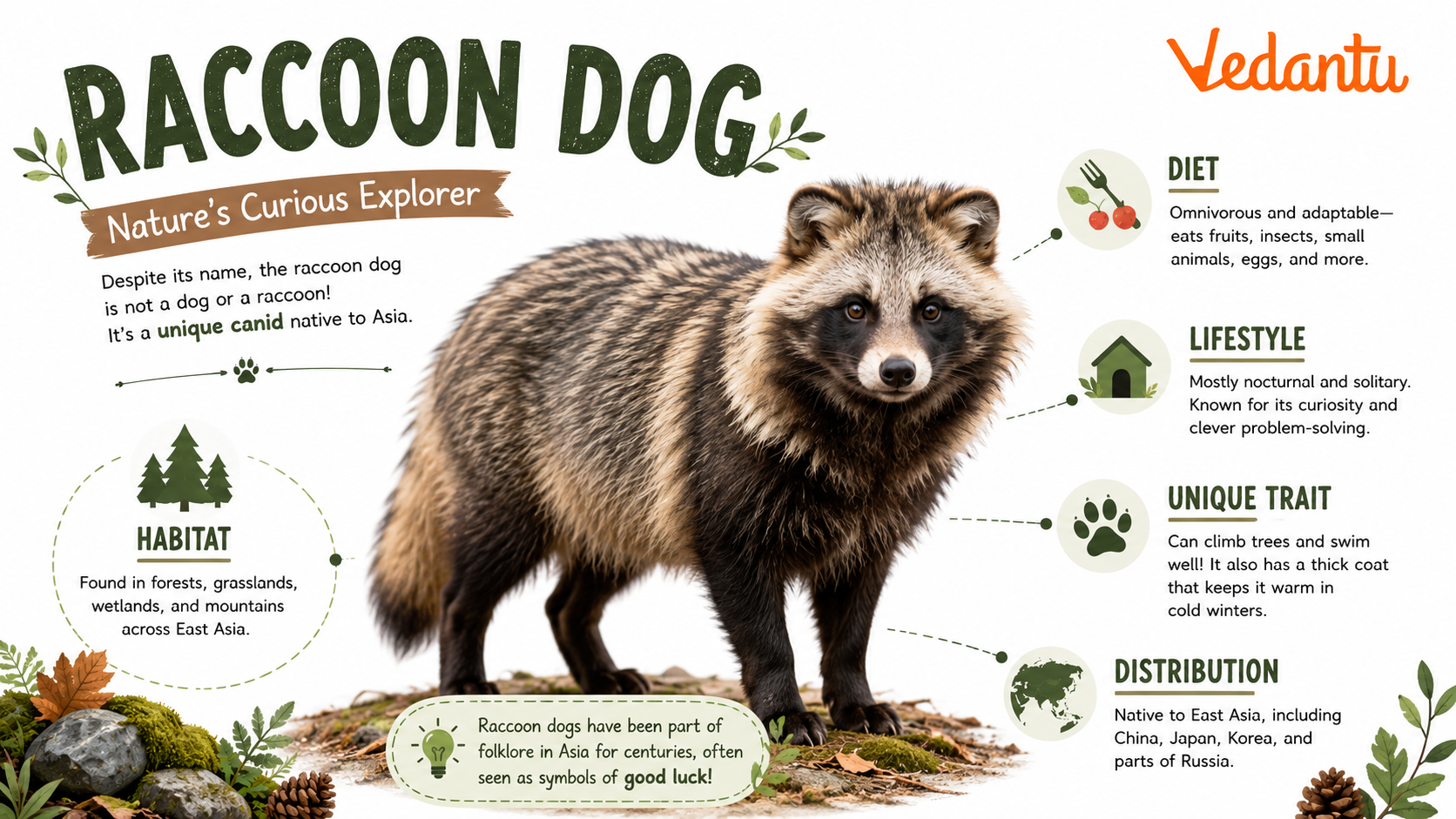
Quick Facts About Raccoon Dog
| Feature | Details |
|---|---|
| Common Name | Raccoon Dog |
| Scientific Name | Nyctereutes procyonoides |
| Animal Group | Mammal (Canidae family) |
| Size | 50–65 cm long |
| Weight | 4–10 kg |
| Lifespan | 6–11 years |
| Habitat | Forests, grasslands, wetlands |
| Diet | Omnivore (plants and animals) |
| Activity | Mostly nocturnal |
| Conservation Status | Least Concern |
Appearance and Physical Characteristics
- Small, fox-like body with short legs.
- Thick, fluffy fur that changes with seasons.
- Dark “mask” around the eyes, similar to a raccoon.
- Short, bushy tail (not ringed like a raccoon).
- Pointed snout and small rounded ears.
Habitat and Distribution
The natural Raccoon Dog habitat includes:
- Forests and woodlands
- Wetlands and riverbanks
- Grasslands and farmlands
- Snowy regions during winter
Diet and Feeding Habits
The Raccoon Dog diet is omnivorous, which means it eats both plants and animals.
Fruits, berries, seeds, grains, and nuts.
Insects, frogs, birds, eggs, fish, and small mammals.
Sometimes feeds on dead animals.
Eats more in autumn to store fat for winter.
This flexible diet helps the Raccoon Dog survive in many different environments.
Behaviour and Lifestyle
- Mostly active at night (nocturnal).
- Usually lives in pairs or small family groups.
- Very shy and avoids humans.
- Uses burrows or hollow trees for shelter.
- Communicates with growls, whines, and body signals.
Life Cycle and Reproduction
- Mating Season: Usually in late winter.
- Pregnancy: Lasts about 60–70 days.
- Birth: Female gives birth to 4–8 pups.
- Parental Care: Both parents help feed and protect the young.
- Growth: Pups open eyes after about 10 days and grow quickly.
- Adult Stage: Become independent in a few months.
The Raccoon Dog life cycle shows strong parental teamwork, which is uncommon in many wild animals.
What Makes the Raccoon Dog Special?
Its dark facial markings help it blend into forest shadows.
Thick winter fur protects it from freezing temperatures.
Unlike most dogs, it can climb trees.
Can eat many types of food to survive.
Importance and Role in Nature
Spreads seeds through droppings after eating fruits.
Eats insects and small animals.
Serves as prey for larger predators.
Helps maintain balance in forest habitats.
Amazing Raccoon Dog Facts
- It is not a raccoon, even though it looks like one.
- It is one of the oldest dog species still alive.
- It can swim well when needed.
- Its fur becomes thicker in winter.
- Both parents take care of their pups.
- It may pretend to be dead when threatened.
Interesting Facts About Raccoon Dog
Fun Facts for Kids
FAQs on Raccoon Dog: Complete Guide to Its Habitat, Diet, and Unique Traits
1. What is a Raccoon Dog?
A Raccoon Dog is a small wild animal that looks like a raccoon but is actually related to dogs.
- Its scientific name is Nyctereutes procyonoides
- It belongs to the canine family (like wolves and foxes)
- It has a raccoon-like face mask but is not a raccoon
- It is sometimes called a tanuki in Japan
2. Are Raccoon Dogs related to raccoons?
No, Raccoon Dogs are not related to raccoons even though they look similar.
- They are part of the dog family (Canidae)
- Raccoons belong to a different animal family called Procyonidae
- Their similar face markings cause confusion
- This is a common “People Also Ask” question about raccoon dog vs raccoon
3. Where do Raccoon Dogs live?
Raccoon Dogs mainly live in forests and grasslands across Asia and parts of Europe.
- Native to East Asia (China, Japan, Korea)
- Also found in Russia and some parts of Europe
- Prefer forests, wetlands, and countryside areas
- They adapt well to cold climates
4. What do Raccoon Dogs eat?
Raccoon Dogs are omnivores, which means they eat both plants and animals.
- Fruits and berries
- Insects and frogs
- Small mammals and birds
- Seeds and crops
5. Do Raccoon Dogs hibernate?
Yes, the Raccoon Dog is the only wild dog species known to hibernate in winter.
- They sleep for long periods during very cold weather
- Their body temperature drops slightly
- They store fat before winter
- This makes them unique among wild canines
6. Are Raccoon Dogs dangerous to humans?
Raccoon Dogs are generally shy and not dangerous to humans.
- They avoid people whenever possible
- They may defend themselves if threatened
- Like many wild animals, they can carry diseases such as rabies
- It is best to observe them from a distance
7. Why are Raccoon Dogs called tanuki in Japan?
In Japan, the Raccoon Dog is called tanuki and appears in many folk stories.
- Tanuki are famous in Japanese mythology
- They are seen as playful and magical creatures
- Statues of tanuki are common in Japan
- This cultural link makes them very popular
8. How big is a Raccoon Dog?
A Raccoon Dog is about the size of a small dog.
- Body length: around 50–65 cm
- Weight: about 4–10 kg
- Thick fur makes them look larger
- They have short legs and a bushy tail
9. Are Raccoon Dogs kept as pets?
Raccoon Dogs are wild animals and are not suitable as pets.
- They have strong wild instincts
- They need large natural habitats
- In many countries, owning one is illegal
- They are best left in the wild
10. What are some interesting facts about Raccoon Dogs?
Raccoon Dogs have many unique and surprising features.
- They are the only hibernating canines
- They can climb trees
- Both parents help raise the babies
- They communicate using growls and whines
- Their fur changes thickness with seasons
