






What Is a Puli? Temperament, Grooming Needs, and Fun Facts
The Puli, commonly known as the tiger, is one of the most majestic and powerful wild animals on Earth. Famous for its bold black stripes and strong body, the Puli is a top predator in forests and grasslands. It plays an important role in maintaining the balance of nature. Learning about Puli facts, Puli habitat, Puli diet, and Puli characteristics helps us understand why this big cat is so special and important.
Quick Facts About Puli
| Feature | Details |
|---|---|
| Common Name | Puli (Tiger) |
| Scientific Name | Panthera tigris |
| Animal Group | Mammal |
| Diet | Carnivore (meat-eater) |
| Lifespan | 10–15 years in the wild |
| Habitat | Forests, grasslands, mangroves |
| Young One | Cub |
| Conservation Status | Endangered |
Appearance and Physical Characteristics
- Large and muscular body with powerful legs.
- Orange coat with unique black stripes.
- White fur on chest and belly.
- Sharp claws and long canine teeth.
- Strong tail for balance while running and turning.
Puli Habitat and Distribution
- Found mainly in Asia.
- Lives in dense forests, grasslands, and swamps.
- Some species live in mangrove forests like the Sundarbans.
- Prefers areas with plenty of water and prey.
The Puli habitat must provide enough cover for hiding and hunting. Tigers are excellent swimmers and often cool off in rivers and lakes.
Puli Diet and Feeding Habits
The Puli diet helps control the population of herbivores, which protects forests and grasslands from overgrazing.
Behaviour and Lifestyle
- Mostly solitary animals.
- Active mainly at night (nocturnal).
- Marks territory using scent and scratches.
- Excellent swimmers.
- Communicates using roars, growls, and scent marks.
Sound or Call
The Puli makes a loud roar that can be heard up to 3 kilometers away. It roars to warn other tigers or to find a mate.
Puli Life Cycle
- Birth: Female gives birth to 2–4 cubs after about 3.5 months.
- Cub Stage: Cubs are born blind and depend on their mother.
- Learning Stage: Mother teaches them how to hunt.
- Adult Stage: At around 2–3 years, they become independent.
What Makes Puli Special?
Importance and Role in Nature
- Maintains balance in the ecosystem.
- Controls herbivore populations.
- Indicates healthy forest ecosystems.
- Important for wildlife tourism and conservation awareness.
Amazing Puli Facts
Interesting Facts About Puli
- Puli stripes are also found on their skin, not just fur.
- They have strong jaws designed for crushing bones.
- Each tiger needs a large territory to survive.
- Tigers are national animals in some countries.
Fun Facts for Kids
FAQs on Puli Dog Breed Guide: Traits, History and Care
1. What is a Puli?
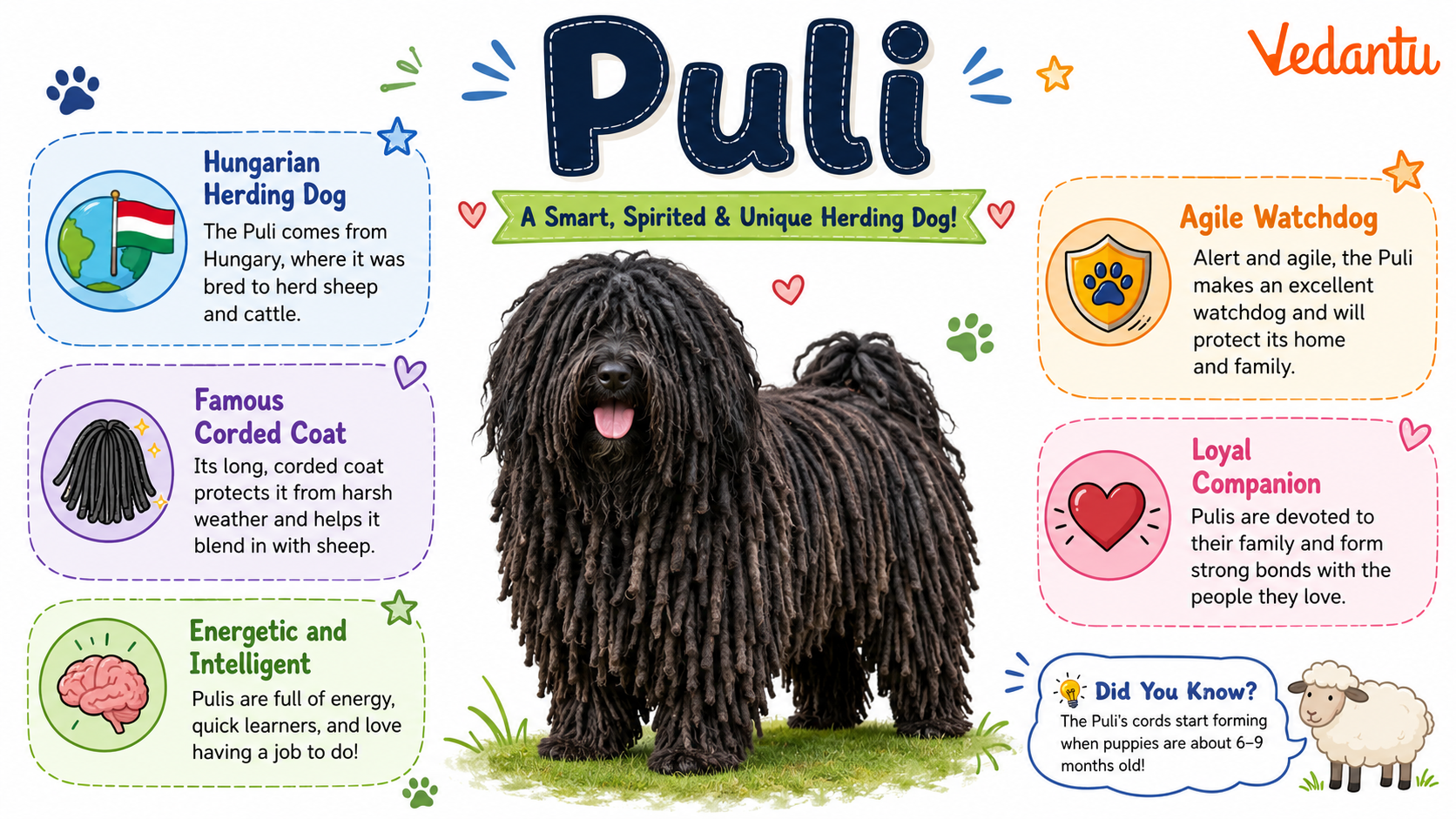
The Puli is a small-to-medium Hungarian herding dog famous for its long, corded coat that looks like dreadlocks.
- The Puli dog breed comes from Hungary
- It was originally used as a sheep herding dog
- It is known for being smart, active, and loyal
- Its unique coat forms natural cords as it grows
2. Why does the Puli have dreadlock-like fur?
The Puli’s coat naturally forms cords to protect it from harsh weather while herding livestock.
- The thick coat keeps the dog warm in winter
- It protects against rain and rough terrain
- The cords develop as the soft undercoat mixes with the outer coat
- This coat makes the Puli breed unique among dogs
3. Is the Puli a good family dog?
Yes, the Puli can be a great family dog if it gets enough exercise and attention.
- It is loyal and protective of its family
- It is playful and enjoys being around children
- It needs regular mental and physical activity
- Early training and socialization are important
4. How big does a Puli grow?
A fully grown Puli dog is small to medium in size but strong and muscular.
- Height: about 16–17 inches tall
- Weight: around 25–35 pounds
- Compact and agile body built for herding sheep
5. What does a Puli eat?
The Puli breed eats high-quality dog food to stay healthy and energetic.
- Balanced commercial dog food or vet-approved meals
- Fresh water daily
- Portion sizes based on age, weight, and activity level
- Occasional healthy dog treats
6. Is the Puli easy to train?
The Puli is very intelligent, which makes training easier with patience and consistency.
- Ranks high in dog intelligence
- Learns commands quickly
- Responds well to positive reinforcement
- Needs mental challenges to avoid boredom
7. How long does a Puli live?
The average Puli lifespan is around 12 to 16 years with proper care.
- Regular veterinary checkups help maintain health
- Healthy diet and exercise increase longevity
- Generally considered a healthy dog breed
8. Does a Puli shed a lot?
The Puli dog sheds very little because its hair forms cords instead of falling out.
- Considered a low-shedding breed
- Needs regular coat maintenance
- Cords must be separated by hand
- Often searched as a possible hypoallergenic dog
9. What colors can a Puli be?
The Puli breed comes in several solid colors recognized by kennel clubs.
- Most common color is black
- Also found in white
- Shades of gray
- Sometimes apricot
10. Why was the Puli used for herding sheep?
The Puli was used for herding because it is quick, alert, and highly intelligent.
- Excellent at controlling and guiding livestock
- Fast and agile runner
- Strong protective instincts
- Worked closely with Hungarian shepherds for centuries
