






What Is a Pony? Size, Breeds, Lifespan, and How to Care for One
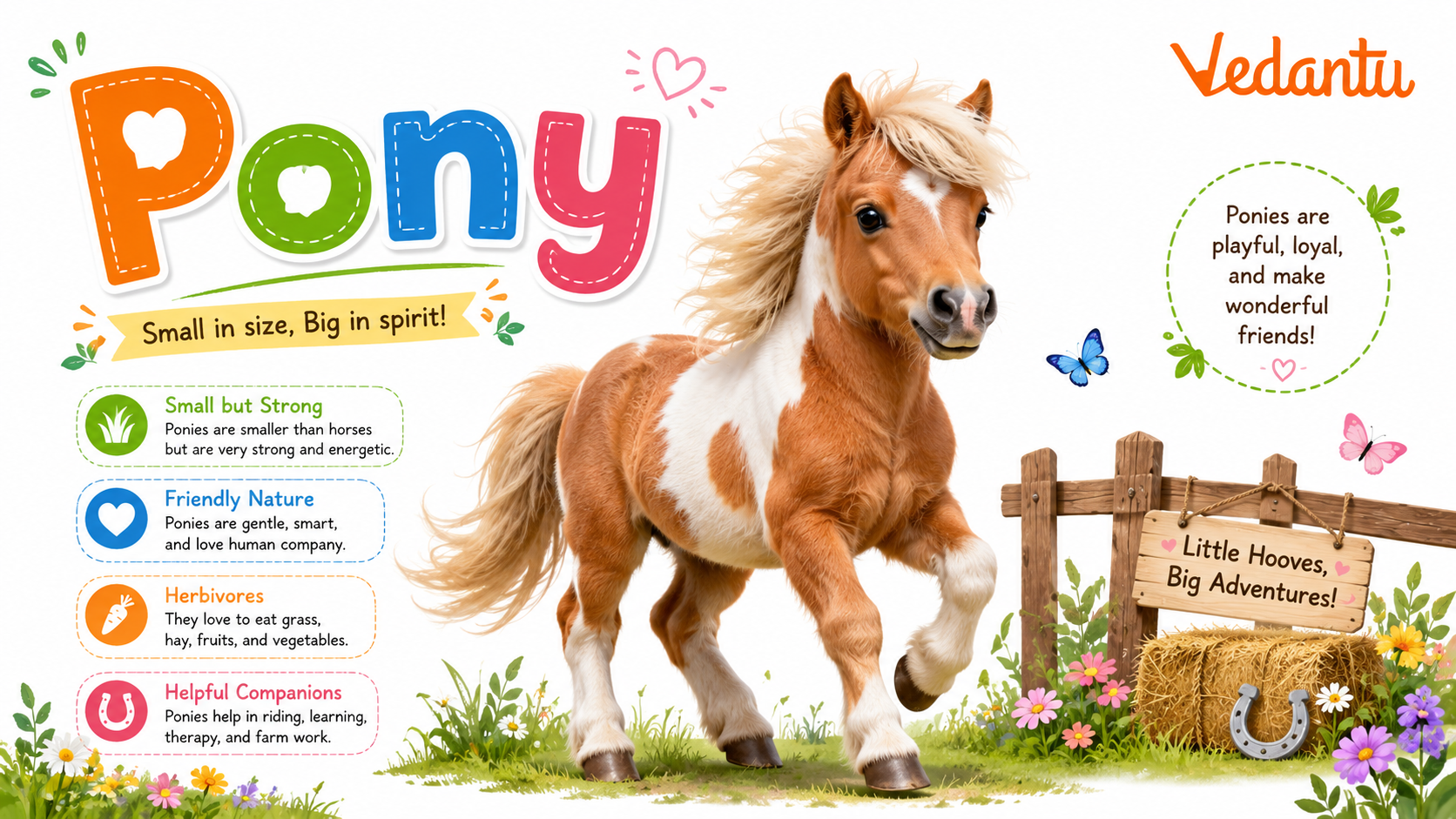
Quick Facts About Pony
| Feature | Details |
|---|---|
| Common Name | Pony |
| Animal Group | Mammal |
| Height | Less than 14.2 hands (about 147 cm) |
| Weight | 200 – 500 kg (depends on breed) |
| Lifespan | 25 – 35 years |
| Diet | Grass, hay, grains |
| Habitat | Grasslands, farms, mountains |
| Young One | Foal |
Appearance and Physical Characteristics
- Shorter than horses but very strong and muscular.
- Thick mane, tail, and coat.
- Short legs and broad chest.
- Large eyes and small ears.
- Come in many colours – brown, black, white, grey, and spotted.
Pony Habitat and Distribution
- Originally found in wild grasslands and mountains.
- Now mostly live on farms, ranches, and riding schools.
- Adapt well to cold and windy climates.
- Some famous pony breeds come from the UK, Iceland, and Mongolia.
Diet and Feeding Habits
- Ponies are herbivores.
- Eat grass, hay, and grains.
- Drink plenty of fresh water daily.
- Have strong teeth for grinding plant food.
Behaviour and Lifestyle
- Friendly and intelligent animals.
- Social – prefer living in groups.
- Can be playful and energetic.
- Communicate through neighing, body movements, and ear positions.
Life Cycle of a Pony
- Birth: A baby pony is called a foal.
- Foal Stage: Drinks mother’s milk and learns to stand within hours.
- Young Pony: Starts eating grass and growing stronger.
- Adult Pony: Fully grown by 4–5 years.
Temperament and Domestic Life
What Makes Pony Special?
Importance and Role in Human Life
- Help in farming and transportation in rural areas.
- Used in children’s sports and competitions.
- Provide companionship and therapy support.
- Important part of cultural festivals in many countries.
Amazing Pony Facts
- Ponies can live longer than many horses.
- Some ponies can carry loads heavier than their own body weight.
- The Shetland Pony is one of the smallest pony breeds.
- Ponies have excellent memory.
- They sleep both standing up and lying down.
- Wild ponies still exist in some parts of the world.
Interesting Facts About Pony
Fun Facts for Kids
- A baby pony can stand within one hour of birth!
- Ponies love rolling in mud.
- They use their tails to swat away flies.
- Ponies can run fast when excited.
- They enjoy being brushed and groomed.
FAQs on Pony Guide: Fun Facts, Breeds, and Care Tips
1. What is a pony?
A pony is a small type of horse known for its short height, thick mane, and friendly nature.
- A pony is usually under 14.2 hands (58 inches) tall.
- They have strong bodies, short legs, and thick coats.
- Popular pony breeds include Shetland Pony, Welsh Pony, and Connemara Pony.
- Ponies are often gentle and great for kids and beginners.
2. What is the difference between a pony and a horse?
The main difference between a pony and a horse is their height and body structure.
- Ponies are shorter than 14.2 hands.
- Horses are taller than 14.2 hands.
- Ponies have thicker manes, tails, and coats.
- Ponies often look stockier and stronger for their size.
3. How tall is a pony?
A pony’s height is usually less than 14.2 hands measured at the shoulder.
- 1 hand equals 4 inches.
- Most ponies are between 9 and 14.2 hands tall.
- Some small breeds like the Shetland Pony can be under 10 hands.
4. What do ponies eat?
Ponies are herbivores, which means they eat plants and grasses.
- Fresh grass and hay are their main foods.
- They may eat grains in small amounts.
- Clean water is essential every day.
- Some enjoy treats like carrots and apples.
5. Are ponies good for kids?
Yes, ponies are often great for kids because they are small and usually gentle.
- Their shorter height makes them less scary for children.
- Many ponies are patient and easy to train.
- Ponies are commonly used in riding lessons and pony rides.
6. How long do ponies live?
Ponies often live longer than horses, with a lifespan of about 25 to 30 years.
- Some ponies can live over 30 years with good care.
- Healthy food, exercise, and vet checkups help them live longer.
- Smaller breeds sometimes live the longest.
7. What are popular pony breeds?
There are many famous pony breeds around the world.
- Shetland Pony – small and very strong.
- Welsh Pony – friendly and great for riding.
- Connemara Pony – athletic and smart.
- Exmoor Pony – hardy and native to England.
8. Can ponies be ridden by adults?
Yes, some ponies can carry adults depending on their size and strength.
- Larger breeds like the Connemara Pony can carry grown-ups.
- Weight limits depend on the pony’s build.
- Ponies are surprisingly strong for their size.
9. Where do ponies live?
Ponies live all over the world in many different habitats.
- They can live on farms, grasslands, and mountains.
- Some wild ponies live in places like Dartmoor and Assateague Island.
- Ponies adapt well to cold weather because of their thick coats.
10. How do you take care of a pony?
Taking care of a pony means giving it proper food, shelter, and love.
- Provide fresh hay, grass, and water daily.
- Brush its coat and clean its hooves regularly.
- Give regular veterinary care and vaccinations.
- Ensure safe shelter from rain, wind, and heat.
