






Okapi Facts, Habitat, Diet, and Conservation Explained
The Okapi is one of the most mysterious animals in the world. Often called the “forest giraffe,” it looks like a mix between a giraffe and a zebra. With its long neck, velvety brown body, and bold white stripes on its legs, the Okapi is truly special. Found only in the rainforests of Central Africa, this rare mammal is shy and difficult to spot in the wild. Let’s explore amazing Okapi facts, habitat, diet, characteristics, and more!
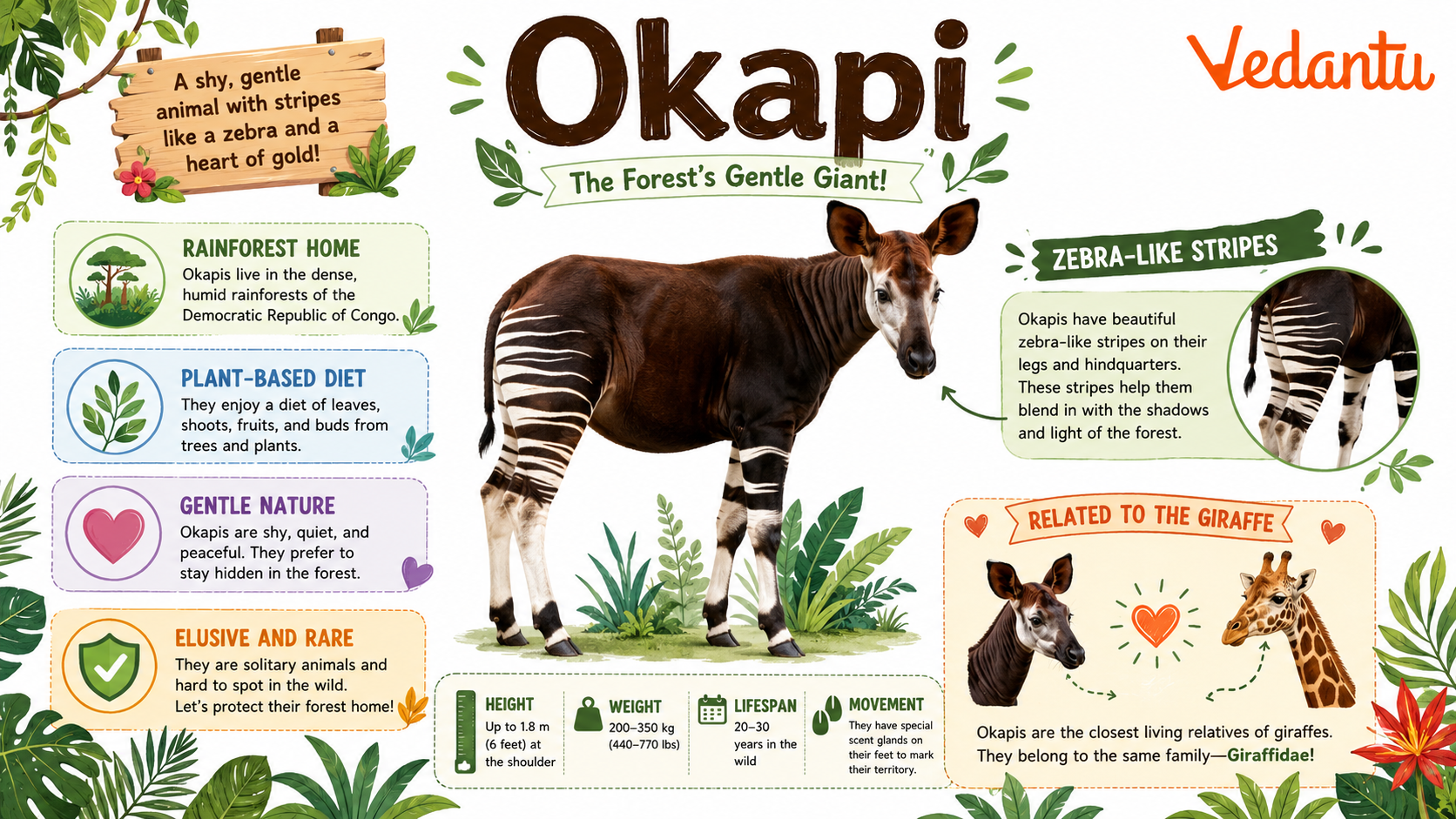
Quick Facts About Okapi
| Feature | Details |
|---|---|
| Common Name | Okapi |
| Scientific Name | Okapia johnstoni |
| Animal Group | Mammal |
| Family | Giraffidae (same family as giraffe) |
| Height | About 5 feet at the shoulder |
| Weight | 200–300 kg |
| Lifespan | 20–30 years (in captivity) |
| Habitat | Tropical rainforests |
| Diet | Leaves, fruits, buds, and fungi |
| Conservation Status | Endangered |
| Found In | Democratic Republic of the Congo (Africa) |
Appearance and Physical Characteristics
- Velvety dark brown or reddish-brown body.
- Bold black-and-white zebra-like stripes on legs.
- Long neck like a giraffe (but shorter).
- Large ears for sharp hearing.
- Long, flexible tongue (up to 18 inches).
The Okapi’s stripes help it blend into the forest shadows. Its strong legs and compact body make it perfect for walking through dense rainforest vegetation.
Okapi Habitat and Distribution
- Lives only in Central Africa.
- Found in dense tropical rainforests.
- Prefers areas near rivers and streams.
- Thrives in warm, humid climates.
The Okapi habitat is limited to the Ituri Forest in the Democratic Republic of the Congo. Because they live in thick forests, they are rarely seen in the wild.
Diet and Feeding Habits
Okapis eat only plants.
Leaves, shoots, fruits, and tree buds.
They also eat clay to get minerals.
Uses long tongue to pull leaves from branches.
The Okapi diet plays an important role in forest ecosystems, as it helps control plant growth.
Behaviour and Lifestyle
- Mostly solitary animals.
- Active during the day (diurnal).
- Very shy and quiet.
- Communicate using soft sounds and scent marking.
- Excellent sense of hearing to detect predators.
Okapi Life Cycle
- Birth: Female gives birth to one calf after about 14–16 months of pregnancy.
- Calf Stage: Baby stays hidden in vegetation for protection.
- Growth: Calf drinks mother’s milk and grows quickly.
- Adult Stage: Becomes independent after about 1 year.
What Makes Okapi Special?
Importance and Role in Nature
Amazing Okapi Facts
- Okapis were once called the “African unicorn.”
- They share the same family as giraffes.
- Their stripes are unique like human fingerprints.
- They can hear predators from far away.
- Main predators include leopards.
- They walk in a pacing gait like giraffes.
Interesting Facts About Okapi
Fun Facts for Kids
FAQs on Okapi: The Rare Forest Giraffe of Central Africa
1. What is an okapi?
An okapi is a rare forest animal from Africa that looks like a mix between a zebra and a giraffe.
- The okapi is a shy mammal related to the giraffe.
- It has a brown body and black-and-white striped legs like a zebra.
- It lives in the rainforests of Central Africa.
- Its scientific name is Okapia johnstoni.
2. Where do okapis live?
Okapis live in the dense tropical rainforests of the Democratic Republic of the Congo in Africa.
- They are found in the Ituri Rainforest.
- They prefer thick forests with lots of trees and plants.
- These forests provide food and hiding places from predators.
3. Why do okapis have stripes like zebras?
Okapis have striped legs to help them hide in the forest.
- The black-and-white stripes break up their body shape.
- This camouflage helps them blend into sunlight and shadows.
- Stripes may also help baby okapis follow their mothers in the forest.
4. What do okapis eat?
Okapis are herbivores, which means they eat plants.
- They eat leaves, buds, fruits, ferns, and fungi.
- They use their long, flexible blue tongue to grab leaves.
- Their tongue can even clean their eyes and ears.
5. Are okapis related to giraffes?
Yes, okapis are the closest living relatives of giraffes.
- Both belong to the animal family Giraffidae.
- They share long tongues and similar skull shapes.
- Okapis have shorter necks compared to giraffes.
6. Are okapis endangered?
Yes, okapis are classified as Endangered due to habitat loss and hunting.
- Their rainforest homes are being cut down.
- Illegal hunting and poaching threaten them.
- Conservation groups protect them in wildlife reserves.
7. How big is an okapi?
An adult okapi is about the size of a horse.
- Height: Around 5 feet (1.5 meters) tall at the shoulder.
- Weight: Between 440–770 pounds (200–350 kg).
- They have a long neck but shorter than a giraffe’s.
8. What animals hunt okapis?
The main predator of the okapi is the leopard.
- Leopards hunt them in the rainforest.
- Human hunters are also a threat.
- Okapis rely on camouflage and sharp hearing to stay safe.
9. How do okapis communicate?
Okapis communicate using sounds, scent markings, and body language.
- They make soft sounds like coughs and whistles.
- Mothers and calves use quiet calls to find each other.
- They mark territory using scent from special glands.
10. Why are okapis important to the ecosystem?
Okapis help keep the rainforest ecosystem healthy.
- They spread seeds through their droppings.
- They help control plant growth by eating leaves.
- Protecting okapis also protects other rainforest animals.
