






Where Do Mountain Goats Live and How Do They Survive in Rocky Mountain Habitats?
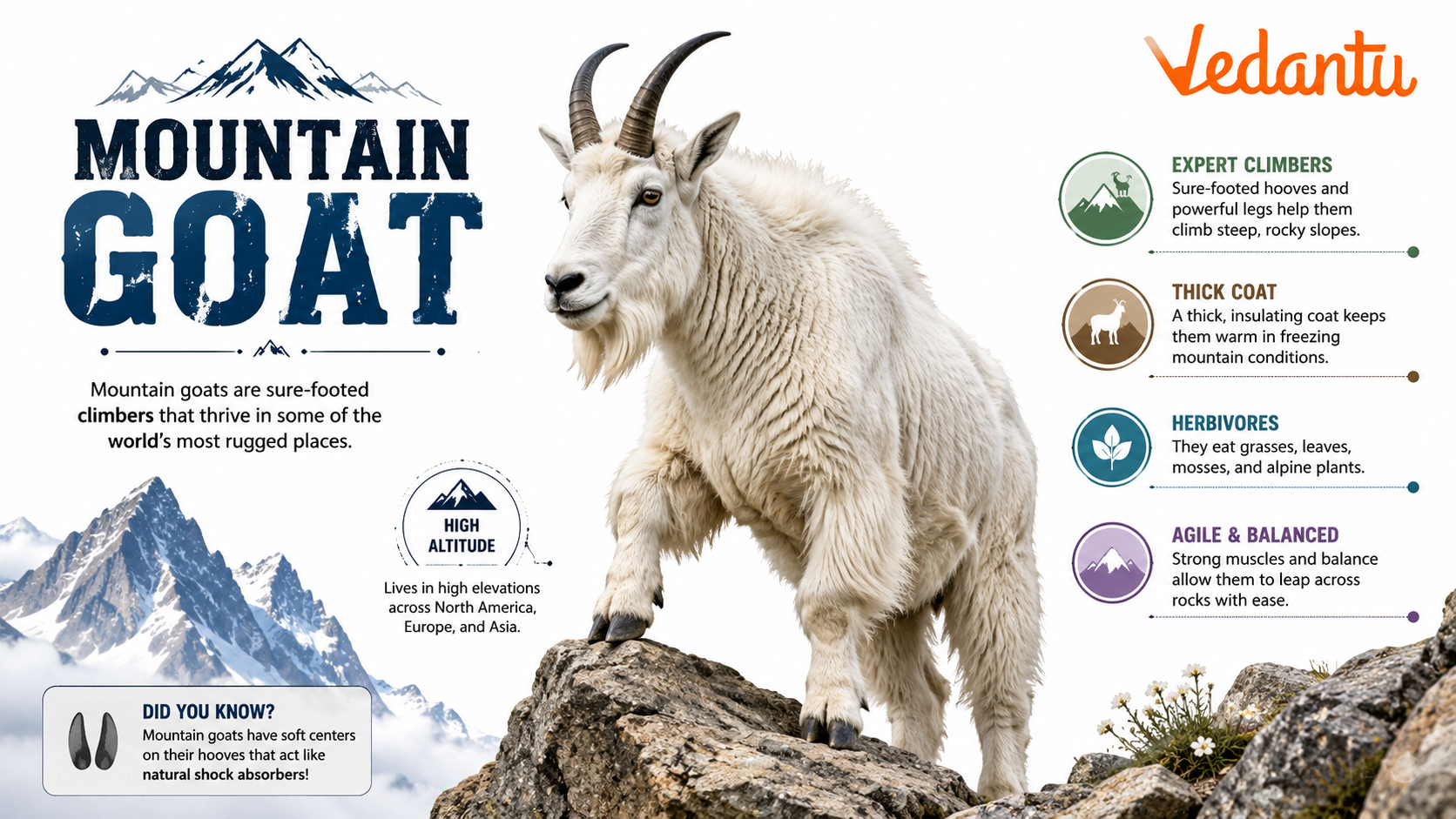
Quick Facts About Mountain Goat
| Feature | Details |
|---|---|
| Common Name | Mountain Goat |
| Scientific Name | Oreamnos americanus |
| Animal Group | Mammal |
| Habitat | Rocky mountains, cliffs, alpine regions |
| Diet | Herbivore (grasses, shrubs, moss) |
| Lifespan | 12–15 years in the wild |
| Weight | 45–140 kg |
| Conservation Status | Least Concern |
Appearance and Physical Characteristics
- Thick, long white fur that keeps them warm in freezing weather.
- Strong, muscular body with powerful legs.
- Sharp black horns (both males and females have horns).
- Special hooves with rough pads for gripping rocks.
- Short tail and beard-like hair under the chin.
Mountain Goat Habitat and Distribution
- Found in the Rocky Mountains and coastal mountain ranges.
- Live in the United States (Alaska, Montana, Idaho) and Canada.
- Prefer cold alpine climates.
- Stay at high elevations during summer.
- Move slightly lower in winter for food.
Mountain Goat Diet and Feeding Habits
Herbivore – eats only plants.
Grasses, moss, lichens, leaves, and small shrubs.
Mostly active in early morning and evening.
Primary consumer in mountain ecosystems.
Behaviour and Lifestyle
- Excellent climbers – can stand on very narrow cliff edges.
- Usually live in small groups.
- Males may live alone except during mating season.
- Use height as protection from predators like wolves and bears.
- Very alert and strong defenders when threatened.
Mountain Goat Life Cycle
- Birth: Females give birth to 1 baby (called a kid) in spring.
- Early Life: Kids can climb within just a few days of birth.
- Growing Up: Stay with their mother for about a year.
- Adult Stage: Reach maturity at 2–3 years.
- Lifespan: Live up to 15 years in the wild.
What Makes Mountain Goats Special?
Rubber-like pads help them stick to rocks.
Protects them from freezing snow and wind.
Can jump and climb steep cliffs easily.
Use sharp horns to fight predators.
Importance and Role in Nature
- Help control plant growth in alpine areas.
- Serve as prey for large predators.
- Maintain balance in mountain food chains.
- Attract wildlife researchers and eco-tourism.
Amazing Mountain Goat Facts
Fun Facts for Kids
- Mountain goats love salty rocks and minerals.
- They sometimes visit roads just to lick salt.
- Their hooves work like natural climbing shoes.
- They live higher than most other mammals.
- They look calm but are very strong animals.
FAQs on Mountain Goat: Habitat, Diet, and Unique Survival Traits
1. What is a mountain goat?
A mountain goat is a strong, hoofed animal that lives in steep and rocky mountains.
- Scientific name: Oreamnos americanus
- Found in North America, especially the Rocky Mountains
- Known for thick white fur and sharp climbing skills
- Related to antelopes and goat-like mammals
2. Where do mountain goats live?
Mountain goats live in high, rocky mountain areas where few other animals can survive.
- Common in the Rocky Mountains of the USA and Canada
- Prefer cliffs, alpine meadows, and snowy peaks
- Live at elevations up to 13,000 feet
- Choose steep terrain to stay safe from predators
3. What do mountain goats eat?
Mountain goats are herbivores, which means they only eat plants.
- Grasses and alpine plants
- Mosses and lichens
- Shrubs and leaves
- Sometimes tree bark during winter
4. How do mountain goats climb steep cliffs?
Mountain goats climb cliffs easily because their bodies are specially adapted for balance and grip.
- Strong muscular legs
- Split cloven hooves for better grip
- Rough hoof pads to prevent slipping
- Excellent balance and coordination
5. Are mountain goats really goats?
Mountain goats are not true goats, but they belong to the same animal family.
- Part of the Bovidae family
- More closely related to antelopes
- Different from domestic farm goats
- Have unique mountain adaptations
6. Do mountain goats have predators?
Yes, mountain goats have natural predators, but their climbing skills help them stay safe.
- Wolves
- Mountain lions
- Bears
- Golden eagles may attack young kids (baby goats)
7. Why do mountain goats have thick white fur?
Mountain goats have thick white fur to survive cold mountain weather.
- Provides insulation in freezing temperatures
- Helps them blend into snowy environments (camouflage)
- Grows extra thick during winter
- Sheds in warmer summer months
8. What are baby mountain goats called?
Baby mountain goats are called kids.
- Born in spring
- Can stand and climb within hours
- Stay close to their mothers for protection
- Learn climbing skills very quickly
9. How long do mountain goats live?
Mountain goats usually live around 12 to 15 years in the wild.
- Females often live longer than males
- Life span depends on predators and environment
- Can live longer in protected areas
- Strong survival instincts increase lifespan
10. Are mountain goats endangered?
Mountain goats are not currently endangered, but they need safe habitats to survive.
- Listed as Least Concern by conservation groups
- Threatened by habitat loss and climate change
- Protected in many national parks
- Important part of the mountain ecosystem
