






Where Do Moray Eels Live, What Do They Eat, and Are They Dangerous?
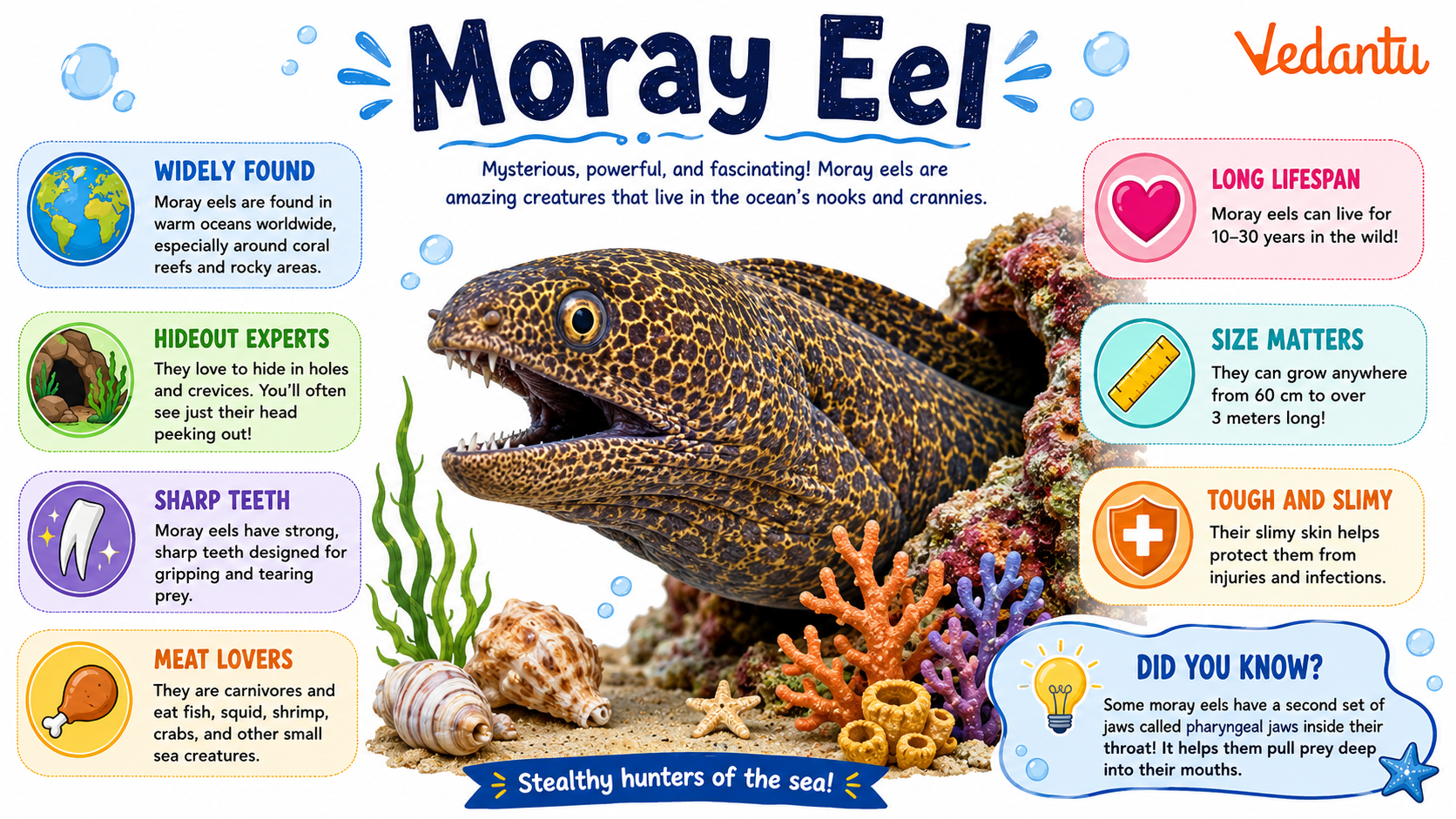
Quick Facts About Moray Eel
| Feature | Details |
|---|---|
| Common Name | Moray Eel |
| Scientific Family | Muraenidae |
| Animal Group | Fish |
| Size | Up to 13 feet (depending on species) |
| Weight | Up to 30 kg (varies by species) |
| Habitat | Tropical and subtropical oceans |
| Diet | Carnivore – fish, crabs, octopus |
| Lifespan | 10–30 years |
| Conservation Status | Mostly Least Concern |
Appearance and Physical Characteristics
- Long, snake-like body without visible scales.
- Smooth, slimy skin that protects it from injuries.
- Sharp, curved teeth for gripping prey.
- Wide mouth that often stays open for breathing.
- Colors range from brown, green, yellow, black, or spotted patterns.
Moray Eel Habitat and Distribution
- Found in tropical and subtropical oceans worldwide.
- Common in coral reefs, rocky shores, and lagoons.
- Usually hide in crevices during the day.
- Prefer shallow waters but some species live deeper.
Moray Eel Diet and Feeding Habits
Carnivorous – eats other sea animals.
Fish, crabs, squid, octopus, and shrimp.
Ambush predator that waits inside rocks.
Mid-to-top level predator in reef ecosystems.
Behaviour and Lifestyle
- Mostly solitary animals.
- Nocturnal – hunt mainly at night.
- Good sense of smell to detect prey.
- Not aggressive unless threatened.
- Often seen opening and closing mouth for breathing.
Moray Eel Life Cycle
- Egg Stage: Females lay eggs in the ocean.
- Larva Stage: Transparent leaf-like larvae drift in water.
- Juvenile Stage: Young eels settle in reefs.
- Adult Stage: Fully grown predator living in crevices.
What Makes Moray Eel Special?
Importance and Role in Nature
- Controls population of reef fish and crustaceans.
- Keeps coral reef ecosystem balanced.
- Prey for larger predators like sharks.
- Important part of marine biodiversity.
Amazing Moray Eel Facts
Fun Facts for Kids
- Moray eels look like sea snakes but they are fish.
- They breathe by constantly opening and closing their mouths.
- They love hiding in tiny rock holes.
- Some have spotted or striped bodies.
- They are important ocean cleaners and hunters.
FAQs on Moray Eel: Fascinating Facts, Habitat, and Behavior
1. What is a Moray Eel?
A Moray Eel is a long, snake-like marine fish that lives in warm ocean waters.
- Belongs to the Muraenidae family
- Has a long, smooth body without scales
- Lives in coral reefs and rocky sea floors
- Is a type of saltwater fish
- Often hides in holes and crevices during the day
2. Where do Moray Eels live?
Moray eels live in warm tropical and subtropical oceans around the world.
- Found in the Atlantic Ocean, Pacific Ocean, and Indian Ocean
- Common in coral reefs
- Hide in rocky crevices and sea caves
- Some species live in deep sea waters
- A few can survive in brackish water
3. Are Moray Eels dangerous to humans?
Moray eels are not usually dangerous but may bite if they feel threatened.
- They are generally shy sea creatures
- Bites happen when disturbed or fed by hand
- Have sharp teeth for catching prey
- Do not usually attack humans on purpose
- Divers should avoid putting hands near their hiding spots
4. What do Moray Eels eat?
Moray eels are carnivorous predators that eat small sea animals.
- Feed on fish
- Eat crabs and other crustaceans
- Hunt octopus and squid
- Use their strong jaws to grab prey
- Sometimes hunt at night
5. Why do Moray Eels open and close their mouths?
Moray eels open and close their mouths to breathe, not because they are angry.
- They pump water over their gills
- Helps them get oxygen from the water
- It may look scary but is normal behavior
- Common among reef fish
6. How big can a Moray Eel grow?
Moray eels can grow from small sizes up to very long lengths depending on the species.
- Some grow about 1 foot (30 cm)
- Larger species reach up to 13 feet (4 meters)
- The Giant Moray is one of the biggest species
- Size depends on habitat and food supply
7. How many species of Moray Eels are there?
There are more than 200 species of Moray Eels found worldwide.
- All belong to the Muraenidae family
- Different colors and patterns
- Examples include the Green Moray and Snowflake Moray
- Each species lives in different ocean habitats
8. Do Moray Eels have two sets of jaws?
Yes, moray eels have two sets of jaws to help them catch and hold prey.
- One main outer jaw with sharp teeth
- A second inner jaw called pharyngeal jaws
- The inner jaw pulls food into the throat
- This makes them excellent ocean predators
9. What colors are Moray Eels?
Moray eels come in many bright and camouflaged colors.
- Green, brown, black, or yellow
- Some have spots or stripes
- Colors help them blend into coral reefs
- Camouflage protects them from predators
10. How long do Moray Eels live?
Moray eels can live for many years in the wild.
- Average lifespan is about 10 to 30 years
- Lifespan depends on species and environment
- Healthy reef habitats help them live longer
- They face threats from overfishing and habitat damage
