






How to Identify a Water Moccasin and Tell It Apart From Other Snakes
Moccasins are powerful, semi-aquatic snakes found mainly in North America. They are also known as cottonmouth snakes because of the bright white colour inside their mouths, which they display when threatened. Famous for their strong venom and defensive behaviour, moccasins play an important role in controlling small animal populations. Let’s explore interesting moccasin facts, their habitat, diet, characteristics, and what makes them special in the reptile world.
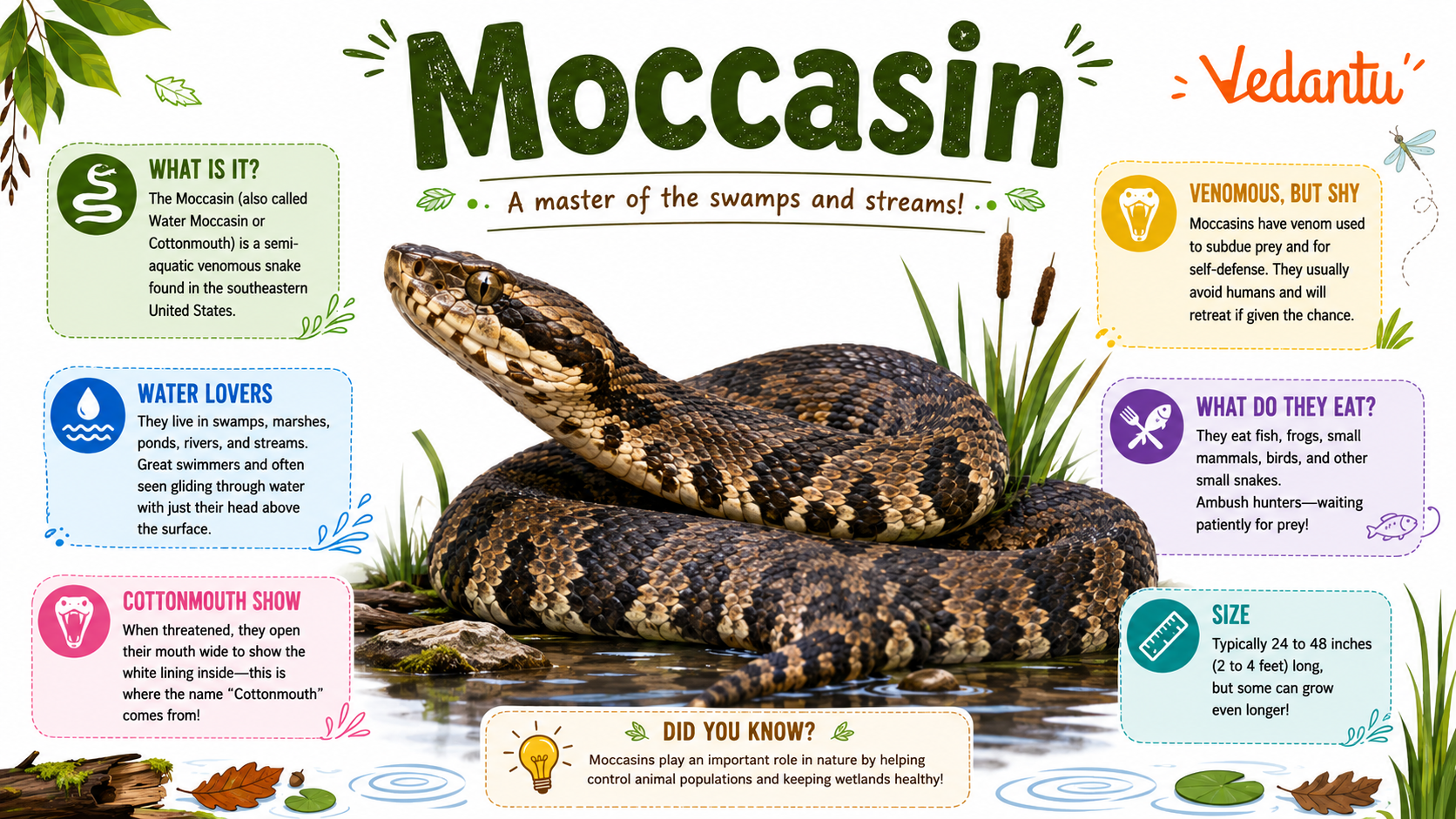
Quick Facts About Moccasin
| Feature | Details |
|---|---|
| Common Name | Moccasin or Cottonmouth |
| Scientific Name | Agkistrodon piscivorus |
| Animal Group | Reptile |
| Length | 2 to 4 feet (60–120 cm) |
| Weight | Up to 4 pounds |
| Habitat | Swamps, marshes, rivers, lakes |
| Diet | Fish, frogs, birds, small mammals |
| Lifespan | 10–20 years |
| Conservation Status | Least Concern |
Appearance and Physical Characteristics
- Thick, muscular body with a broad triangular head.
- Dark brown, olive, or black colour with faint bands.
- Vertical, cat-like pupils.
- Heat-sensing pits between the eyes and nostrils.
- White interior of the mouth (cotton-like appearance).
Moccasin Habitat and Distribution
- Found mainly in the southeastern United States.
- Live in swamps, marshes, ponds, rivers, and lakes.
- Can also survive in forests and grasslands near water.
- Prefer warm climates.
Diet and Feeding Habits
- Eat fish, frogs, lizards, and small mammals.
- Sometimes feed on birds and other snakes.
- Use venom to paralyse prey.
- Sense body heat of animals using special pit organs.
Behaviour and Lifestyle
- Mostly active during warm months.
- May be active during day or night depending on temperature.
- Good swimmers and can float on water.
- Defensive when disturbed.
- Do not usually chase humans unless threatened.
Moccasin Life Cycle
- Internal Fertilisation: Mating usually occurs in spring.
- Live Birth: Unlike many snakes, moccasins give birth to live young.
- Baby Snakes: 5–15 babies are born at a time.
- Independent Life: Young snakes can hunt soon after birth.
- Adult Stage: Reach maturity in 2–3 years.
What Makes Moccasin Special?
Can detect warm-blooded prey even in darkness.
Venom helps in quickly subduing prey.
Shows white mouth as a warning signal.
Moves smoothly in water and on land.
Importance and Role in Nature
Amazing Moccasin Facts
- Moccasins are one of the few venomous water snakes in North America.
- They can swim with their whole body floating on water.
- Young moccasins have brighter tail tips to attract prey.
- They shed their skin several times a year.
- Their venom is mainly used for hunting, not attacking humans.
- They can remain still for long periods while waiting for prey.
Fun Facts for Kids
FAQs on Moccasin Snake (Water Moccasin): Complete Identification Guide
1. What is a moccasin?
A moccasin is a soft, comfortable shoe traditionally made from leather and worn by many Native American tribes.
- Made from deerskin or soft leather
- Designed for quiet walking and comfort
- Often decorated with beads, embroidery, or fringe
- Used for both indoor and outdoor wear
2. Who invented moccasins?
Moccasins were first created by Native American peoples hundreds of years ago.
- Different tribes designed their own styles
- Made to match local climates and land
- Used natural materials like animal hides
- Passed down as part of cultural traditions
3. What materials are moccasins made from?
Traditional moccasins are made from soft and natural materials.
- Deerskin leather (most common)
- Moose or buffalo hide
- Beads and porcupine quills for decoration
- Soft soles or sometimes hard soles for protection
4. Why did Native Americans wear moccasins?
Native Americans wore moccasins because they were comfortable and practical for walking outdoors.
- Protected feet from rocks and dirt
- Allowed quiet movement while hunting
- Kept feet warm in cold weather
- Matched different terrains like forests or plains
5. Are moccasins still worn today?
Yes, moccasins are still popular today as both cultural footwear and casual shoes.
- Worn during traditional ceremonies
- Sold as comfortable everyday shoes
- Available for kids, teens, and adults
- Inspired modern styles like loafers and driving shoes
6. What is the difference between moccasins and loafers?
The main difference is that moccasins are traditional Native American shoes, while loafers are modern fashion shoes inspired by them.
- Moccasins are usually softer and handmade
- Loafers often have thicker soles and heels
- Moccasins may feature beadwork and cultural designs
- Loafers are common in school or office wear
7. How are moccasins made?
Moccasins are made by shaping soft leather around the foot and stitching it together.
- Leather is cut into special patterns
- Pieces are sewn with strong thread or sinew
- Decorations like beadwork are added
- Soles are attached for protection
8. What are the different types of moccasins?
There are different types of moccasins based on region and tribe.
- Soft-sole moccasins for forest areas
- Hard-sole moccasins for rocky plains
- High-top moccasin boots
- Modern indoor moccasin slippers
9. Are moccasins good for kids?
Yes, moccasins are great for kids because they are soft, light, and comfortable.
- Easy to slip on and off
- Flexible soles help natural foot movement
- Warm and cozy for indoor use
- Available in fun colors and designs
10. How should you take care of moccasins?
Proper care helps moccasins last longer and stay soft.
- Keep them dry and avoid heavy rain
- Clean gently with a soft brush
- Use leather conditioner when needed
- Store in a cool, dry place
