






What Do Manatees Eat, Where Do They Live, and Why Are They Endangered?
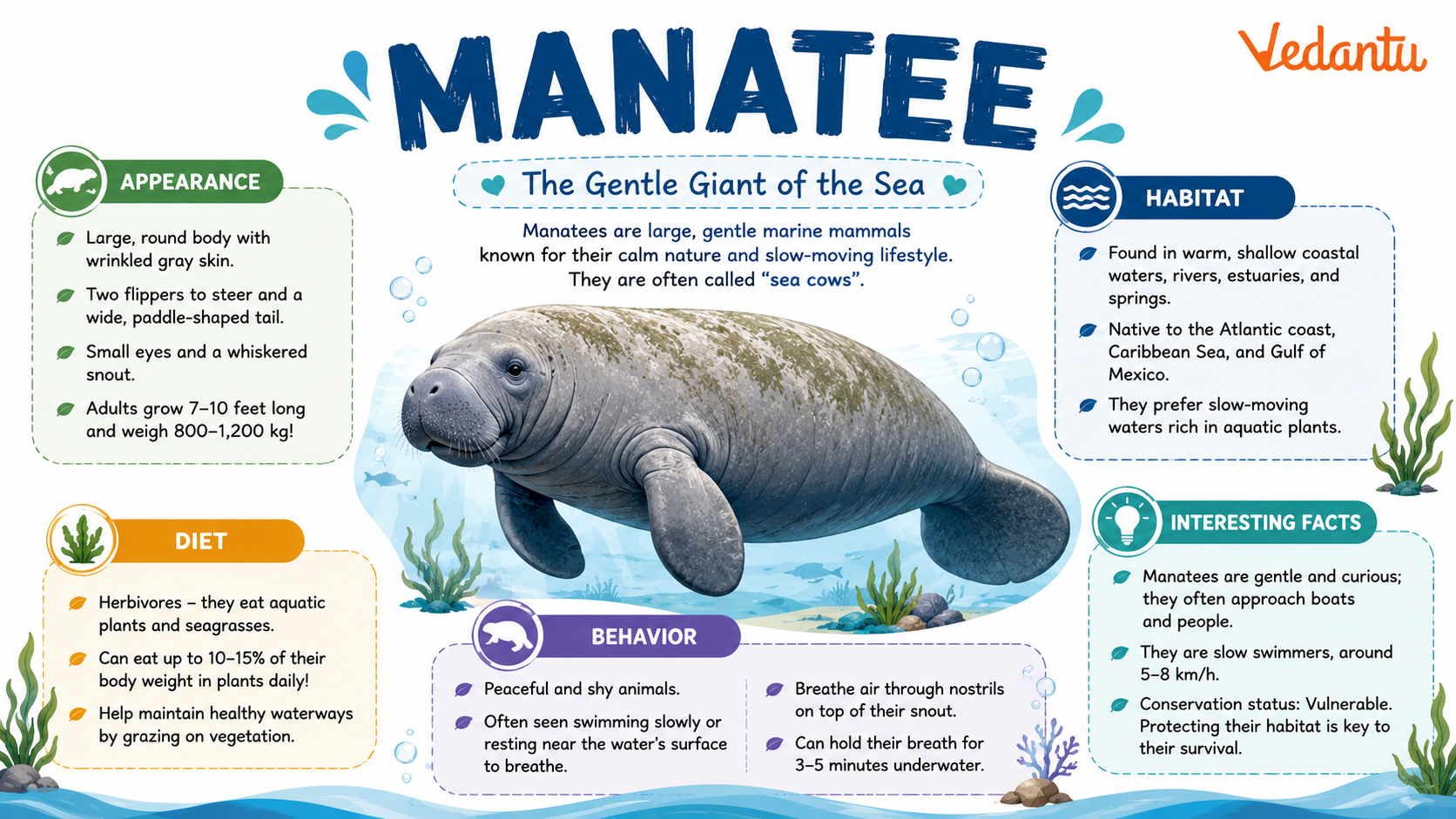
Quick Facts About Manatee
| Feature | Details |
|---|---|
| Common Name | Manatee |
| Scientific Name | Trichechus |
| Animal Group | Mammal |
| Length | Up to 4 meters |
| Weight | 400–600 kg (some even heavier) |
| Lifespan | 40–60 years |
| Habitat | Shallow coastal waters, rivers, and estuaries |
| Diet | Seagrass and aquatic plants |
| Conservation Status | Vulnerable |
Appearance and Physical Characteristics
- Large, round, and streamlined body.
- Grey or brown thick skin with wrinkles.
- Flat, paddle-shaped tail for swimming.
- Two flippers used for steering and holding food.
- Small eyes and no visible outer ears.
Habitat and Distribution
- Found in warm coastal waters of the Caribbean, Gulf of Mexico, and parts of West Africa and the Amazon Basin.
- Prefer shallow waters less than 3 meters deep.
- Often live near seagrass beds and freshwater springs.
- Cannot survive long in cold water.
Diet and Feeding Habits
- Strict herbivores (plant-eaters).
- Eat seagrass, algae, and other water plants.
- Can eat up to 10% of their body weight in one day.
- Spend 6–8 hours daily feeding.
Behaviour and Lifestyle
- Peaceful and slow-moving animals.
- Usually solitary but sometimes seen in small groups.
- Come to the surface every few minutes to breathe.
- Communicate using squeaks and chirps.
- Rest underwater for long periods.
Manatee Life Cycle
- Birth: Female gives birth to one calf after about 12 months of pregnancy.
- Baby Stage: Calf stays close to its mother and drinks milk.
- Growth: Young manatees learn to eat plants within a few months.
- Adult Stage: Reach maturity at around 5 years.
What Makes Manatees Special?
Importance and Role in Nature
Amazing Manatee Facts
- They are sometimes called “sea cows” because they graze like cows.
- They have no natural predators except humans.
- Boat strikes are one of the biggest dangers to manatees.
- They migrate to warmer waters during winter.
- They sleep underwater but must surface to breathe.
- They can move each side of their lips independently.
Fun Facts for Kids
FAQs on Manatee: Gentle Sea Cow of Coastal Waters
1. What is a manatee?
A manatee is a large, gentle marine mammal often called a sea cow because it eats plants and moves slowly in the water.
- Belongs to the animal group Sirenia
- Lives in warm coastal waters, rivers, and springs
- Breathes air with lungs like humans
- Spends most of its time eating and resting
2. Where do manatees live?
Manatees live in warm, shallow waters where food is easy to find.
- Found in the Atlantic Ocean, Caribbean Sea, and Gulf of Mexico
- Common in Florida and parts of South America and Africa
- Prefer freshwater rivers, coastal lagoons, and mangroves
- Migrate to warm springs during cold weather
3. What do manatees eat?
Manatees are herbivores that eat only plants and water vegetation.
- Feed on seagrass and algae
- Eat floating and underwater plants
- Can eat up to 10% of their body weight daily
- Use their flexible lips to grab food
4. How big can a manatee grow?
Manatees are very large marine animals that can grow as big as a small car.
- Average length: 8 to 13 feet
- Average weight: 800 to 1,200 pounds
- Have thick, wrinkled gray or brown skin
- Have paddle-shaped tails for swimming
5. Are manatees endangered?
Manatees are considered a threatened species and need protection to survive.
- Protected under the Endangered Species Act
- Main threats include boat collisions
- Also harmed by pollution and habitat loss
- Conservation programs help protect them
6. How long do manatees live?
Manatees can live for many decades in the wild.
- Average lifespan: 40 to 60 years
- Grow slowly and mature late
- Females usually have one calf at a time
- Babies stay with their mothers for up to two years
7. How do manatees breathe?
Manatees breathe air through their lungs and must come to the surface to inhale.
- Have nostrils on top of their snout
- Can hold their breath for about 20 minutes
- Usually surface every few minutes
- Sleep underwater but wake up to breathe
8. Why are manatees called sea cows?
Manatees are called sea cows because they slowly graze on underwater plants like cows graze on grass.
- Move gently and calmly
- Spend hours eating vegetation
- Help keep seagrass beds healthy
- Nickname used by sailors long ago
9. Do manatees have predators?
Adult manatees have very few natural predators, but they still face dangers.
- Occasionally attacked by sharks or alligators
- Humans are their biggest threat
- Boat propellers can cause serious injuries
- Cold stress can harm them in winter
10. How can we help protect manatees?
People can help protect manatees by keeping their habitats safe and clean.
- Follow boat speed limits in manatee zones
- Do not feed or disturb wild manatees
- Reduce water pollution
- Support wildlife conservation programs
