






How Lungfish Survive Droughts and Breathe Outside Water
The Lungfish is one of the most fascinating creatures in the animal kingdom. Known as a “living fossil,” it has existed for over 400 million years! Unlike most fish, Lungfish can breathe air using lungs and survive even when water dries up. These unique abilities make Lungfish facts, habitat, diet, and life cycle extremely interesting for students learning about evolution and aquatic animals.
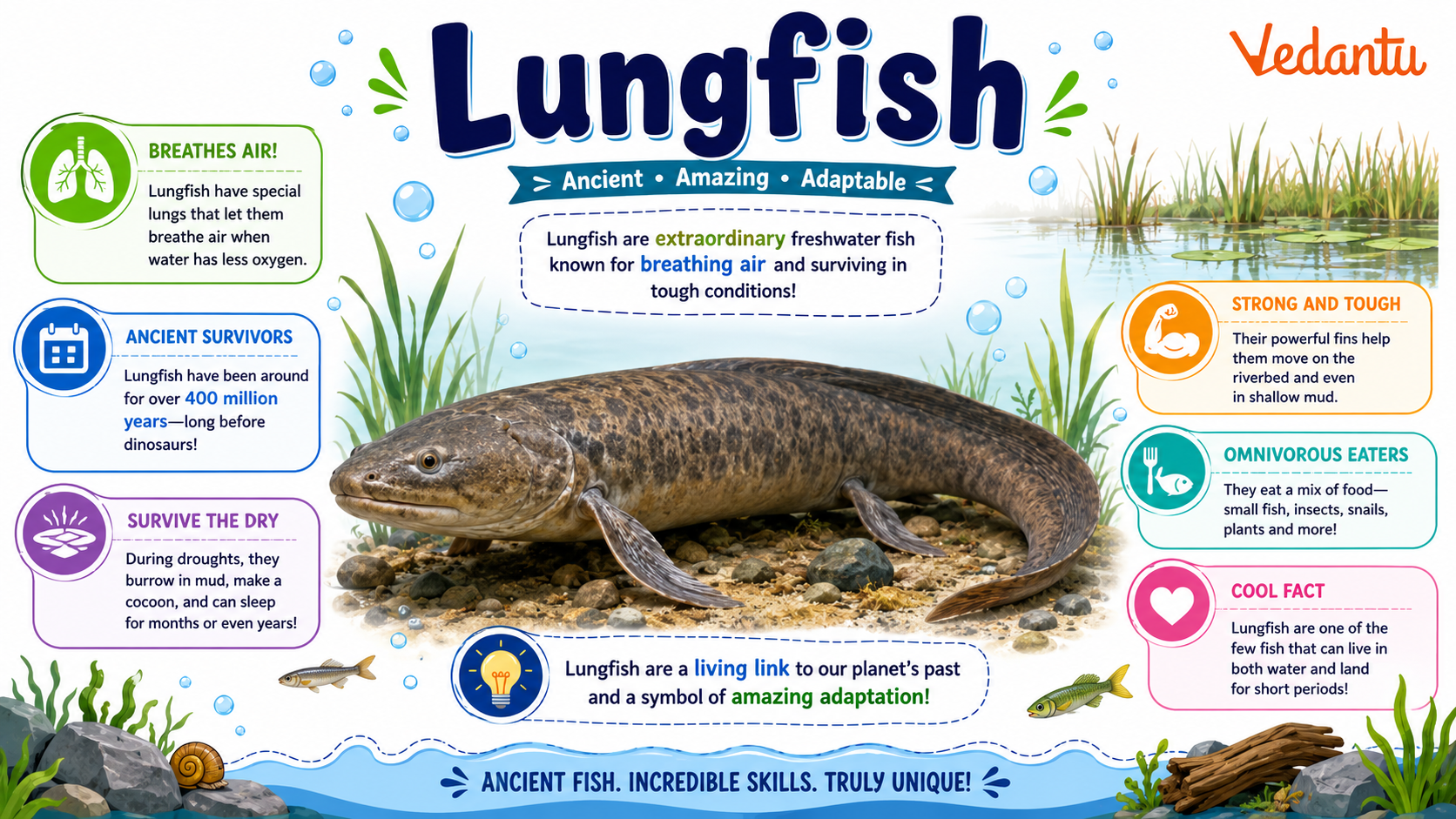
Quick Facts About Lungfish
| Feature | Details |
|---|---|
| Common Name | Lungfish |
| Scientific Group | Dipnoi |
| Animal Group | Fish (Sarcopterygii – Lobe-finned fish) |
| Length | Up to 2 meters (varies by species) |
| Lifespan | 20–100 years (some live very long) |
| Habitat | Freshwater rivers, lakes, swamps |
| Diet | Worms, insects, crustaceans, small fish |
| Special Feature | Can breathe air using lungs |
| Found In | Africa, South America, Australia |
Appearance and Physical Characteristics
- Long, eel-like body.
- Smooth scales and slimy skin.
- Fleshy, lobed fins that look like small limbs.
- One or two functional lungs for breathing air.
- Strong teeth plates for crushing food.
Lungfish Habitat and Distribution
The Lungfish habitat mainly includes freshwater environments where water levels may change during the year.
- Rivers and floodplains
- Swamps and marshes
- Shallow lakes and ponds
Where Are Lungfish Found?
- African Lungfish – Central and East Africa
- South American Lungfish – Amazon and Paraguay basins
- Australian Lungfish – Rivers in Queensland
Diet and Feeding Habits
The Lungfish diet mostly includes small aquatic animals. They are mainly carnivorous.
Behaviour and Lifestyle
- Mostly slow-moving and bottom-dwelling.
- Can breathe through gills and lungs.
- Comes to the surface to gulp air.
- Some species become inactive during drought.
Lungfish Life Cycle
- Egg Stage: Females lay eggs in water nests or vegetation.
- Larva Stage: Young ones have external gills like tadpoles.
- Juvenile Stage: Gradually develop lungs.
- Adult Stage: Fully developed lungs and strong fins.
The Lungfish life cycle shows how they share features with both fish and early land animals.
What Makes Lungfish Special?
Types of Lungfish
- 4 African species
- 1 South American species
- 1 Australian species
Importance and Role in Nature
Amazing Lungfish Facts
- Lungfish have existed for more than 400 million years.
- They can survive in dry mud for years.
- Some species must breathe air regularly or they drown.
- The Australian Lungfish has only one lung.
- African Lungfish have two lungs.
- They are sometimes called “living fossils.”
Interesting Facts About Lungfish
Fun Facts for Kids
- Lungfish can “sleep” inside mud during dry seasons.
- They have both gills and lungs.
- They are older than dinosaurs!
- They can live for many decades.
- They help scientists understand how animals moved to land.
FAQs on Lungfish: The Ancient Fish That Breathes Air
1. What is a lungfish?
A lungfish is a special type of freshwater fish that can breathe air using lungs as well as gills.
- Belongs to the group called lobe-finned fish
- Lives in rivers, lakes, and swamps
- Can survive in low-oxygen water
- Often called a “living fossil” because it has existed for millions of years
2. How do lungfish breathe?
A lungfish breathes using both gills and lungs, making it unique among fish.
- Uses gills to breathe underwater
- Uses lungs to breathe air at the surface
- Can gulp air when water oxygen levels are low
- African lungfish rely mostly on lungs as adults
3. Where do lungfish live?
Lungfish live in freshwater habitats in certain parts of the world.
- Found in Africa, South America, and Australia
- Prefer slow-moving rivers, lakes, and swamps
- Often live in muddy or seasonal waters
4. Can lungfish survive out of water?
Yes, some lungfish can survive out of water for months or even years during droughts.
- Bury themselves in mud
- Form a protective mucus cocoon
- Slow down body functions in a state called aestivation
5. What do lungfish eat?
Lungfish are carnivorous animals that eat small aquatic creatures.
- Feed on insects and insect larvae
- Eat small fish
- Consume crustaceans and snails
- Sometimes eat plant material
6. Why are lungfish called living fossils?
Lungfish are called living fossils because they have changed very little over millions of years.
- First appeared about 400 million years ago
- Existed during the Age of Dinosaurs
- Still have ancient features like lobe-shaped fins
7. How are lungfish related to land animals?
Lungfish are closely related to the ancestors of amphibians, reptiles, birds, and mammals.
- Belong to the group of lobe-finned vertebrates
- Have lungs similar to early land animals
- Share genetic traits with tetrapods (four-limbed animals)
8. How many species of lungfish are there?
There are six living species of lungfish in the world today.
- Four species in Africa
- One species in South America
- One species in Australia
9. How big can a lungfish grow?
Lungfish can grow quite large compared to many freshwater fish.
- African lungfish can reach up to 2 meters (6.5 feet)
- Australian lungfish can weigh over 40 kilograms (88 pounds)
- They have long, eel-like bodies
10. Are lungfish endangered?
Some lungfish species are threatened due to environmental changes and human activity.
- Habitat loss from pollution and dam building
- Overfishing in certain regions
- Climate change affecting freshwater ecosystems
