






How to Identify a Long Horned Grasshopper, Its Habitat, Diet, and Life Cycle
The Long Horned Grasshopper is a fascinating insect known for its extra-long antennae and musical chirping sounds. Often found in fields, gardens, and forests, these insects are closely related to crickets and katydids. Their unique body structure and strong hind legs make them expert jumpers. In this page, explore amazing Long Horned Grasshopper facts, habitat, diet, characteristics, life cycle, and importance in nature in a fun and easy way.
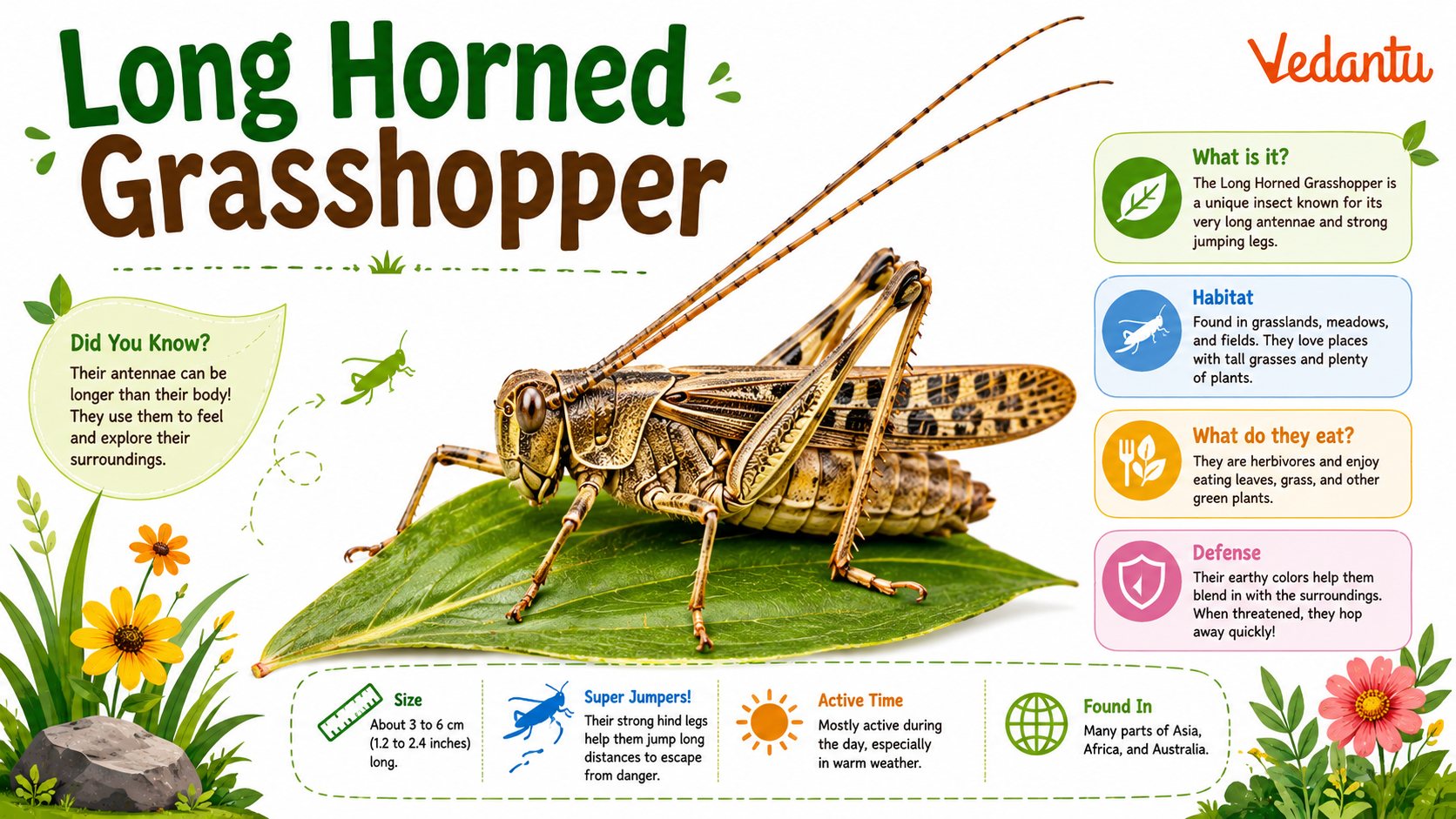
Quick Facts and Statistics
| Feature | Details |
|---|---|
| Common Name | Long Horned Grasshopper |
| Scientific Family | Tettigoniidae |
| Animal Group | Insect |
| Size | 2 to 6 cm long (varies by species) |
| Habitat | Grasslands, forests, bushes, gardens |
| Diet | Leaves, flowers, small insects |
| Movement | Jumping and short flights |
| Special Feature | Antennae longer than body |
| Life Cycle | Egg → Nymph → Adult |
Appearance and Physical Characteristics
- Slender, leaf-like body shape.
- Very long antennae, often longer than its entire body.
- Strong and muscular hind legs for jumping.
- Two pairs of wings (some species have shorter wings).
- Usually green or brown for camouflage.
Habitat and Distribution
The Long Horned Grasshopper habitat includes warm and green areas where plants grow well.
- Grasslands and meadows
- Forests and bushes
- Farms and crop fields
- Home gardens
Diet and Feeding Habits
The Long Horned Grasshopper diet is mostly plant-based, but some species also eat small insects.
Eats leaves, grass, flowers, and soft plant parts.
May eat small insects or larvae for extra nutrients.
Uses chewing mouthparts to bite and grind food.
Acts as prey for birds, reptiles, frogs, and spiders.
Behaviour and Lifestyle
- Mostly active at night (nocturnal).
- Communicate using chirping sounds.
- Males rub their wings together to produce sound.
- Use camouflage to hide from predators.
- Jump quickly when threatened.
Sound or Call
Long Horned Grasshoppers make chirping or buzzing sounds. This sound is mainly used by males to attract females during the breeding season.
Life Cycle of Long Horned Grasshopper
- Egg Stage: Female lays eggs in soil or plant stems.
- Nymph Stage: Young nymphs hatch and look like small adults without wings.
- Molting: Nymph sheds its outer skin several times as it grows.
- Adult Stage: Develops full wings and can reproduce.
What Makes Long Horned Grasshoppers Special?
Importance and Role in Nature
Amazing Facts About Long Horned Grasshopper
- There are over 6,000 species in the Tettigoniidae family.
- Their antennae can be two to three times their body length.
- Some species can glide short distances.
- They can hear using special organs on their front legs.
- They are closely related to crickets.
- Most species are green to blend with plants.
Fun Facts for Kids
FAQs on Long Horned Grasshopper: Complete Guide to Features and Behavior
1. What is a Long Horned Grasshopper?
A Long Horned Grasshopper is an insect known for its very long antennae and strong jumping legs.
- Belongs to the family Tettigoniidae
- Also called a katydid or bush cricket
- Has antennae longer than its body
- Common in gardens, forests, and grasslands
2. Why is it called a Long Horned Grasshopper?
It is called a Long Horned Grasshopper because of its extremely long antennae that look like horns.
- Antennae can be longer than the insect’s body
- Used for sensing touch, smell, and vibrations
- Helps them find food and detect danger
3. Where do Long Horned Grasshoppers live?
Long Horned Grasshoppers live in warm and grassy environments around the world.
- Found in gardens, meadows, and forests
- Prefer areas with tall grass and bushes
- Most active in warm seasons like summer
4. What do Long Horned Grasshoppers eat?
Long Horned Grasshoppers mostly eat plants but some species also eat small insects.
- Leaves and grass
- Flowers and fruits
- Small insects (in some species)
5. How do Long Horned Grasshoppers make sound?
Long Horned Grasshoppers make sound by rubbing their wings together, a process called stridulation.
- Males produce sounds to attract females
- Each species has a unique chirping pattern
- Commonly heard at night
6. How are Long Horned Grasshoppers different from short-horned grasshoppers?
Long Horned Grasshoppers differ mainly in antenna length and behavior.
- Long antennae (longer than body)
- Usually active at night (nocturnal)
- Often green and leaf-like for camouflage
7. Are Long Horned Grasshoppers harmful to humans?
Long Horned Grasshoppers are generally harmless to humans.
- Do not bite or sting people
- May damage garden plants in large numbers
- Important part of the food chain
8. How long do Long Horned Grasshoppers live?
A Long Horned Grasshopper usually lives for about one year.
- Egg stage during winter
- Nymph stage in spring
- Adult stage in summer and early fall
9. What are some interesting facts about Long Horned Grasshoppers?
Long Horned Grasshoppers have many fascinating features that help them survive.
- Excellent camouflage that looks like leaves
- Strong hind legs for powerful jumping
- Some species can fly short distances
- Mostly active at night
10. How do Long Horned Grasshoppers protect themselves?
Long Horned Grasshoppers protect themselves using camouflage and quick movements.
- Blend into leaves and grass
- Jump away quickly when threatened
- Some may produce warning sounds
