






Why Are Lionfish Invasive and How Do They Impact Coral Reefs?
The lionfish is one of the most eye-catching creatures in the ocean. With its long, flowing spines and bold red-and-white stripes, it looks like an underwater firework! But don’t be fooled by its beauty—this fish has venomous spines for protection. Found in warm seas, the lionfish is both admired and studied for its unique features, hunting style, and impact on marine ecosystems. Let’s explore fascinating lionfish facts, habitat, diet, and special characteristics.
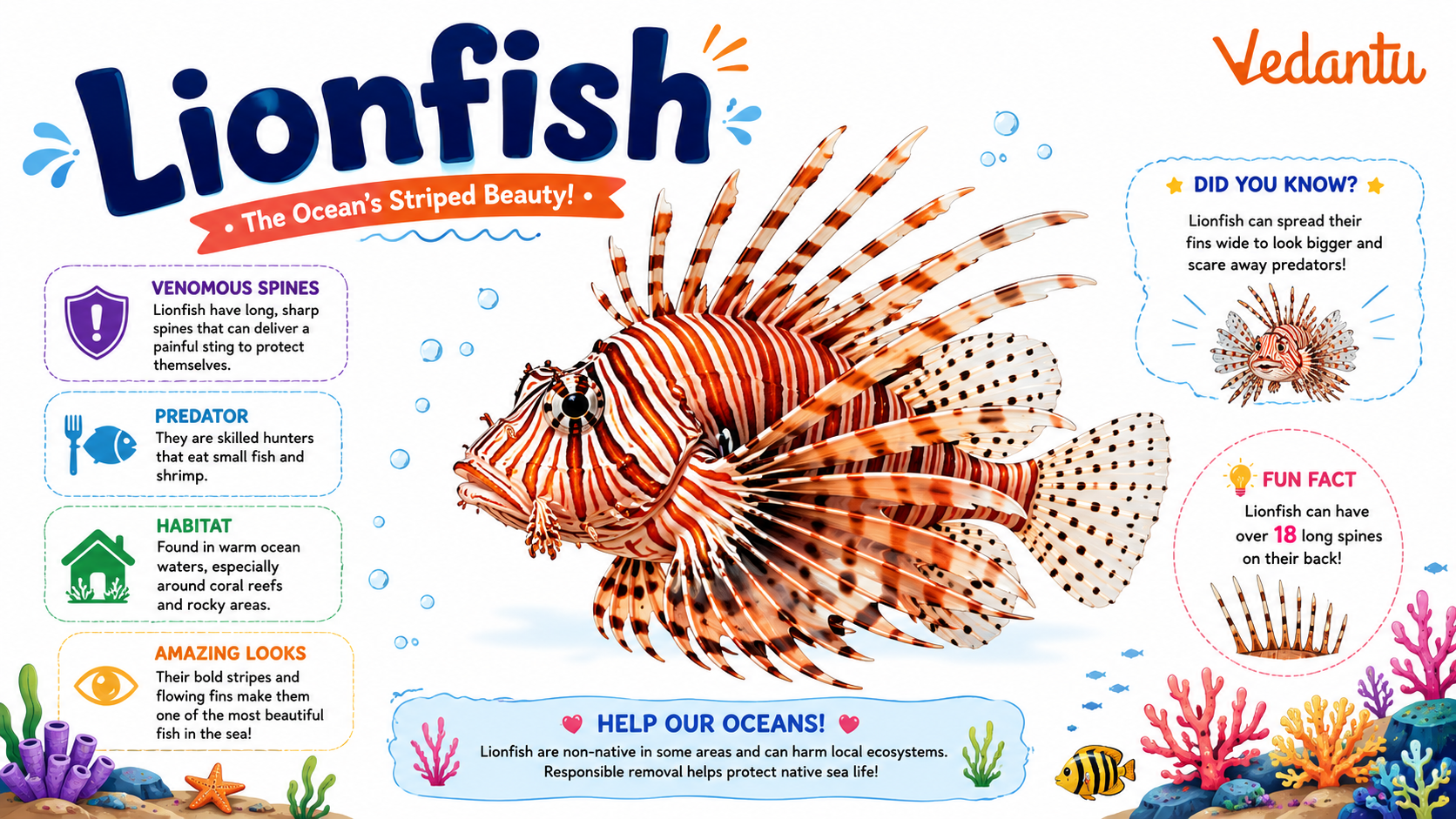
Quick Facts About Lionfish
| Feature | Details |
|---|---|
| Common Name | Lionfish |
| Scientific Name | Pterois |
| Animal Group | Fish (Marine) |
| Size | Up to 30–38 cm |
| Lifespan | Up to 10–15 years |
| Habitat | Coral reefs, rocky crevices, lagoons |
| Diet | Small fish, shrimp, crabs |
| Special Feature | Venom-filled spines |
Appearance and Physical Characteristics
- Bright red, white, and brown vertical stripes.
- Long, fan-like pectoral fins that look like wings.
- Sharp dorsal spines containing venom.
- Zebra-like pattern helps in camouflage among corals.
- Large mouth to swallow prey quickly.
Lionfish Habitat and Distribution
- Prefer warm, tropical waters.
- Live near coral reefs and rocky bottoms.
- Found at depths from shallow waters to over 300 feet.
- Hide in caves and crevices during the day.
Diet and Feeding Habits
- Carnivorous fish.
- Eat small fish, shrimp, and crabs.
- Use their wide fins to corner prey.
- Swallow prey whole in one quick gulp.
Behaviour and Lifestyle
- Mostly solitary hunters.
- More active during evening and night.
- Slow swimmers but very precise hunters.
- Use venomous spines only for defence.
Lionfish Life Cycle
- Egg Stage: Females release thousands of eggs into the water.
- Larva Stage: Eggs float and hatch into tiny larvae.
- Juvenile Stage: Young lionfish grow stripes and spines.
- Adult Stage: Fully developed venomous spines and hunting skills.
What Makes Lionfish Special?
Importance and Role in Nature
Amazing Lionfish Facts
- Each lionfish has up to 18 venomous spines.
- They can survive in different water depths.
- Their venom is rarely fatal to humans but very painful.
- They reproduce quickly and lay thousands of eggs.
- Predators avoid them because of warning colours.
- They are popular in aquariums due to their beauty.
Fun Facts for Kids
FAQs on Lionfish: Fascinating Facts, Habitat, and Behavior
1. What is a lionfish?
A lionfish is a colorful marine fish known for its long, venomous spines and striped body.
- Belongs to the Pterois genus
- Native to the Indo-Pacific Ocean
- Recognized by red, white, and brown zebra-like stripes
- Has long, fan-like pectoral fins
- Often searched as: venomous reef fish, striped ocean fish, exotic aquarium fish
2. Why are lionfish considered invasive species?
Lionfish are called invasive species because they spread quickly and harm local marine ecosystems.
- Found in the Atlantic Ocean and Caribbean Sea where they are not native
- Have very few natural predators
- Eat many small reef fish and shrimp
- Reproduce rapidly, laying thousands of eggs
- Often searched as: lionfish invasion, Atlantic lionfish problem
3. Are lionfish dangerous to humans?
Lionfish can sting humans, but they are not aggressive predators toward people.
- Have venomous spines on their fins
- A sting can cause pain, swelling, and redness
- They sting only when touched or threatened
- Safe to observe while scuba diving if not handled
- Related searches: lionfish sting symptoms, are lionfish poisonous?
4. What do lionfish eat?
Lionfish are carnivores that eat small fish and crustaceans in coral reef habitats.
- Feed on small reef fish
- Eat shrimp and crabs
- Use their wide fins to trap prey
- Can reduce biodiversity in coral reefs
- People also ask: what predators eat lionfish?
5. Where do lionfish live?
Lionfish live in warm ocean waters, especially around coral reefs.
- Native to the Indian Ocean and Pacific Ocean
- Now common in the Caribbean and Gulf of Mexico
- Prefer coral reefs, rocky areas, and mangroves
- Can live in both shallow and deep waters
- Also searched as: lionfish habitat, reef fish locations
6. How do lionfish reproduce?
Lionfish reproduce quickly, which helps them spread fast in new environments.
- Females release thousands of eggs every few days
- Eggs float in the ocean currents
- Young lionfish grow rapidly
- High reproduction rate makes them hard to control
- Common query: how fast do lionfish multiply?
7. Do lionfish have any natural predators?
Lionfish have very few natural predators outside their native habitat.
- Larger fish like groupers may eat them
- Sharks sometimes prey on lionfish
- In the Atlantic, predators rarely recognize them as food
- This lack of predators increases their population
- People also search: what eats lionfish?
8. Can humans eat lionfish?
Yes, lionfish are safe and tasty to eat once the venomous spines are removed.
- The meat is white and flaky
- Venom is only in the spines, not the flesh
- Promoted as a way to control invasive populations
- Served in many Caribbean restaurants
- Related searches: is lionfish edible?, lionfish recipes
9. Why are lionfish important to coral reefs?
Lionfish impact coral reefs by changing the balance of marine life.
- Eat young fish that keep reefs healthy
- Reduce populations of herbivorous fish
- Can harm overall reef biodiversity
- Scientists study them to protect ocean ecosystems
- Also asked: how do lionfish affect coral reefs?
10. How can we control the lionfish population?
Lionfish populations are controlled mainly through human efforts and fishing programs.
- Organized lionfish hunting events
- Encouraging people to eat lionfish
- Training divers to safely remove them
- Marine conservation programs monitor spread
- People also ask: how to stop lionfish invasion?
