






What Is a Lapwing? Identification, Diet, Habitat and Fun Facts
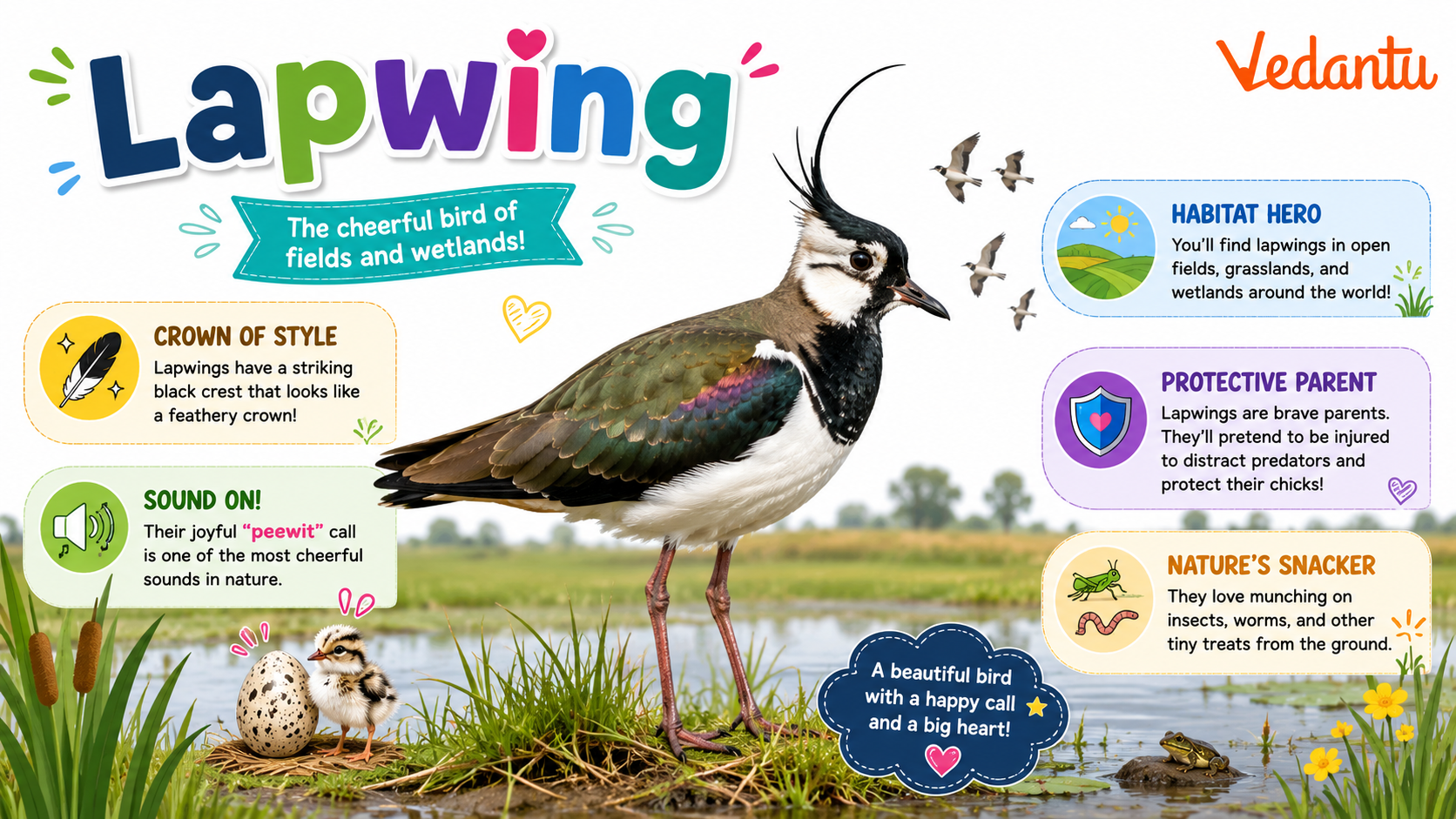
Quick Facts About Lapwing
| Feature | Details |
|---|---|
| Common Name | Lapwing |
| Scientific Name | Vanellus vanellus (Northern Lapwing) |
| Animal Group | Bird |
| Size | 28–31 cm long |
| Wingspan | 67–72 cm |
| Weight | 130–330 grams |
| Habitat | Wetlands, grasslands, farmlands |
| Diet | Insects, worms, larvae |
| Lifespan | Up to 10 years |
| Conservation Status | Near Threatened (in some regions) |
Appearance and Physical Characteristics
- Medium-sized bird with a rounded body.
- Glossy black head and chest with a white belly.
- Greenish-purple shine on the back and wings.
- Long, thin legs perfect for walking on ground.
- Distinctive thin crest (feather tuft) on the head.
- Broad, rounded wings for slow, graceful flight.
Habitat and Distribution
- Commonly found in Europe and parts of Asia.
- Lives in wetlands, marshes, riverbanks, and open fields.
- Often seen in agricultural lands and meadows.
- Prefers flat, open areas where it can easily spot predators.
The Lapwing habitat usually includes damp grasslands and muddy grounds where food is easy to find. Some lapwings migrate to warmer regions during winter.
Diet and Feeding Habits
What Does a Lapwing Eat?
The Lapwing diet mainly consists of small invertebrates, making it an important bird for controlling insect populations.
Behaviour and Lifestyle
- Very protective and fearless near its nest.
- Makes loud alarm calls to warn others.
- Performs dramatic flight displays to scare predators.
- Often seen in small groups outside breeding season.
- Active during the day (diurnal bird).
Lapwings are famous for pretending to have a broken wing to distract predators away from their eggs. This clever trick protects their young.
Life Cycle and Reproduction
- Nesting: Builds a simple nest on the ground using grass and small twigs.
- Eggs: Lays about 3–4 speckled eggs that blend with the soil.
- Incubation: Both parents take turns incubating for about 26–30 days.
- Chicks: Chicks can walk and feed themselves soon after hatching.
- Adult Stage: Grow feathers and learn to fly within a few weeks.
The Lapwing life cycle shows strong parental care and smart survival strategies.
Flight Adaptations
- Broad and rounded wings help in slow, controlled flight.
- Strong chest muscles power long-distance migration.
- Lightweight bones reduce body weight.
- Wide wings allow quick turns while escaping predators.
Sound or Call
The lapwing makes a loud “pee-wit” or “kleep-kleep” sound. These calls are:
- Used to warn others of danger.
- Commonly heard during breeding season.
- Helpful in protecting nests.
What Makes Lapwing Special?
Importance and Role in Nature
Amazing Facts About Lapwing
- Lapwings can migrate thousands of kilometres.
- Their eggs are perfectly camouflaged on bare ground.
- They perform tumbling flight displays in the sky.
- Both male and female share parenting duties.
- Chicks leave the nest within hours of hatching.
- Their loud calls can be heard from far distances.
Fun Facts for Kids
FAQs on Lapwing Bird: Complete Guide to Facts, Habitat and Behavior
1. What is a Lapwing?
Lapwing is a medium-sized wading bird known for its beautiful crest and loud call.
- Belongs to the plover family (Charadriidae)
- Scientific name: Vanellus vanellus (Northern Lapwing)
- Famous for its shiny green feathers and floppy crest
- Often seen in wetlands, grasslands, and farmlands
2. Where do Lapwings live?
Lapwings live in open landscapes near water and grassy areas.
- Found in Europe, Asia, and parts of North Africa
- Prefer wetlands, marshes, meadows, and farmland
- Migrate to warmer regions during winter
- Build nests directly on the ground
3. What does a Lapwing look like?
Lapwings are striking birds with colorful feathers and a unique crest.
- Glossy green and purple back
- White belly with a black chest
- Long legs and broad wings
- Thin, curved crest on the head
4. What do Lapwings eat?
Lapwings mainly eat insects and small invertebrates.
- Earthworms
- Beetles and flies
- Spiders
- Small seeds
5. Why is the Lapwing called “Peewit”?
The Lapwing is nicknamed “Peewit” because of its loud, high-pitched call.
- Makes a sound like “pee-wit” or “kwee-vit”
- Calls loudly during flight
- Uses calls to warn others of danger
- Common in spring breeding season
6. How do Lapwings protect their nests?
Lapwings protect their nests by distracting predators.
- Perform dramatic fake injury displays
- Fly noisily around intruders
- Dive toward predators to scare them
- Build simple nests hidden in grass
7. Are Lapwings migratory birds?
Yes, many Lapwings migrate to warmer places in winter.
- Breed in northern Europe and Asia
- Travel to southern Europe and North Africa in cold months
- Some stay year-round in milder climates
- Migrate in large flocks
8. Are Lapwings endangered?
Lapwing populations are declining in some regions.
- Listed as Near Threatened in parts of Europe
- Habitat loss from farming and drainage
- Climate change affects breeding areas
- Conservation efforts protect wetlands
9. How do Lapwings build their nests?
Lapwings build simple nests on the ground.
- Scrape a small hollow in soil
- Line it with grass and leaves
- Lay about 3–4 speckled eggs
- Both parents guard the nest
10. Why are Lapwings important to nature?
Lapwings help maintain healthy ecosystems.
- Control insect populations
- Serve as indicators of wetland health
- Provide food for larger predators
- Support biodiversity in grasslands
