






What Do Ibis Birds Eat, Where Do They Live, and Why Are They Important?
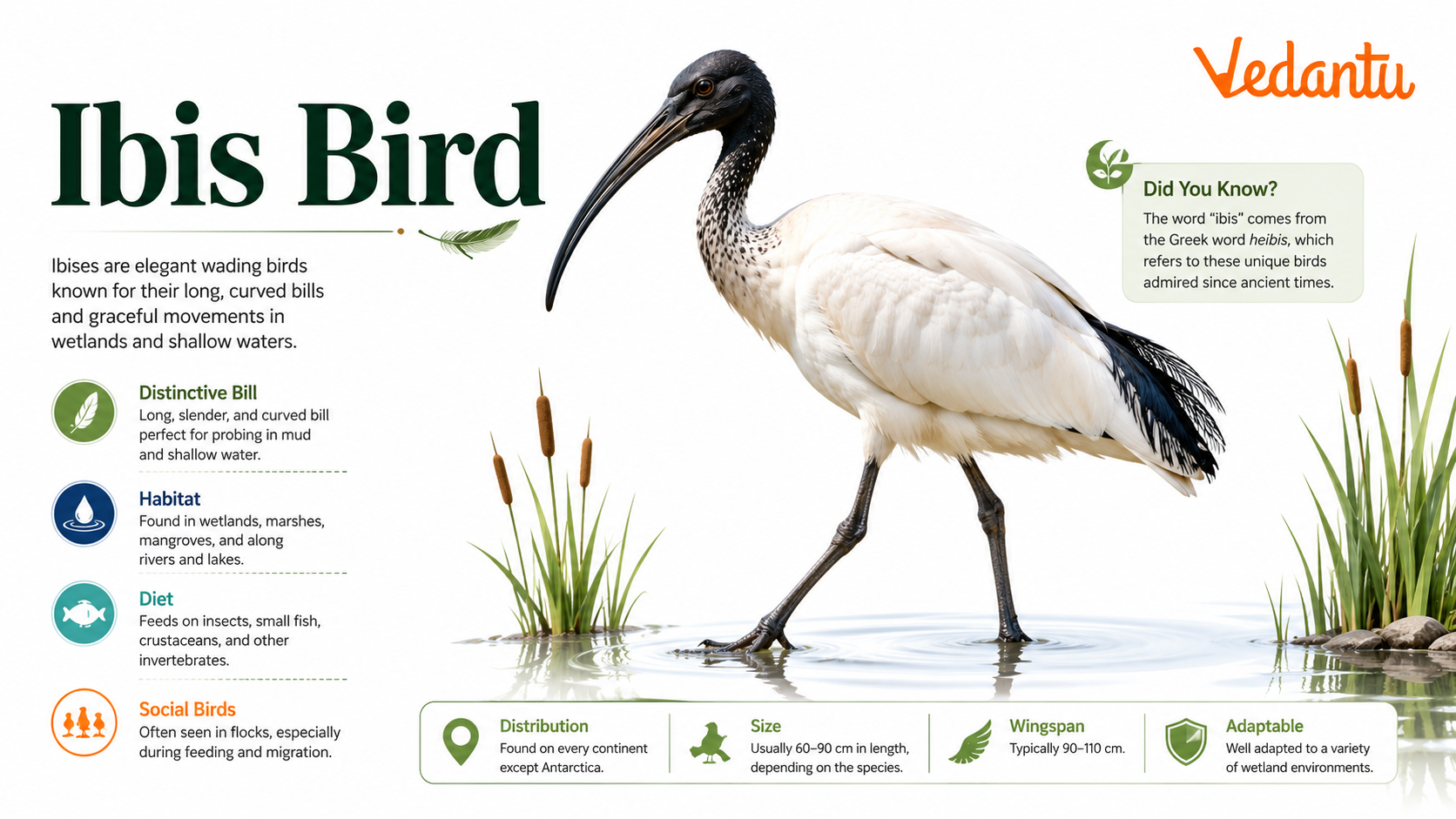
The Ibis bird is a fascinating water bird known for its long legs and curved beak. Found near rivers, lakes, and wetlands, this elegant bird uses its special bill to search for food in shallow water. There are many types of ibises around the world, and each has unique colours and habits. Let us explore interesting Ibis bird facts, their habitat, diet, life cycle, and why they are important in nature.
Quick Facts About Ibis Bird
| Feature | Details |
|---|---|
| Common Name | Ibis |
| Scientific Family | Threskiornithidae |
| Animal Group | Bird |
| Size | 55 – 75 cm long (varies by species) |
| Wingspan | 95 – 105 cm |
| Diet | Insects, fish, frogs, crustaceans |
| Habitat | Wetlands, marshes, rivers, lakes |
| Lifespan | 15 – 20 years (in the wild) |
| Conservation Status | Mostly Least Concern (varies by species) |
Appearance and Physical Characteristics
- Long, thin legs that help it walk in shallow water.
- A long, downward-curved beak used to dig in mud for food.
- Slender body with a long neck.
- Feather colours vary: white, black, brown, or glossy green.
- Strong, broad wings for smooth flight.
Ibis Habitat and Distribution
The Ibis habitat mainly includes wetlands and water-rich areas. These birds prefer places where they can easily find food in soft mud or shallow water.
- Marshes and swamps
- Riverbanks and lakesides
- Coastal lagoons
- Flooded fields and grasslands
Ibises are found in Africa, Asia, Australia, Europe, and the Americas. Different species live in different climates, from tropical regions to warm temperate zones.
Diet and Feeding Habits
What Does an Ibis Eat?
The ibis slowly walks through water and uses its curved beak to probe into mud. It can feel prey with its sensitive bill even without seeing it clearly.
Behaviour and Lifestyle
- Ibises are usually social birds and live in colonies.
- They often feed in groups.
- Most species are active during the day (diurnal).
- They fly in straight lines or V-shaped formations.
- During breeding season, they build nests in trees or bushes near water.
Ibis Life Cycle
- Egg Stage: Female lays 2–4 eggs in a nest made of sticks.
- Incubation: Both parents take turns keeping the eggs warm for about 3 weeks.
- Chick Stage: Chicks hatch with soft feathers and depend on parents for food.
- Growth: Young birds learn to fly within 4–5 weeks.
- Adult Stage: They grow into mature birds ready to breed.
Flight Adaptations
- Strong flight muscles for long-distance travel.
- Broad wings for smooth gliding.
- Lightweight bones that reduce body weight.
- Neck stretched forward and legs extended backward during flight for balance.
Sound or Call
Ibises are usually quiet birds. They make low croaking or grunting sounds, especially during breeding season or when communicating in colonies.
Types of Ibis Birds
Importance and Role in Nature
Amazing Ibis Bird Facts
- The Scarlet Ibis gets its red colour from the food it eats.
- Some ibises migrate long distances during seasonal changes.
- They can stand on one leg to rest.
- Ibises often nest in large colonies with hundreds of birds.
- Their curved beak is perfectly shaped for probing mud.
- They have excellent balance while walking in water.
Fun Facts for Kids
FAQs on Ibis Bird: Fascinating Facts, Habitat, and Behavior
1. What is an Ibis bird?
An Ibis bird is a long-legged wading bird known for its curved beak and life near water.
- Belongs to the Threskiornithidae family
- Has a long, curved bill for finding food in mud
- Often found in wetlands, rivers, and marshes
- Includes species like the White Ibis and Sacred Ibis
2. Where do Ibis birds live?
Ibis birds live in warm regions near water around the world.
- Common in Africa, Asia, Australia, and the Americas
- Prefer wetlands, swamps, lakes, and coastal areas
- Some species adapt to urban parks and cities
- Build nests in trees near water
3. What do Ibis birds eat?
The Ibis diet mainly includes small animals found in water and mud.
- Insects and insect larvae
- Small fish and frogs
- Crabs and other crustaceans
- Worms and snails
4. Why does an Ibis have a long curved beak?
An Ibis has a long curved beak to easily catch food in shallow water and mud.
- Helps probe deep into soft soil
- Finds hidden prey without seeing it
- Grabs slippery animals like fish and frogs
- Improves survival in wetland habitats
5. What are the different types of Ibis birds?
There are many types of Ibis species found worldwide.
- White Ibis – common in the Americas
- Scarlet Ibis – bright red bird of South America
- Sacred Ibis – important in ancient Egypt
- Glossy Ibis – shiny dark feathers
6. Is the Ibis bird important in history?
Yes, the Sacred Ibis was very important in ancient Egyptian history and culture.
- Linked to the god Thoth
- Symbol of wisdom and knowledge
- Often shown in Egyptian art and carvings
- Some were even mummified
7. How big is an Ibis bird?
An adult Ibis bird is medium-sized with long legs and a long neck.
- Height: about 22–30 inches (55–75 cm)
- Wingspan: around 35–45 inches
- Weight: usually 1–3 pounds
- Males and females look similar
8. How do Ibis birds build their nests?
Ibis birds build simple nests in trees or bushes near water.
- Made from sticks and twigs
- Built in colonies called rookeries
- Usually laid with 2–5 eggs
- Both parents help care for chicks
9. Are Ibis birds endangered?
Most Ibis species are not endangered, but some face environmental threats.
- Habitat loss due to wetland destruction
- Pollution affecting food sources
- Climate change impacting breeding areas
- Conservation programs protect some species
10. How long do Ibis birds live?
Ibis birds can live for many years, especially in safe habitats.
- Average lifespan: 15–20 years in the wild
- May live longer in protected environments
- Life depends on food supply and safety
- Predators include large birds and mammals
