






Where Do Hyenas Live, What Do They Eat, and How Do They Survive?
Hyenas are powerful wild animals known for their strong jaws, unique laughter-like sounds, and important role in keeping nature clean. Often misunderstood, hyenas are not just scavengers — they are skilled hunters too. Found mainly in Africa and parts of Asia, these intelligent mammals live in groups and have fascinating social lives. Let’s explore amazing Hyena facts, their habitat, diet, characteristics, life cycle, and why they are so important in the wild.
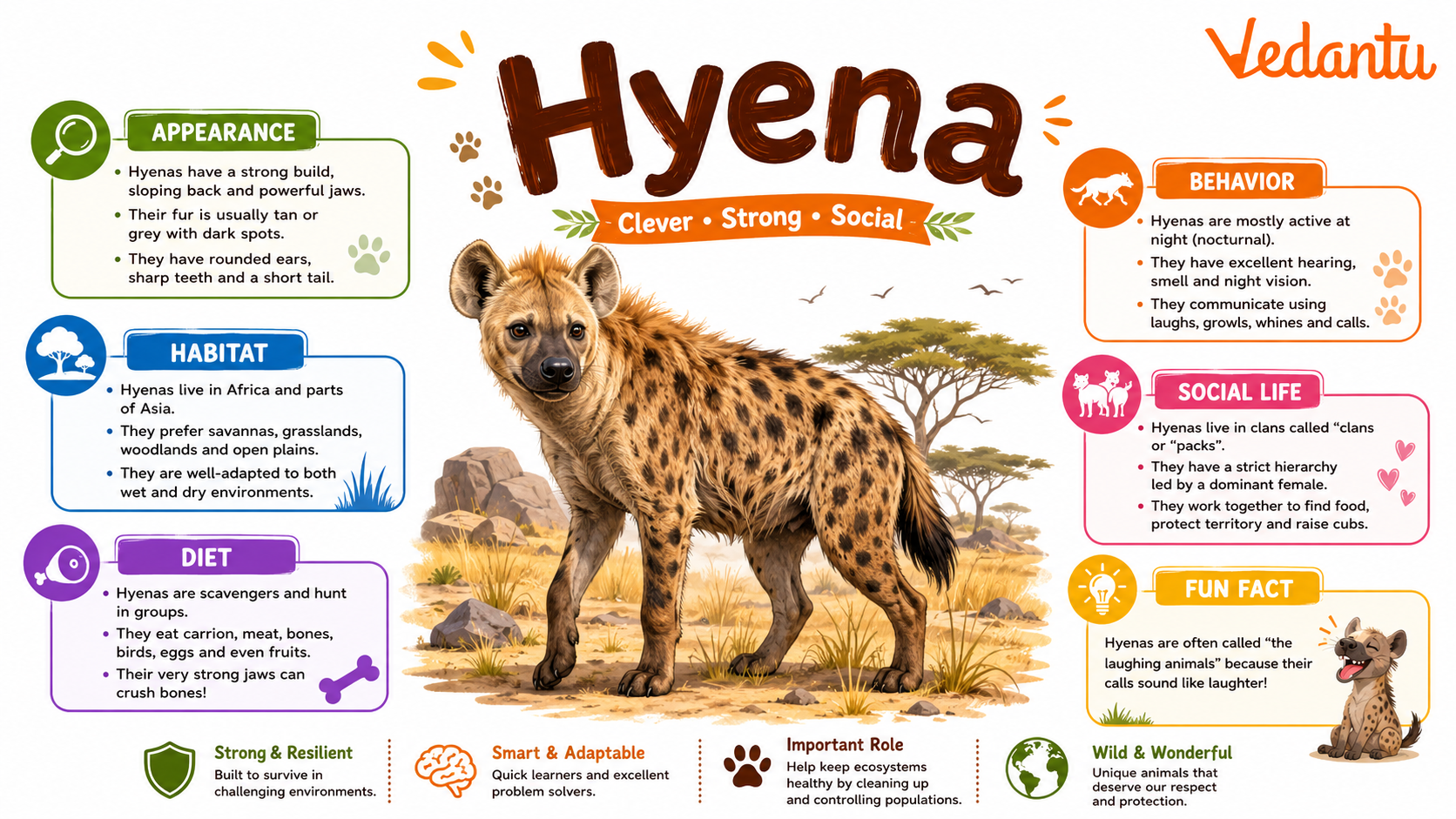
Quick Facts and Statistics
| Feature | Details |
|---|---|
| Common Name | Hyena |
| Scientific Family | Hyaenidae |
| Animal Group | Mammal |
| Average Length | 1 to 1.5 metres |
| Weight | 40 to 80 kg (varies by species) |
| Lifespan | 12–25 years |
| Habitat | Grasslands, savannas, woodlands, deserts |
| Diet | Carnivore (meat-eater) |
| Conservation Status | Varies by species (some Near Threatened) |
Appearance and Physical Characteristics
- Strong, muscular body with a sloping back.
- Front legs longer than back legs.
- Large head with powerful jaws.
- Sharp teeth designed to crush bones.
- Short, rough fur, usually brown, grey, or spotted.
- Rounded ears and bushy tail.
Habitat and Distribution
- Mainly found in Africa.
- Striped hyenas also live in parts of Asia.
- Prefer open grasslands and savannas.
- Can survive in dry deserts and rocky areas.
- Live in dens made in burrows or caves.
Diet and Feeding Habits
- Hyenas are carnivores.
- They hunt animals like antelopes and zebras.
- Also eat leftover meat from other predators.
- Can eat skin, bones, and even hooves.
- Have very strong digestive systems.
Behaviour and Lifestyle
- Live in groups called clans.
- A clan can have up to 80 members.
- Mostly active at night (nocturnal).
- Communicate using whoops, giggles, and growls.
- Very intelligent and cooperative hunters.
Sound or Call
Hyenas are famous for their “laughing” sound. This sound is actually a series of high-pitched giggles used during excitement, fights, or feeding time.
Life Cycle and Reproduction
- Birth: Female hyenas give birth to 1–3 cubs after about 3–4 months of pregnancy.
- Cubs: Born with eyes open and small teeth.
- Growth: Cubs stay in dens for safety and drink mother’s milk.
- Young Adults: Learn hunting and social rules from the clan.
- Adult Stage: Become skilled hunters and active clan members.
Types of Hyenas
Most common and strongest species. Lives in large clans in Africa.
Found in Africa and Asia. Has black stripes on grey fur.
Shaggy brown fur. Mostly scavenger. Found in southern Africa.
Smallest member. Eats mainly termites instead of large animals.
What Makes Hyenas Special?
Importance and Role in Nature
Amazing Hyena Facts
- Hyenas are more closely related to cats than dogs.
- Their jaws can crush thick bones easily.
- They can run up to 60 km/h.
- Each hyena has a unique spot pattern.
- They can hear sounds from far distances.
- Female hyenas are usually larger than males.
- They are very intelligent problem solvers.
Fun Facts for Kids
- Hyenas don’t really laugh — it just sounds like it!
- Baby hyenas are called cubs.
- They live in big families called clans.
- They can eat almost every part of their food.
- They are brave enough to challenge lions sometimes.
FAQs on Hyena: Fascinating Facts About This Powerful Wild Predator
1. What is a hyena?
A hyena is a wild carnivorous mammal known for its strong jaws and loud laughing sound.
- Hyenas belong to the family Hyaenidae.
- They are often found in Africa and parts of Asia.
- They look similar to dogs but are more closely related to cats.
- Common types include the spotted hyena, striped hyena, and brown hyena.
2. Where do hyenas live?
Hyenas mainly live in warm regions of Africa and parts of Asia.
- They are common in savannas and grasslands.
- Some species live in deserts and woodlands.
- They build or use dens to rest and raise their young.
3. What do hyenas eat?
Hyenas are carnivores that eat meat from both hunting and scavenging.
- They hunt animals like zebras, wildebeests, and antelopes.
- They also scavenge leftover meat from other predators like lions.
- Hyenas can crush and digest bones with their powerful jaws.
4. Why do hyenas laugh?
Hyenas "laugh" to communicate with other members of their group.
- The sound is called a whoop or giggle.
- It can show excitement, fear, or submission.
- The spotted hyena is most famous for this laughing sound.
5. Are hyenas dangerous?
Hyenas can be dangerous in the wild, but they usually avoid humans.
- They are strong predators with powerful jaws and sharp teeth.
- Most attacks happen when they feel threatened or hungry.
- They prefer hunting wild animals instead of people.
6. How do hyenas live in groups?
Hyenas live in social groups called clans.
- A clan can have up to 80 members.
- Groups are led by a strong female leader.
- They work together to hunt and protect their territory.
7. How big is a hyena?
A hyena is a medium-to-large carnivorous mammal.
- They can grow up to 4 to 5 feet long.
- Most weigh between 90 to 190 pounds, depending on the species.
- The spotted hyena is the largest type.
8. How long do hyenas live?
Hyenas can live many years, especially in safe environments.
- In the wild, they live about 10 to 20 years.
- In zoos, they may live up to 25 years.
- Life span depends on food, habitat, and safety from predators.
9. Are hyenas related to dogs?
Hyenas look like dogs but are more closely related to cats.
- They belong to the animal family Hyaenidae.
- Dogs belong to the family Canidae.
- Hyenas share some traits with felines (cats).
10. What are the different types of hyenas?
There are four main species of hyenas in the world.
- Spotted hyena – the largest and most social species.
- Striped hyena – known for its stripes and shy behavior.
- Brown hyena – has long shaggy fur.
- Aardwolf – smaller and mainly eats termites.
