






Common House Snakes: How to Identify Species and Stay Safe
House snakes are small, non-venomous snakes often found near human homes, farms, and gardens. They are shy reptiles that help control pests like rats and mice. Many people mistake them for dangerous snakes, but most house snakes are harmless and beneficial. Learning about house snakes facts, habitat, diet, and characteristics helps us understand why they are important for maintaining balance in nature.
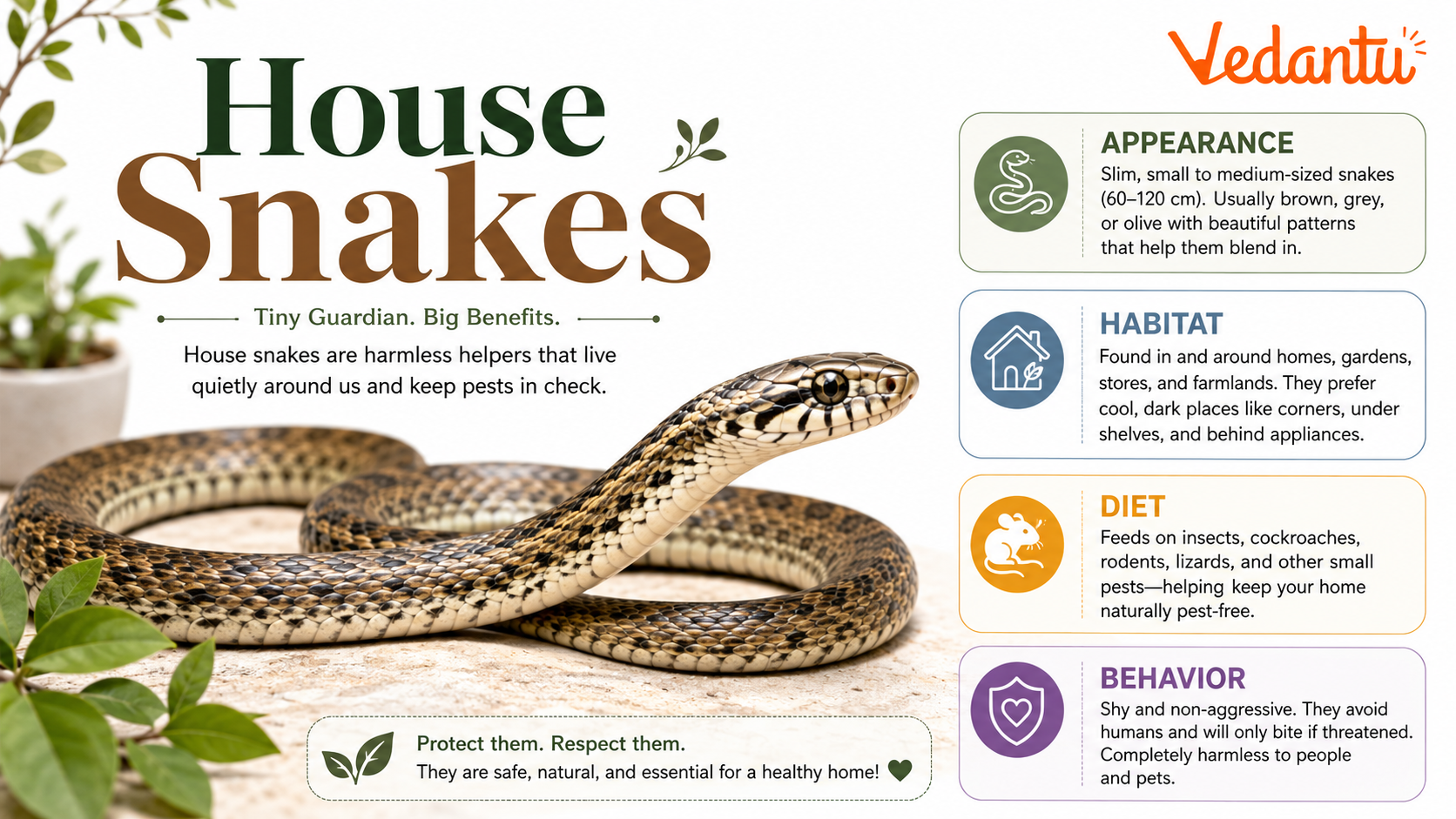
Quick Facts About House Snakes
| Feature | Details |
|---|---|
| Common Name | House Snake |
| Scientific Name | Lamprophis (Boaedon) species |
| Animal Group | Reptile |
| Size | About 60–120 cm long |
| Diet | Rats, mice, small birds, lizards |
| Habitat | Gardens, farms, houses, grasslands |
| Activity | Mostly nocturnal (active at night) |
| Lifespan | Up to 15–20 years (in captivity) |
Appearance and Physical Characteristics
- Slender, smooth body covered with shiny scales.
- Usually brown, grey, or olive in colour.
- Light or cream-coloured belly.
- Round pupils (unlike many venomous snakes).
- Small head that is not very different from the neck.
House Snakes Habitat and Distribution
- Commonly found in Africa and nearby regions.
- Live near human settlements, farms, and villages.
- Prefer warm climates and dry to semi-humid areas.
- Hide in rock crevices, wood piles, roofs, and wall gaps.
The house snakes habitat often overlaps with human homes because these places attract rodents. They do not usually enter houses to harm people but to find food and shelter.
Diet and Feeding Habits
Behaviour and Lifestyle
- Mostly active at night (nocturnal).
- Shy and avoid humans whenever possible.
- Move silently and smoothly.
- Do not show aggressive behaviour unless threatened.
- If scared, they may hiss or try to escape quickly.
House Snakes Life Cycle
- Egg Stage: Female house snakes lay eggs in hidden, warm places.
- Hatching: Baby snakes hatch after several weeks.
- Young Snakes: They are independent from birth.
- Adult Stage: Grow into full size within a few years.
The house snakes life cycle is simple, and they do not care for their young after laying eggs.
What Makes House Snakes Special?
Importance and Role in Nature
- Control rodent populations naturally.
- Protect crops and stored grains from damage.
- Maintain balance in the food chain.
- Serve as prey for larger animals like birds of prey.
Amazing House Snakes Facts
Fun Facts for Kids
- House snakes use their tongue to “taste” the air.
- They do not have eyelids, so their eyes stay open.
- They shed their skin as they grow.
- They can swallow animals bigger than their head!
- They help keep homes free from rats.
FAQs on House Snakes: Identification, Behavior, and Home Facts
1. What are house snakes?
House snakes are small, non-venomous snakes that often live near homes and buildings.
- They belong to the species African House Snake (Boaedon capensis).
- They are common in Africa and warm regions.
- They are harmless to humans and pets.
- They are often kept as pet snakes because they are calm and easy to care for.
2. Are house snakes dangerous to humans?
House snakes are not dangerous because they are non-venomous and rarely bite.
- They do not have harmful venom.
- They usually hide instead of attacking.
- If handled gently, they stay calm.
- Bites are rare and not harmful.
3. What do house snakes eat?
House snakes eat small animals like rodents, which makes them helpful around homes.
- Their main food is mice and small rats.
- Young snakes may eat small lizards.
- Pet house snakes eat frozen-thawed feeder mice.
- They swallow their food whole.
4. Why are they called house snakes?
They are called house snakes because they often live near human houses to find warmth and food.
- Homes provide shelter and hiding spots.
- Rodents near houses attract them.
- They like warm places like roofs or gardens.
- They are commonly found in urban and rural areas.
5. Can house snakes be kept as pets?
Yes, house snakes are popular beginner pet snakes because they are easy to handle and care for.
- They are calm and rarely aggressive.
- They need a simple snake terrarium with heat.
- They eat once every 1–2 weeks.
- They can live up to 15–20 years in captivity.
6. How big do house snakes grow?
House snakes are small to medium-sized snakes that usually grow between 2 to 4 feet long.
- Males are usually smaller than females.
- Females can grow slightly longer and thicker.
- They have slim, smooth bodies.
- Their size makes them easy to keep as pets.
7. Where do house snakes live in the wild?
House snakes live mainly in sub-Saharan Africa in warm and dry environments.
- They are found in grasslands and savannas.
- They hide under rocks or inside buildings.
- They prefer warm climates.
- They are active mostly at night (nocturnal).
8. What do house snakes look like?
House snakes have smooth scales and shiny bodies that can be different colors.
- Common colors include brown, black, or striped patterns.
- They have round pupils.
- Their bodies are slender and flexible.
- Some pet varieties come in special color morphs.
9. How do house snakes protect themselves?
House snakes protect themselves by hiding and staying still instead of attacking.
- They hide in cracks and small spaces.
- They may hiss if scared.
- They try to escape quickly.
- Biting is a last defense.
10. How long do house snakes live?
House snakes can live a long time, especially as pets, often reaching 15–20 years.
- Wild house snakes may live shorter lives.
- Good food and care increase lifespan.
- Proper heating and habitat are important.
- Regular care keeps them healthy.
