






What Makes the Hoopoe Unique? Diet, Nesting Habits, and Cultural Significance
The Hoopoe is one of the most eye-catching birds in the world. Famous for its beautiful fan-shaped crest and unique “hoo-poo” call, this bird is easy to recognise. Hoopoe facts reveal that it is a colourful ground-feeding bird found in warm regions across Europe, Asia, and Africa. With its long curved beak and striking wings, the Hoopoe plays an important role in controlling insects in nature.
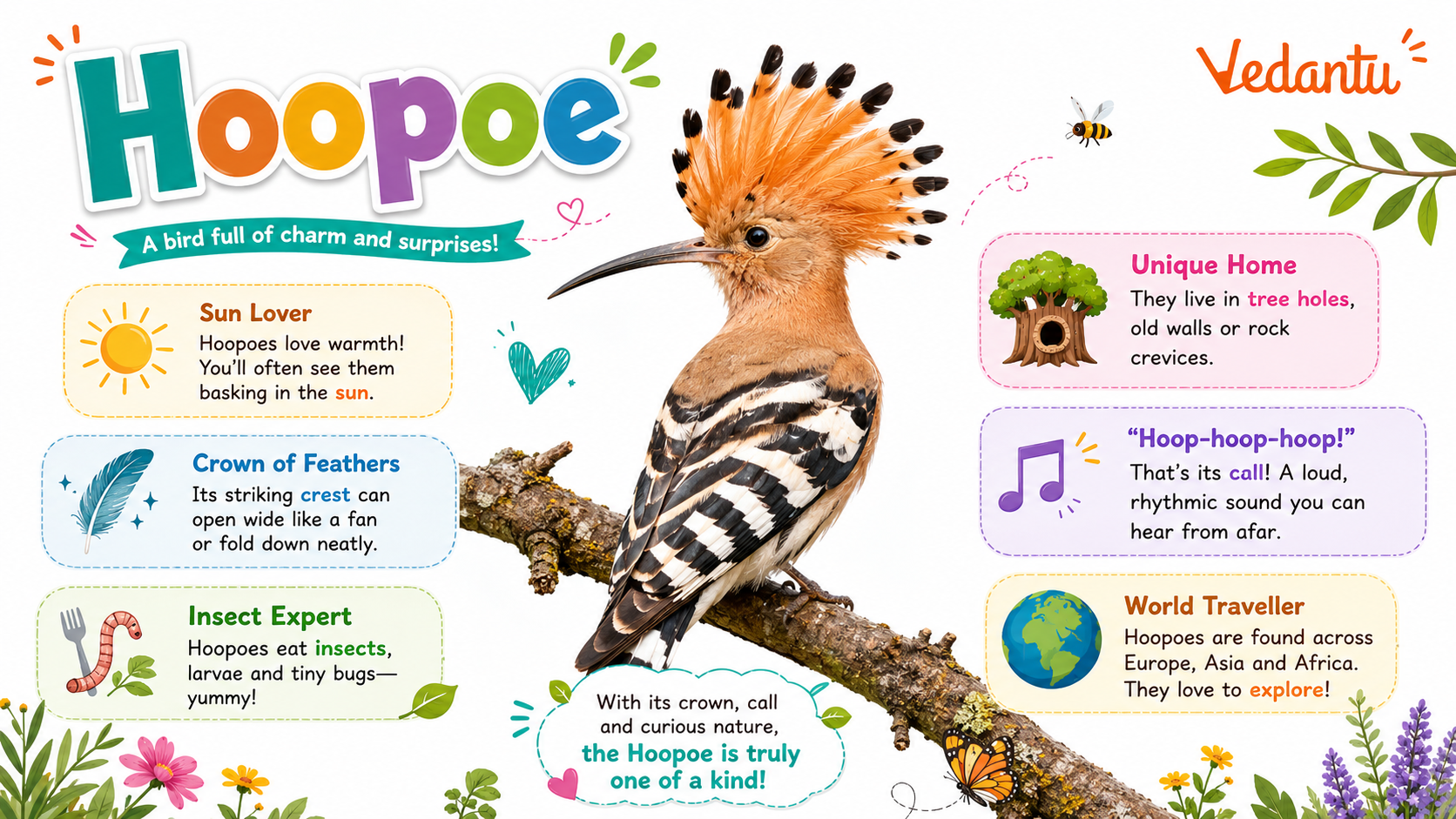
Quick Facts About Hoopoe
| Feature | Details |
|---|---|
| Common Name | Hoopoe |
| Scientific Name | Upupa epops |
| Animal Group | Bird |
| Size | 25–32 cm long |
| Wingspan | 44–48 cm |
| Diet | Insects, larvae, small reptiles |
| Habitat | Open grasslands, farms, woodland edges |
| Lifespan | Up to 10 years |
| Conservation Status | Least Concern |
Appearance and Physical Characteristics
- Crest: Large fan-shaped crown with black tips that opens when excited or alert.
- Colour: Light brown body with bold black-and-white striped wings.
- Beak: Long, thin, and curved downward for digging insects.
- Tail: Short with a white band across it.
- Legs: Strong legs for walking and searching on the ground.
Habitat and Distribution
- Found in Europe, Asia, and Africa.
- Prefers grasslands, farmlands, orchards, and savannas.
- Avoids very dense forests and extremely cold regions.
- Nests in tree holes, wall cracks, or abandoned burrows.
Some Hoopoes migrate during winter to warmer regions, while others stay in the same area all year round.
Diet and Feeding Habits
- Beetles and grasshoppers
- Ants and termites
- Insect larvae and worms
- Small reptiles occasionally
The Hoopoe uses its long beak to probe into soil and cracks. It quickly pulls out insects and sometimes tosses them into the air before swallowing.
Behaviour and Lifestyle
- Mostly solitary or seen in pairs.
- Active during the day (diurnal).
- Walks gracefully on the ground while searching for food.
- Flies in a wavy, butterfly-like pattern.
- Uses its crest and wings for display and defence.
Life Cycle and Reproduction
- Nesting: Female lays 5–8 eggs inside tree holes or cavities.
- Incubation: Eggs hatch after about 15–18 days.
- Chicks: Young birds are fed by parents with insects.
- Fledging: Chicks leave the nest after about 4 weeks.
- Adult Stage: Grow into fully crested, independent birds.
Flight Adaptations
- Broad rounded wings help in short-distance flight.
- Strong chest muscles power flapping motion.
- Lightweight hollow bones reduce body weight.
- Tail helps in balance and direction.
Sound or Call
- Call sounds like “oop-oop-oop”.
- Usually heard during breeding season.
- Used to attract mates and mark territory.
What Makes the Hoopoe Special?
Importance and Role in Nature
Amazing Hoopoe Facts
- The Hoopoe is the national bird of Israel.
- Its scientific name Upupa epops copies its call sound.
- It can spread its crest in less than a second.
- Hoopoe nests can have a strong smell to scare predators.
- Chicks can spray a bad-smelling liquid for defence.
- It has been mentioned in ancient stories and cultures.
Fun Facts for Kids
FAQs on Hoopoe Bird: Fascinating Facts, Behavior, and Natural Habitat
1. What is a Hoopoe?
The Hoopoe is a colorful, medium-sized bird known for its crown-like crest and unique call.
- Scientific name: Upupa epops
- Famous for its orange-brown body and black-and-white striped wings
- Recognized by its fan-shaped feather crest
- Found in Europe, Asia, and Africa
- Popular in birdwatching and wildlife studies
2. Why is the Hoopoe called a crown bird?
The Hoopoe is called a crown bird because of the beautiful crest of feathers on its head.
- The crest opens like a fan when the bird is excited or alarmed
- The feathers are orange with black tips
- This feature makes it easy to identify among garden birds and wild birds
- The crest helps in communication and display
3. Where do Hoopoes live?
Hoopoes live in warm regions across Europe, Asia, and Africa.
- Prefer open woodlands, grasslands, and savannas
- Often seen in gardens, farms, and parks
- Avoid very cold and snowy areas
- Migrate to warmer places during winter
4. What do Hoopoes eat?
Hoopoes mainly eat insects and small invertebrates.
- Feed on beetles, ants, crickets, and grasshoppers
- Use their long, curved beak to dig into soil
- Sometimes eat small reptiles and seeds
- Help farmers by controlling harmful insects
5. How does a Hoopoe build its nest?
Hoopoes build their nests in holes or cavities instead of trees branches.
- Nest inside tree holes, walls, or rocky spaces
- Do not add many nesting materials
- Female lays about 5 to 8 eggs
- Both parents help feed the chicks
6. What sound does a Hoopoe make?
The Hoopoe makes a soft “hoo-poo” sound, which gives it its name.
- Call sounds like “oop-oop-oop”
- Usually repeated several times
- Used to attract mates and mark territory
- Easy to recognize in nature and bird habitats
7. Is the Hoopoe a migratory bird?
Yes, many Hoopoes are migratory birds that travel to warmer regions.
- European Hoopoes migrate to Africa in winter
- Some Asian and African populations stay year-round
- Migration depends on climate and food supply
- Known for long seasonal journeys
8. Why is the Hoopoe important in culture and history?
The Hoopoe has cultural and historical importance in many countries.
- National bird of Israel
- Mentioned in ancient stories and religious texts
- Symbol of wisdom and communication in folklore
- Featured in art and literature
9. How can you identify a Hoopoe?
You can identify a Hoopoe by its bright colors and unique crest.
- Orange-brown body with black and white wings
- Long, thin, curved beak
- Fan-shaped crown feathers
- Distinctive “hoo-poo” call
10. Are Hoopoes endangered?
Hoopoes are not currently endangered but face some environmental threats.
- Listed as Least Concern by conservation groups
- Threatened by habitat loss and pollution
- Pesticides reduce their insect food supply
- Protected in many countries to support bird conservation
