






Where Do Hippopotamuses Live, What Do They Eat, and Why Are They So Dangerous?
The hippopotamus is one of the largest and most fascinating mammals in the world. Known for its huge mouth, thick skin, and love for water, this powerful animal spends most of its time in rivers and lakes. Hippopotamus facts often surprise students because, although they look slow and calm, they are strong swimmers and can run fast on land. Let’s explore the hippopotamus habitat, diet, characteristics, life cycle, and importance in nature.
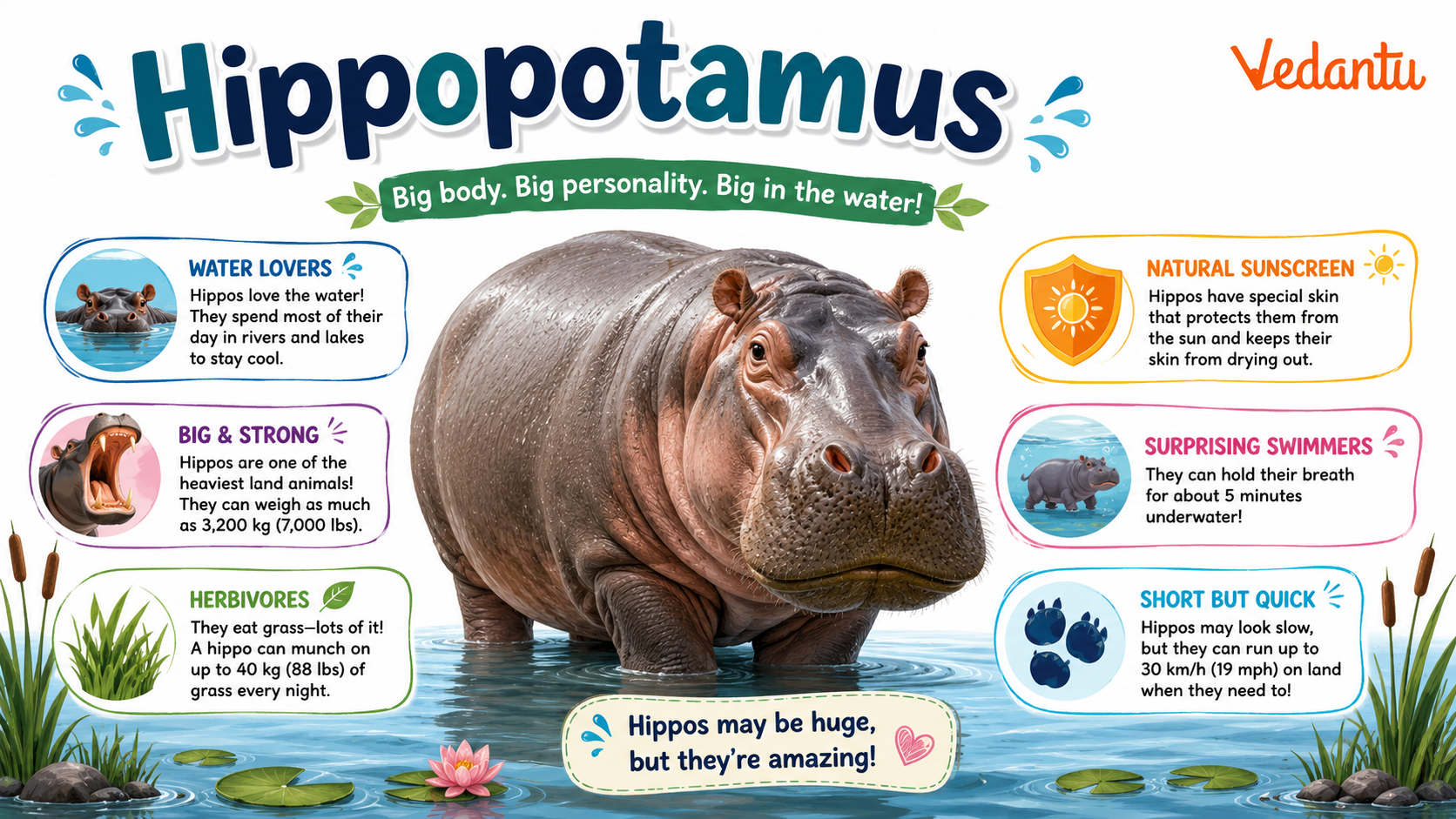
Quick Facts and Statistics
| Feature | Details |
|---|---|
| Common Name | Hippopotamus |
| Scientific Name | Hippopotamus amphibius |
| Animal Group | Mammal |
| Size | Up to 5 meters long |
| Weight | 1,500–3,200 kg |
| Lifespan | 40–50 years |
| Habitat | Rivers, lakes, wetlands |
| Diet | Grass (Herbivore) |
| Conservation Status | Vulnerable |
Appearance and Physical Characteristics
- Huge, barrel-shaped body with short, strong legs.
- Thick, hairless skin that looks grey or brown.
- Very large head with a wide mouth.
- Long canine teeth that can grow up to 50 cm.
- Small eyes, ears, and nostrils placed on top of the head.
Habitat and Distribution
- Found mainly in sub-Saharan Africa.
- Lives in rivers, lakes, and swamps.
- Prefers warm climates with plenty of water.
- Stays in water during the day to keep its body cool.
- Comes out at night to graze on land.
The hippopotamus habitat is closely connected to freshwater sources. Without water, their skin can dry and crack, so they depend on rivers and lakes for survival.
Diet and Feeding Habits
Herbivore – mainly eats short grass.
Mostly feeds at night.
Can eat 30–40 kg of grass in one night.
Uses wide lips to pull and cut grass.
Even though hippos live in water, they do not eat fish. The hippopotamus diet mainly includes grasses found near riverbanks.
Behaviour and Lifestyle
- Live in groups called pods, usually 10–30 members.
- Led by a dominant male.
- Spend up to 16 hours a day in water.
- Communicate through grunts, roars, and splashes.
- Can run up to 30 km/h on land for short distances.
Life Cycle and Reproduction
- Birth: Female gives birth to one calf after about 8 months of pregnancy.
- Calf Stage: Baby hippos can weigh 25–45 kg at birth and can swim soon after.
- Growing Up: Calves stay close to their mothers for protection.
- Adult Stage: Become fully grown in 5–7 years.
What Makes Hippopotamus Special?
Importance and Role in Nature
Amazing Facts About Hippopotamus
- The name “hippopotamus” means “river horse” in Greek.
- They are the third-largest land mammals after elephants and rhinos.
- Despite their size, they float and move easily in water.
- Their skin secretes a red oily substance.
- They are more closely related to whales than to pigs.
- They can sleep underwater and rise automatically to breathe.
Fun Facts for Kids
FAQs on Hippopotamus: Fascinating Facts About This Giant River Mammal
1. What is a hippopotamus?
A hippopotamus, often called a hippo, is a very large, semi-aquatic mammal that lives in Africa.
- The name hippopotamus means “river horse” in Greek.
- It is one of the largest land animals in the world.
- Hippos spend most of their time in rivers, lakes, and swamps.
- They are closely related to whales and dolphins, not pigs.
2. Where do hippos live?
Hippos live in sub-Saharan Africa, mainly near freshwater sources.
- They prefer rivers, lakes, and wetlands.
- Water keeps their skin cool under the hot African sun.
- They rest in water during the day and come out at night.
- Countries like Kenya, Tanzania, and Zambia have large hippo populations.
3. What do hippos eat?
Hippos are herbivores, which means they eat plants.
- Their main food is grass.
- They graze at night for up to 5–6 hours.
- An adult hippo can eat about 35–40 kg of grass in one night.
- They rarely eat meat, even though they have large teeth.
4. How big is a hippopotamus?
A hippopotamus is one of the heaviest land mammals on Earth.
- Adult males can weigh up to 1,500–3,200 kg.
- They can grow about 3.5 to 5 meters long.
- Despite their size, they can run up to 30 km/h on land.
- Only elephants and rhinos are heavier land animals.
5. Are hippos dangerous to humans?
Yes, hippos are considered one of the most dangerous animals in Africa.
- They are very territorial in water.
- They may attack boats or people if they feel threatened.
- Their large canine teeth can cause serious injury.
- It is important to keep a safe distance from wild hippos.
6. Why do hippos stay in water?
Hippos stay in water to keep their bodies cool and protect their skin.
- Their skin can dry out and crack in hot weather.
- Water helps prevent sunburn.
- They release a natural red liquid called “blood sweat” that protects their skin.
- They can hold their breath underwater for about 5 minutes.
7. How long do hippos live?
Hippos can live for several decades in the wild and even longer in zoos.
- In the wild, they live about 40–50 years.
- In captivity, they may live slightly longer.
- Calves stay close to their mothers for protection.
- Female hippos usually give birth to one baby at a time.
8. What are the different types of hippos?
There are two main species of hippopotamus in the world.
- The Common Hippopotamus (Hippopotamus amphibius).
- The Pygmy Hippopotamus (Choeropsis liberiensis).
- Pygmy hippos are smaller and live in West Africa.
- Both species are important to African ecosystems.
9. How do hippos communicate?
Hippos communicate using sounds, body movements, and even underwater signals.
- They make loud grunts, roars, and bellows.
- Sounds can travel through both air and water.
- They open their mouths wide to show dominance.
- Communication helps protect their territory.
10. Are hippos endangered?
Hippos are currently listed as vulnerable, meaning they face threats in the wild.
- Main threats include habitat loss and illegal hunting.
- Water pollution affects their living areas.
- The Pygmy Hippopotamus is more endangered than the common species.
- Conservation programs help protect hippos and their habitats.
