






Himalayan Cat Personality, Grooming Needs, Health Issues, and Lifespan
The Himalayan Cat is a stunning long-haired cat breed known for its sparkling blue eyes, soft fluffy coat, and calm personality. A mix between the Persian and Siamese breeds, this cat combines beauty with a gentle temperament. Popular as a family pet, the Himalayan Cat is loved for its relaxed nature and attractive colour patterns. Let’s explore Himalayan Cat facts, characteristics, habitat, diet, life cycle, and why this adorable cat is so special.
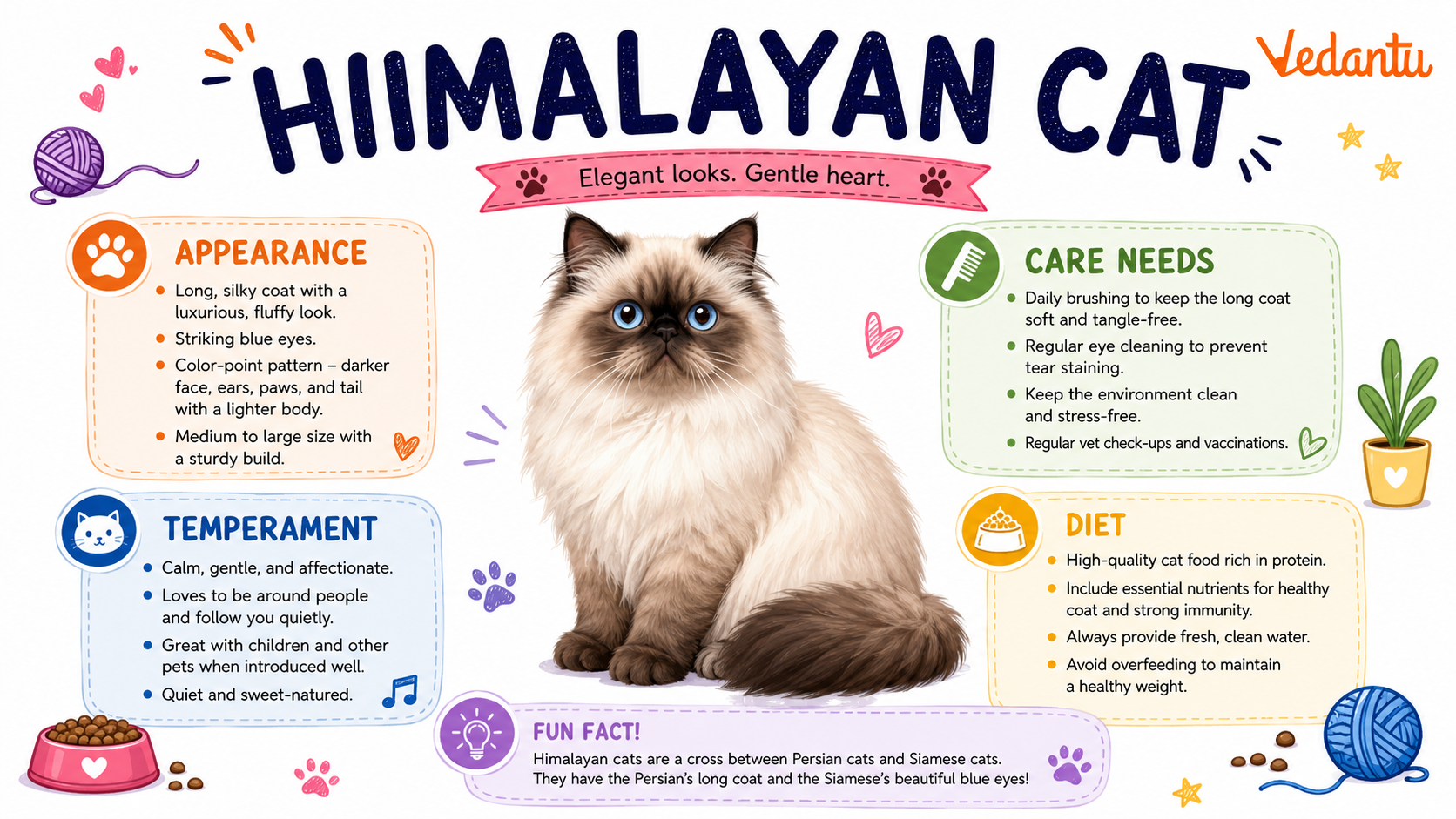
Quick Facts About Himalayan Cat
| Feature | Details |
|---|---|
| Common Name | Himalayan Cat |
| Scientific Name | Felis catus |
| Animal Group | Mammal |
| Size | Medium to large |
| Weight | 3.5 – 6.5 kg |
| Lifespan | 9 – 15 years |
| Diet | Carnivore |
| Habitat | Domestic homes |
| Young One | Kitten |
Appearance and Physical Characteristics
- Long, thick, and silky fur that needs regular grooming.
- Round face with a short nose (similar to Persian cats).
- Large, round, bright blue eyes.
- Strong, sturdy body with short legs.
- Colour-point pattern (darker colour on ears, face, paws, and tail).
Himalayan Cat Habitat
Unlike wild animals, the Himalayan Cat habitat is mainly indoors. These cats are specially bred to live comfortably in homes.
- Prefers calm and quiet indoor spaces.
- Does not enjoy extreme heat due to thick fur.
- Loves soft beds, couches, and cozy corners.
- Needs a clean and safe environment.
Himalayan Cat Diet
The Himalayan Cat diet is mainly meat-based because it is a carnivore.
Behaviour and Lifestyle
- Calm, quiet, and affectionate.
- Enjoys sitting on laps and being petted.
- Not very active or jumpy compared to other breeds.
- Gets along well with families and older children.
- Communicates with soft meows.
Himalayan Cat Life Cycle
- Kitten Stage: Born blind and fully white; depends on mother’s milk.
- Growing Stage: Colour points appear; begins eating solid food.
- Adult Stage: Fully grown by 1–2 years; thick coat develops.
- Senior Stage: Needs extra care and health check-ups.
Temperament and Domestic Life
What Makes Himalayan Cat Special?
Amazing Himalayan Cat Facts
- The breed was developed in the 1930s.
- It is also called “Himmie” by cat lovers.
- Recognized by many cat associations worldwide.
- Shares traits with both Persian and Siamese cats.
- Comes in colours like seal, blue, chocolate, lilac, and cream.
- Needs more grooming than short-haired cats.
Fun Facts for Kids
FAQs on Himalayan Cat: Complete Guide to Personality, Care, and Characteristics
1. What is a Himalayan Cat?
A Himalayan Cat is a fluffy, blue-eyed cat breed known for its color-point coat and sweet personality.
- The Himalayan cat breed is a mix of the Persian cat and the Siamese cat.
- It has a long, soft coat and darker colors on the face, ears, paws, and tail (called color points).
- Himalayans are calm, gentle, and love being indoors.
- They are sometimes called Himmies by cat lovers.
2. Why are Himalayan Cats called color-point cats?
Himalayan Cats are called color-point cats because their bodies are light while their face, ears, legs, and tail are darker.
- The darker areas are known as points.
- Common colors include seal point, blue point, chocolate point, and lilac point.
- This pattern comes from their Siamese ancestry.
- All Himalayan kittens are born white and develop color as they grow.
3. Are Himalayan Cats good pets for kids?
Yes, Himalayan Cats are gentle and affectionate, making them great pets for calm and caring kids.
- They enjoy quiet play and cuddling.
- They are not very active, so they like peaceful homes.
- They bond closely with family members.
- They prefer gentle handling rather than rough play.
4. How big do Himalayan Cats grow?
A fully grown Himalayan Cat is medium to large in size with a strong, sturdy body.
- Weight: usually 7–12 pounds.
- Body type: round face, short legs, and thick fur.
- They appear larger because of their long, fluffy coat.
- They grow fully by about 2 years of age.
5. Do Himalayan Cats need a lot of grooming?
Yes, Himalayan Cats need daily grooming to keep their long fur clean and tangle-free.
- Brush their coat every day to prevent mats.
- Clean their eyes regularly because they can have tear stains.
- Occasional baths help maintain their fluffy coat.
- Regular grooming keeps their skin and fur healthy.
6. What do Himalayan Cats eat?
Himalayan Cats need a balanced diet to stay healthy and maintain their thick coat.
- High-quality cat food with protein.
- Fresh water every day.
- Portion control to prevent weight gain.
- Special diets may help with hairball control.
7. Are Himalayan Cats active or lazy?
Himalayan Cats are calm and moderately active, but they are not as playful as some other breeds.
- They enjoy short play sessions.
- They love relaxing on soft furniture.
- They prefer indoor living.
- They are less energetic than Siamese cats.
8. Do Himalayan Cats have health problems?
Like many purebred cats, Himalayan Cats can have certain health issues.
- Breathing problems due to their flat face.
- Polycystic kidney disease (PKD) in some lines.
- Eye tearing and dental problems.
- Regular vet checkups help keep them healthy.
9. How long do Himalayan Cats live?
A healthy Himalayan Cat can live a long and happy life indoors.
- Average lifespan: 9–15 years.
- Proper grooming and nutrition improve longevity.
- Indoor living keeps them safer.
- Routine veterinary care supports long-term health.
10. How are Himalayan Cats different from Persian Cats?
Himalayan Cats are very similar to Persian Cats but have special color-point markings and blue eyes.
- Himalayans have color points; Persians usually have solid colors.
- Himalayans always have bright blue eyes.
- Both breeds have long fur and flat faces.
- Himalayans come from crossing Persian and Siamese cats.
