






What Do Hedgehogs Eat, Where Do They Live, and How Do They Survive?
Hedgehogs are small, adorable mammals famous for their sharp spines and cute faces. These shy creatures are mostly active at night and are known for rolling into a tight ball when they feel threatened. Hedgehog facts, hedgehog habitat, hedgehog diet, and hedgehog characteristics make them one of the most interesting animals to learn about. Let’s explore their world and discover what makes them so unique in nature!
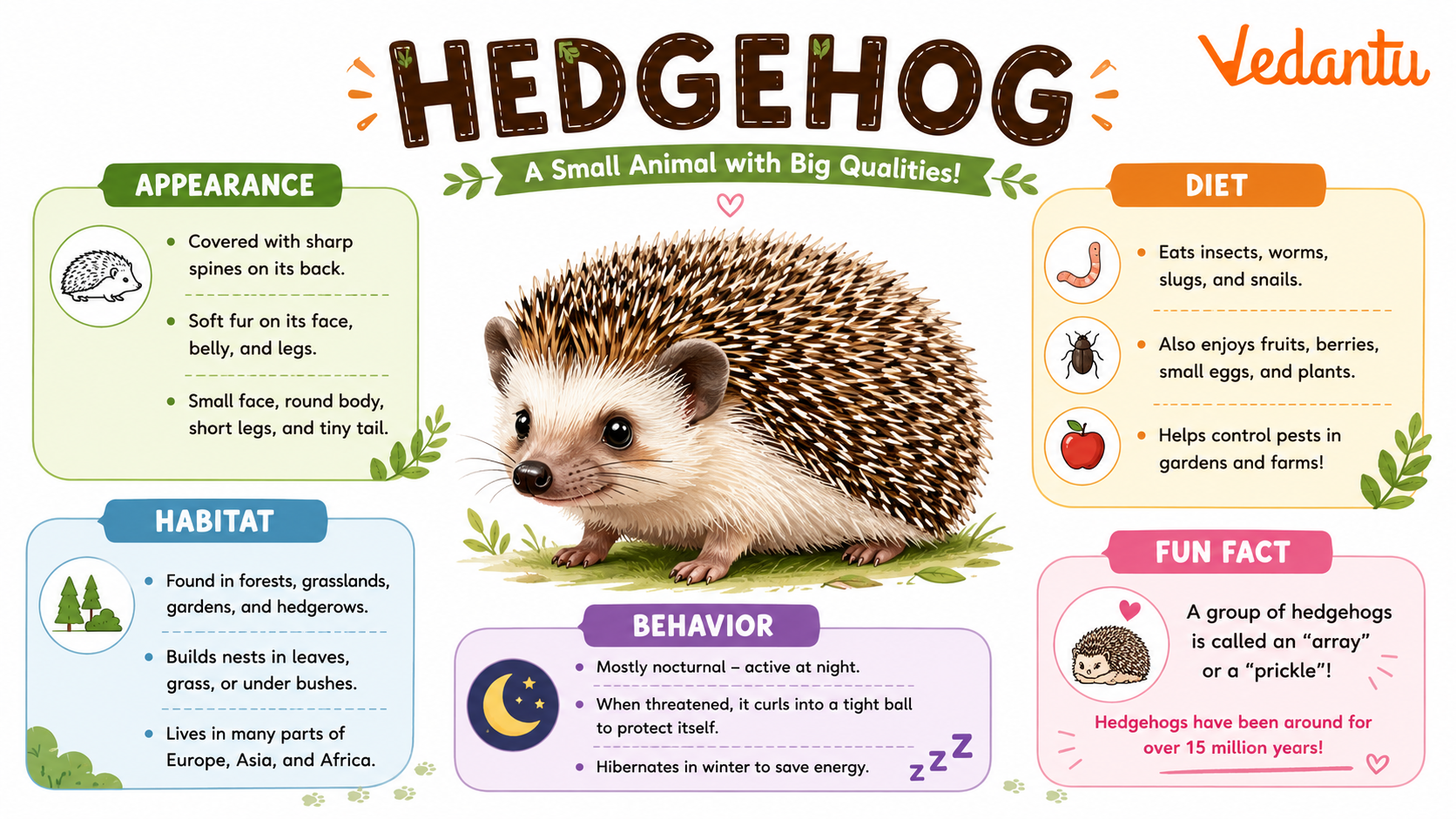
Quick Facts About Hedgehog
| Feature | Details |
|---|---|
| Common Name | Hedgehog |
| Scientific Family | Erinaceidae |
| Animal Group | Mammal |
| Size | 10–30 cm long |
| Weight | 0.5–1.5 kg |
| Lifespan | 3–7 years (in the wild) |
| Diet | Insects, worms, small animals |
| Habitat | Forests, grasslands, gardens |
| Conservation Status | Varies by species (some are declining) |
Appearance and Physical Characteristics
- Covered with around 5,000–7,000 sharp spines on their back.
- Spines are made of keratin, the same material as human hair and nails.
- Small face with tiny eyes, pointed snout, and short legs.
- Soft fur on the face, belly, and legs.
- Strong claws for digging.
Hedgehog Habitat and Distribution
- Found in Europe, Asia, and Africa.
- Prefer woodlands, meadows, gardens, and hedgerows.
- Build nests from leaves and grass.
- Some species hibernate during cold winters.
- Avoid very cold deserts and extreme snowy regions.
Hedgehog Diet and Feeding Habits
Type: Insectivore (mainly eats insects)
- Beetles, caterpillars, and worms
- Snails and slugs
- Small frogs or baby mice (occasionally)
- Fruits and vegetables sometimes
Hedgehogs use their strong sense of smell and hearing to find food at night. They help control insect populations in gardens and forests.
Behaviour and Lifestyle
Hedgehog Life Cycle
- Mating: Usually during warm seasons.
- Birth: Female gives birth to 3–7 babies called hoglets.
- Baby Stage: Hoglets stay with mother for about 4–6 weeks.
- Growing Up: Young hedgehogs learn to hunt and survive.
- Adult: Become independent and live alone.
What Makes Hedgehog Special?
Importance and Role in Nature
- Control harmful insect populations.
- Help maintain ecological balance.
- Serve as prey for larger animals like owls and foxes.
- Important part of the food chain.
Amazing Hedgehog Facts
Fun Facts for Kids
- Hedgehogs love exploring gardens at night.
- They curl up like a tiny football.
- Their name comes from “hedge” (where they live) and “hog” (their snorting sound).
- They are very good climbers and swimmers.
- Each spine lasts about a year before falling out.
FAQs on Hedgehog Facts, Habitat, Diet, and Behavior Explained
1. What is a hedgehog?
A hedgehog is a small, spiny mammal known for rolling into a ball to protect itself.
- Hedgehogs belong to the family Erinaceidae.
- They are covered with sharp spines (quills) on their backs.
- They are mostly nocturnal animals, meaning they are active at night.
- Hedgehogs are found in Europe, Africa, and Asia.
- They are often searched as small insect-eating mammals or spiny garden animals.
2. Where do hedgehogs live?
Hedgehogs live in forests, grasslands, gardens, and hedgerows.
- They prefer areas with lots of bushes and leaves for hiding.
- Common habitats include woodlands, farms, and suburban gardens.
- They build nests under shrubs, logs, or piles of leaves.
- Pet hedgehogs live in safe indoor enclosures.
- People also ask: “Do hedgehogs live in deserts?” Some species in Africa can survive in dry areas.
3. What do hedgehogs eat?
Hedgehogs are insectivores that mainly eat insects and small creatures.
- Their favorite food includes beetles, worms, caterpillars, and slugs.
- They may also eat snails, frogs, eggs, and fruits.
- Pet hedgehogs eat special hedgehog food or high-protein diets.
- They help gardens by controlling pests and bugs.
- Also searched as: “What do hedgehogs eat in the wild?”
4. Why do hedgehogs roll into a ball?
Hedgehogs roll into a tight ball to protect themselves from predators.
- When threatened, they curl up using strong back muscles.
- Their sharp spines point outward to scare predators.
- This defense protects their soft face, legs, and belly.
- Predators include foxes, owls, and badgers.
- People also search: “How do hedgehogs defend themselves?”
5. Are hedgehogs good pets?
Hedgehogs can be good pets if cared for properly and handled gently.
- The most common pet species is the African pygmy hedgehog.
- They need a warm, clean habitat enclosure.
- They are usually shy but can become friendly with training.
- They require a proper diet and veterinary care.
- People also ask: “Are hedgehogs safe for kids?” Adult supervision is recommended.
6. How long do hedgehogs live?
Hedgehogs usually live 3–7 years depending on species and care.
- Wild hedgehogs often live around 3–5 years.
- Pet hedgehogs may live up to 5–7 years with good care.
- Their lifespan depends on diet, habitat, and safety.
- Threats include predators, traffic, and illness.
- Also searched as: “What is the lifespan of a hedgehog?”
7. Are hedgehogs born with spikes?
Yes, baby hedgehogs are born with soft spines that harden later.
- Baby hedgehogs are called hoglets.
- Their soft spines are covered by a protective layer at birth.
- Within hours, the spines dry and become sharper.
- This protects them while keeping the mother safe during birth.
- People also ask: “What are baby hedgehogs called?”
8. Do hedgehogs hibernate?
Many hedgehogs hibernate during cold winter months to save energy.
- European hedgehogs hibernate in winter.
- They build nests from leaves and grass.
- Their heart rate and body temperature drop during hibernation.
- Some African species may enter a lighter sleep called aestivation.
- Also searched as: “Do pet hedgehogs hibernate?”
9. How big do hedgehogs grow?
Hedgehogs usually grow between 6 and 12 inches long.
- They weigh about 1–2.5 pounds.
- Size depends on the species.
- The African pygmy hedgehog is smaller than the European hedgehog.
- They are considered small mammals.
- People also search: “What size is a full-grown hedgehog?”
10. Are hedgehogs endangered?
Some hedgehog species are declining due to habitat loss and pollution.
- The European hedgehog population is decreasing in some areas.
- Main threats include road traffic, pesticides, and habitat destruction.
- Conservation efforts protect wildlife habitats and garden spaces.
- People can help by creating hedgehog-friendly gardens.
- Also searched as: “Why are hedgehogs in danger?”
