






Where Do Halibut Live, What Do They Eat, and How Big Do They Grow?
The Halibut is one of the largest flatfish in the world and a true giant of the sea floor. Known for its unusual body shape and both eyes on one side of its head, this fish is perfectly designed for life at the bottom of the ocean. Halibut facts, habitat, diet, and characteristics make it a fascinating marine creature for students who want to explore deep-sea life.
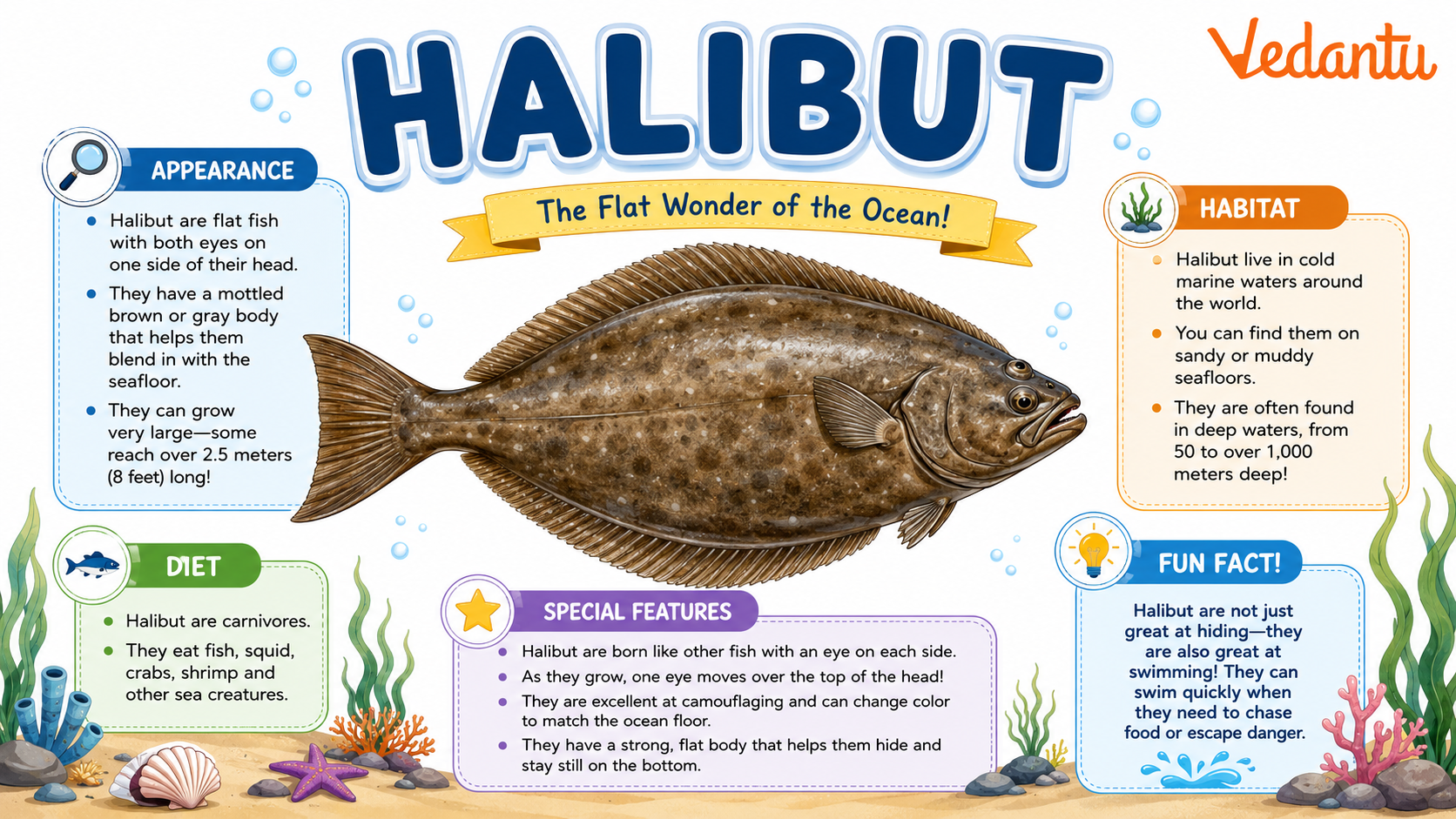
Quick Facts About Halibut
| Feature | Details |
|---|---|
| Common Name | Halibut |
| Scientific Name | Hippoglossus species |
| Animal Group | Fish (Flatfish) |
| Size | Up to 2.5 metres |
| Weight | Can exceed 300 kg |
| Lifespan | Up to 50 years |
| Habitat | Cold ocean floors |
| Diet | Carnivore (fish, crabs, squid) |
| Conservation Status | Varies by species |
Appearance and Physical Characteristics
- Flat, oval-shaped body.
- Both eyes located on the upper side of the head.
- Dark brown or olive on top for camouflage.
- White underside facing the sea floor.
- Large mouth with sharp teeth.
- Strong tail fin for quick bursts of speed.
Halibut Habitat and Distribution
The Halibut habitat includes cold waters of the North Atlantic and North Pacific Oceans. They live close to the seabed at depths ranging from 50 to over 2,000 metres.
- Found near Canada, Alaska, Greenland, Norway, and Russia.
- Prefer cold, deep ocean waters.
- Rest and hide on sandy or muddy sea floors.
Diet and Feeding Habits
The Halibut diet makes it a strong carnivore in the marine food chain.
- Eats smaller fish like cod and herring.
- Feeds on crabs, shrimp, and squid.
- Ambush predator – waits quietly and attacks quickly.
Behaviour and Lifestyle
- Mostly solitary fish.
- Active hunters, especially at night.
- Excellent swimmers despite flat shape.
- Migrate to deeper waters for spawning.
Halibut Life Cycle
Females release millions of eggs into deep water.
Hatch with one eye on each side of the head.
One eye moves to the other side as the body flattens.
Settles on the ocean floor and becomes a powerful predator.
What Makes Halibut Special?
Importance and Role in Nature
Amazing Halibut Facts
- One of the largest bony fish in the world.
- Can weigh more than a small car.
- Excellent camouflage experts.
- Can swim long distances during migration.
- Have sharp teeth for catching slippery prey.
- Females are usually much larger than males.
Fun Facts for Kids
FAQs on Halibut: Fascinating Facts About the Giant Flatfish
1. What is halibut?
Halibut is a large, flat ocean fish known for its mild taste and firm white meat.
- It belongs to the flatfish family
- It lives in cold waters like the Pacific Ocean and Atlantic Ocean
- It has both eyes on one side of its head
- It is popular as a seafood choice worldwide
2. Where do halibut live?
Halibut live in cold, deep ocean waters, mainly in the northern parts of the world.
- Found in the North Pacific and North Atlantic
- Stay near the ocean floor
- Prefer cold, salty seawater
- Migrate to shallow waters to spawn
3. What does halibut eat?
Halibut are carnivorous fish that eat smaller sea animals.
- Feed on smaller fish like cod and herring
- Eat crabs, shrimp, and squid
- Hunt along the ocean bottom
- Use camouflage to surprise prey
4. How big can halibut grow?
Halibut are one of the largest flatfish in the world and can grow very big.
- Can reach over 8 feet long
- May weigh more than 500 pounds
- Females are usually larger than males
- Can live up to 50 years
5. Is halibut healthy to eat?
Halibut is a healthy seafood choice because it is rich in nutrients and low in fat.
- High in protein
- Contains omega-3 fatty acids
- Good source of vitamin D and selenium
- Low in saturated fat
6. How is halibut cooked?
Halibut can be cooked in many simple and tasty ways because of its firm texture.
- Grilled with herbs and lemon
- Baked in the oven
- Pan-seared for crispy edges
- Used in fish tacos or seafood dishes
7. Why do halibut have both eyes on one side?
Halibut have both eyes on one side to help them live on the ocean floor.
- They are born with one eye on each side
- As they grow, one eye moves to the other side
- This helps them lie flat and hide from predators
- It gives them better vision upward
8. What is the difference between Pacific and Atlantic halibut?
Pacific halibut and Atlantic halibut are two main types with slight differences.
- Pacific halibut are more commonly caught
- Atlantic halibut are less common and more protected
- Both live in cold northern oceans
- They look similar but may vary in size and population
9. Are halibut endangered?
Some halibut populations are carefully managed to prevent overfishing.
- Atlantic halibut face more conservation concerns
- Pacific halibut fisheries are strictly regulated
- Fishing limits help protect numbers
- Sustainable seafood choices support ocean health
10. Why is halibut important?
Halibut is important for both ocean ecosystems and people.
- Plays a role as a predator in the marine food chain
- Supports commercial fishing industries
- Provides healthy seafood for families
- Is part of cultural traditions in coastal communities
