






Where Do Hake Fish Live and What Do They Eat?
The Hake is a long, slender fish found in deep ocean waters around the world. It is known for its soft white flesh, sharp teeth, and fast swimming ability. Hake belongs to the cod family and plays an important role in marine ecosystems as well as in global seafood industries. Learning about Hake facts, habitat, diet, and life cycle helps us understand how this fascinating ocean predator survives in the deep sea.
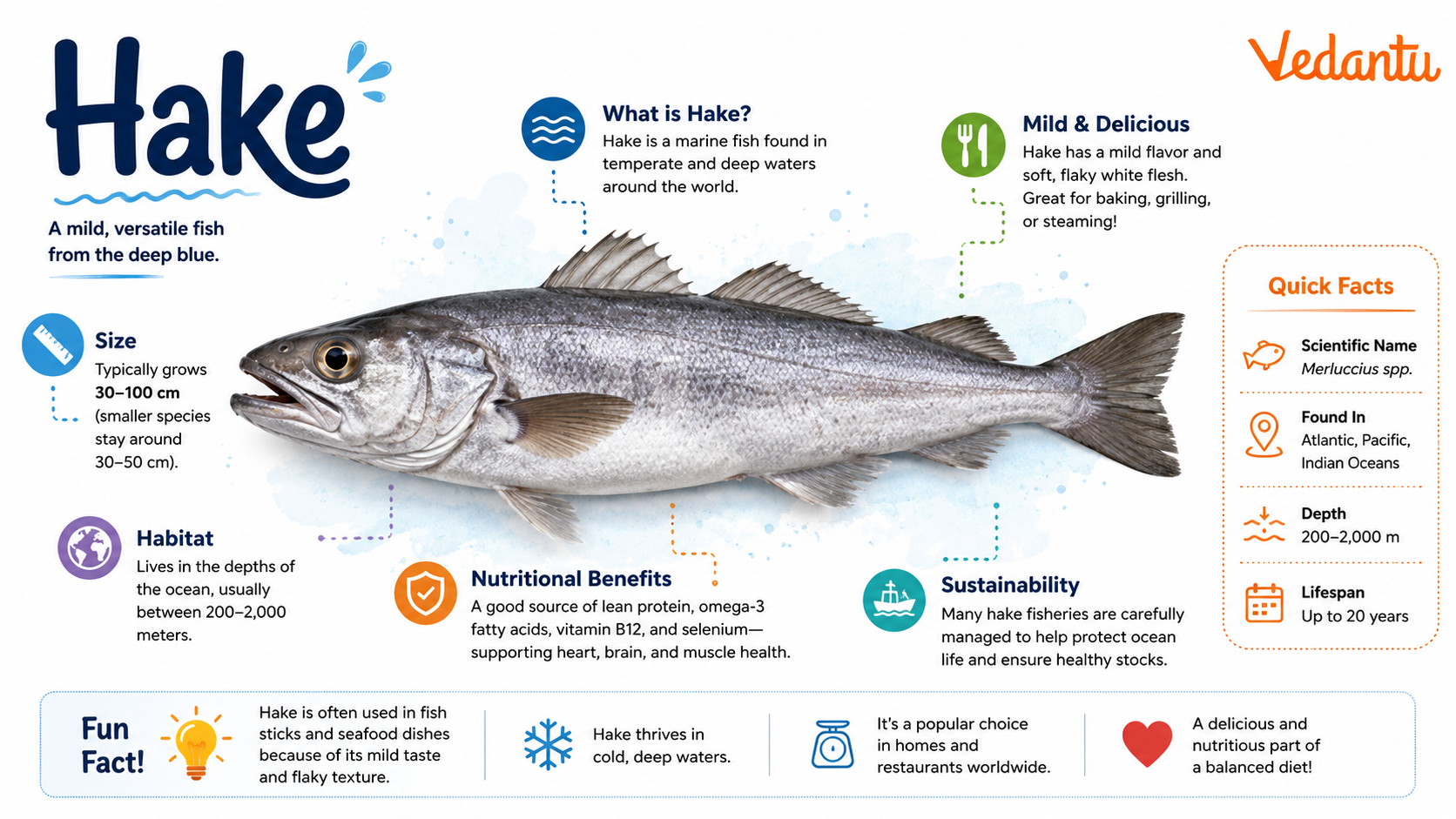
Quick Facts and Statistics
| Feature | Details |
|---|---|
| Common Name | Hake |
| Scientific Genus | Merluccius |
| Animal Group | Fish (Marine) |
| Length | Up to 1.5 meters (varies by species) |
| Weight | Up to 15 kg (large species) |
| Habitat | Deep ocean waters, continental shelves |
| Diet | Fish, squid, crustaceans |
| Lifespan | Up to 20 years (depending on species) |
| Conservation Status | Varies by species (some overfished) |
Appearance and Physical Characteristics
- Long, slim, and torpedo-shaped body built for fast swimming.
- Silvery-grey or brownish colour with a lighter belly.
- Large head with a wide mouth and sharp teeth.
- Two dorsal fins and one anal fin.
- Soft scales and smooth body surface.
Hake Habitat and Distribution
The Hake habitat mainly includes deep ocean waters and continental shelves. They are found in both temperate and cold seas.
- Common in the Atlantic and Pacific Oceans.
- Found near Europe, North and South America, and Africa.
- Prefer depths between 50 and 1,000 meters.
- Usually stay close to the sea bottom during the day.
Many Hake species move to shallower waters at night to feed, making them active nighttime predators.
Hake Diet and Feeding Habits
The Hake diet makes it a carnivorous predator in the marine food chain.
Behaviour and Lifestyle
- Usually live in groups called schools.
- Stay deeper during the day for safety.
- Swim upward at night to hunt.
- Strong swimmers with good vision in low light.
- Migrate seasonally for breeding and feeding.
Hake Life Cycle and Reproduction
- Spawning: Adult females release thousands of eggs into the water.
- Fertilisation: Eggs are fertilised externally by males.
- Larval Stage: Tiny larvae float near the surface.
- Juvenile Stage: Young fish grow and move to deeper waters.
- Adult Stage: Mature Hake reproduce and continue the cycle.
What Makes Hake Special?
Importance and Role in Nature
- Controls populations of smaller fish and squid.
- Serves as prey for sharks, dolphins, and large fish.
- Supports fishing industries and coastal economies.
- Helps maintain balance in marine ecosystems.
Amazing Hake Facts
Interesting Facts About Hake
- Hake are closely related to cod and haddock.
- Some populations are carefully managed to prevent overfishing.
- Their long body helps them move quickly through water.
- They are an important export fish in countries like Spain and Argentina.
Fun Facts for Kids
FAQs on Hake Fish: Species Overview, Diet, and Habitat
1. What is a hake fish?
Hake is a soft, white fish that lives in the ocean and is popular as seafood around the world.
- It belongs to the cod family (Merlucciidae).
- It has a long, slim body and sharp teeth.
- It is found in the Atlantic Ocean and Pacific Ocean.
- People often compare hake to cod and pollock.
2. Where do hake fish live?
Hake fish live in deep ocean waters, usually near the sea floor.
- They are common in the North Atlantic and South Atlantic.
- Some species live in the Pacific Ocean.
- They prefer cool, deep water habitats.
- Young hake may swim closer to the surface at night.
3. What does hake taste like?
Hake tastes mild and slightly sweet, making it great for kids and picky eaters.
- It has a soft, flaky texture.
- The flavor is lighter than salmon but similar to cod.
- It absorbs spices and sauces easily.
- It is often used in fish and chips.
4. Is hake healthy to eat?
Hake is a healthy fish packed with nutrients that help the body grow strong.
- Rich in protein for muscles.
- Contains omega-3 fatty acids for heart and brain health.
- Low in fat and calories.
- Provides vitamins like B12 and minerals like selenium.
5. How big can a hake grow?
Hake can grow quite large depending on the species.
- Most hake grow between 1 to 3 feet long.
- Some species can weigh over 20 pounds.
- They have long bodies that help them swim quickly.
- Larger hake usually live in deeper waters.
6. What do hake fish eat?
Hake are carnivorous fish, meaning they eat other sea animals.
- They feed on small fish like sardines.
- They eat squid and crustaceans.
- Young hake may eat plankton.
- They hunt mostly at night.
7. How is hake different from cod?
Hake and cod are similar white fish but have some differences.
- Hake has softer, more delicate flesh.
- Cod is firmer and thicker.
- Hake tastes milder than cod.
- Both are popular in seafood dishes and healthy meals.
8. How do people cook hake?
Hake can be cooked in many simple and tasty ways.
- Baked with lemon and herbs.
- Fried for fish and chips.
- Grilled or steamed.
- Used in fish soups and stews.
9. Are there different types of hake?
Yes, there are many species of hake found worldwide.
- European hake (Merluccius merluccius).
- Pacific hake (Merluccius productus).
- Argentine hake.
- Each species lives in different oceans but looks similar.
10. Why is hake important?
Hake is important for both ocean ecosystems and people.
- It is part of the marine food chain.
- It supports fishing industries and jobs.
- It is a popular and affordable seafood choice.
- Healthy hake populations help keep oceans balanced.
