






What Do Groundhogs Eat, Where Do They Live, and Why Do They Hibernate?
The groundhog is a fascinating mammal famous for its role in Groundhog Day celebrations. Also known as the woodchuck, this furry animal is an expert digger and a true winter sleeper. Groundhogs are part of the squirrel family and are best known for their burrowing skills and long hibernation period. Let’s explore exciting groundhog facts, their habitat, diet, life cycle, and why they are important in nature.
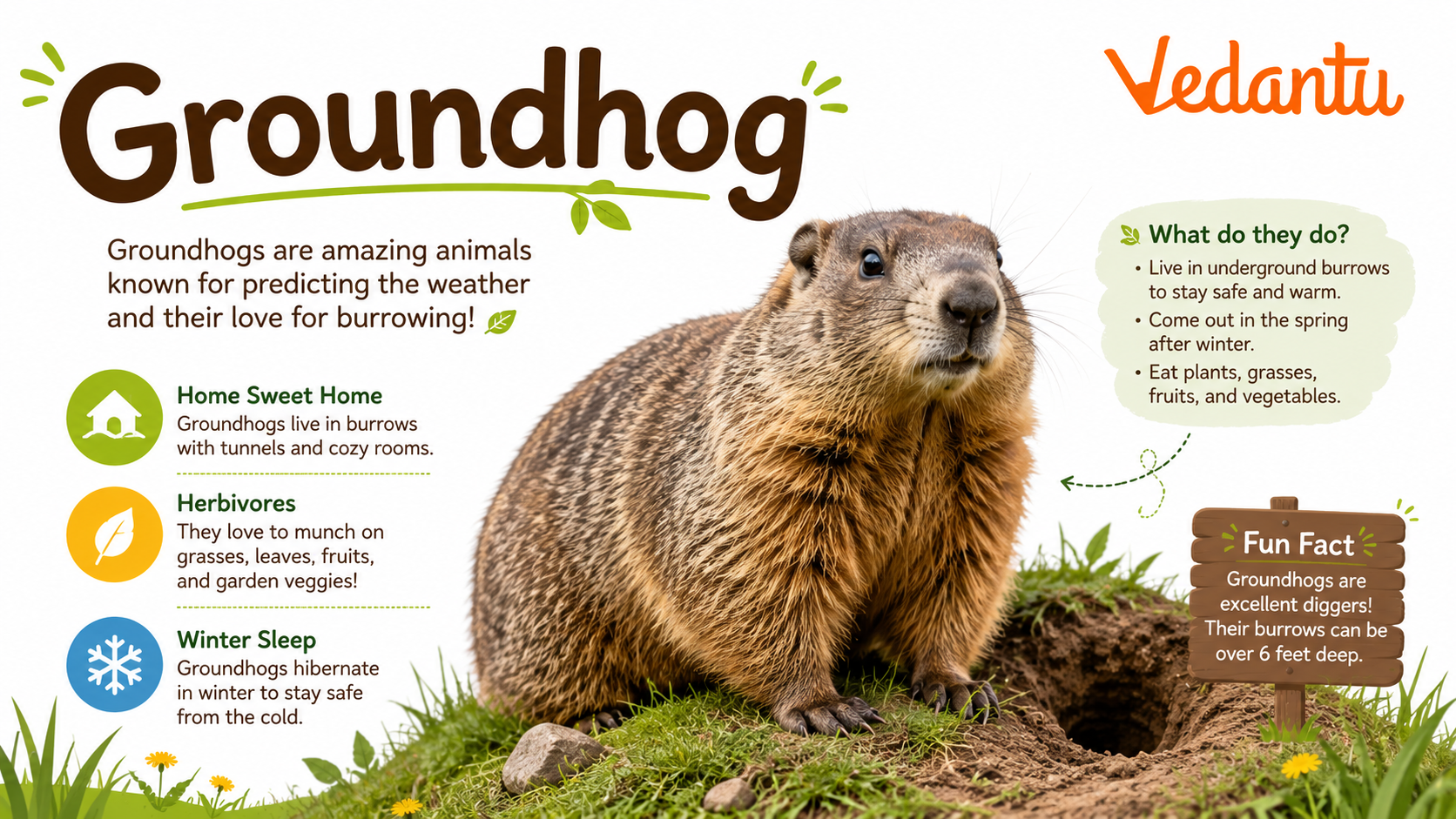
Quick Facts About Groundhog
| Feature | Details |
|---|---|
| Common Name | Groundhog (Woodchuck) |
| Scientific Name | Marmota monax |
| Animal Group | Mammal |
| Family | Squirrel Family (Sciuridae) |
| Length | 40–65 cm (including tail) |
| Weight | 2–6 kg |
| Lifespan | 3–6 years (wild) |
| Groundhog Habitat | Grasslands, forests, farms, and open fields |
| Groundhog Diet | Herbivore – plants, grasses, fruits |
| Conservation Status | Least Concern |
Appearance and Physical Characteristics
- Stout and heavy body with short, strong legs.
- Covered in thick brown or greyish-brown fur.
- Small ears and sharp curved claws for digging.
- Short, bushy tail.
- Large front teeth that grow continuously.
Groundhog Habitat and Distribution
The groundhog habitat includes open land areas where digging is easy. They are mainly found in North America, especially in the United States and Canada.
- Prefer grassy fields and forest edges.
- Often live near farms and gardens.
- Dig deep burrows with multiple tunnels and exits.
- Burrows may reach up to 1.5 meters deep.
Groundhog Diet and Feeding Habits
The groundhog diet is completely herbivorous. They spend many hours eating to build fat before winter hibernation.
- Grasses and clover
- Vegetables and garden plants
- Fruits and berries
- Bark and leaves
Behaviour and Lifestyle
Groundhog Life Cycle
- Mating: Early spring after hibernation.
- Birth: 2–6 babies (called pups) are born in underground burrows.
- Growth: Pups stay with the mother for a few months.
- Independence: Young groundhogs leave to dig their own burrows.
- Adult Stage: Reach maturity in about one year.
What Makes Groundhog Special?
Importance and Role in Nature
- Their burrows help aerate and mix soil.
- Provide shelter for other animals after they leave.
- Serve as prey for foxes, coyotes, and hawks.
- Play an important role in maintaining ecosystem balance.
Amazing Groundhog Facts
Fun Facts for Kids
- Groundhogs are actually large squirrels.
- They love munching on fresh garden plants.
- They are also called woodchucks.
- They sleep almost the entire winter.
- They can whistle loudly when scared.
FAQs on Groundhog: Fascinating Facts, Behavior, and Natural Habitat
1. What is a groundhog?
A groundhog is a furry wild animal that belongs to the squirrel family and lives underground.
- Scientific name: Marmota monax
- Also called a woodchuck or whistle-pig
- Part of the rodent family
- Found mostly in North America
- Known for digging deep burrows
2. Where do groundhogs live?
Groundhogs live in underground homes called burrows across North America.
- Common in the United States and Canada
- Prefer fields, forests, farms, and grasslands
- Dig complex tunnel systems
- Burrows have sleeping, nesting, and safety areas
- Stay close to food sources like plants and crops
3. What do groundhogs eat?
Groundhogs are mostly plant-eaters that enjoy fresh vegetation.
- Eat grass, clover, and leaves
- Love fruits and vegetables
- Sometimes eat insects
- Are mainly herbivores
- Can climb small trees to find food
4. What is Groundhog Day?
Groundhog Day is a fun holiday celebrated on February 2 to predict the weather.
- Celebrated in the United States and Canada
- Famous groundhog: Punxsutawney Phil
- If the groundhog sees its shadow, winter continues
- If it does not see its shadow, spring comes early
- Tradition began in the 1800s
5. Do groundhogs really predict the weather?
Groundhogs cannot truly predict the weather, and the tradition is mostly for fun.
- The event is based on folklore
- Weather predictions are not scientifically accurate
- Celebration continues as a cultural tradition
- It brings communities together each year
- Linked to seasonal changes and early spring myths
6. How big do groundhogs grow?
Groundhogs are one of the largest members of the squirrel family.
- Weigh between 5 to 14 pounds
- Grow about 16 to 26 inches long
- Have short, strong legs for digging
- Covered in thick brown fur
- Have sharp claws for burrowing
7. Do groundhogs hibernate?
Yes, groundhogs hibernate during the winter to survive cold weather.
- Enter deep hibernation from late fall to early spring
- Body temperature drops greatly
- Heart rate slows down
- Live off stored body fat
- Wake up around February
8. How do groundhogs dig their burrows?
Groundhogs use their strong claws and teeth to dig large underground tunnels.
- Dig with powerful front claws
- Create tunnels up to 45 feet long
- Make separate rooms for sleeping and raising babies
- Have more than one entrance for safety
- Burrows protect them from predators
9. What animals prey on groundhogs?
Groundhogs have natural predators that hunt them in the wild.
- Foxes
- Coyotes
- Hawks and large birds of prey
- Dogs
- Humans in some areas
10. Are groundhogs helpful or harmful?
Groundhogs can be both helpful and harmful depending on where they live.
- Help soil by aerating the ground when digging
- Provide homes for other animals after leaving burrows
- Can damage gardens and crops
- May weaken farm structures with tunnels
- Are important parts of the ecosystem
