






What Is a Glider Marsupial? Habitat, Diet, Behavior, and Unique Adaptations
Glider marsupials are small, tree-dwelling mammals famous for their ability to glide through the air. These fascinating animals use a special skin membrane to move from tree to tree without touching the ground. Mostly found in Australia and nearby regions, glider marsupials are nocturnal and highly adapted to forest life. From their large eyes to their strong claws and pouches for carrying babies, glider marsupial characteristics make them truly unique in the animal kingdom.
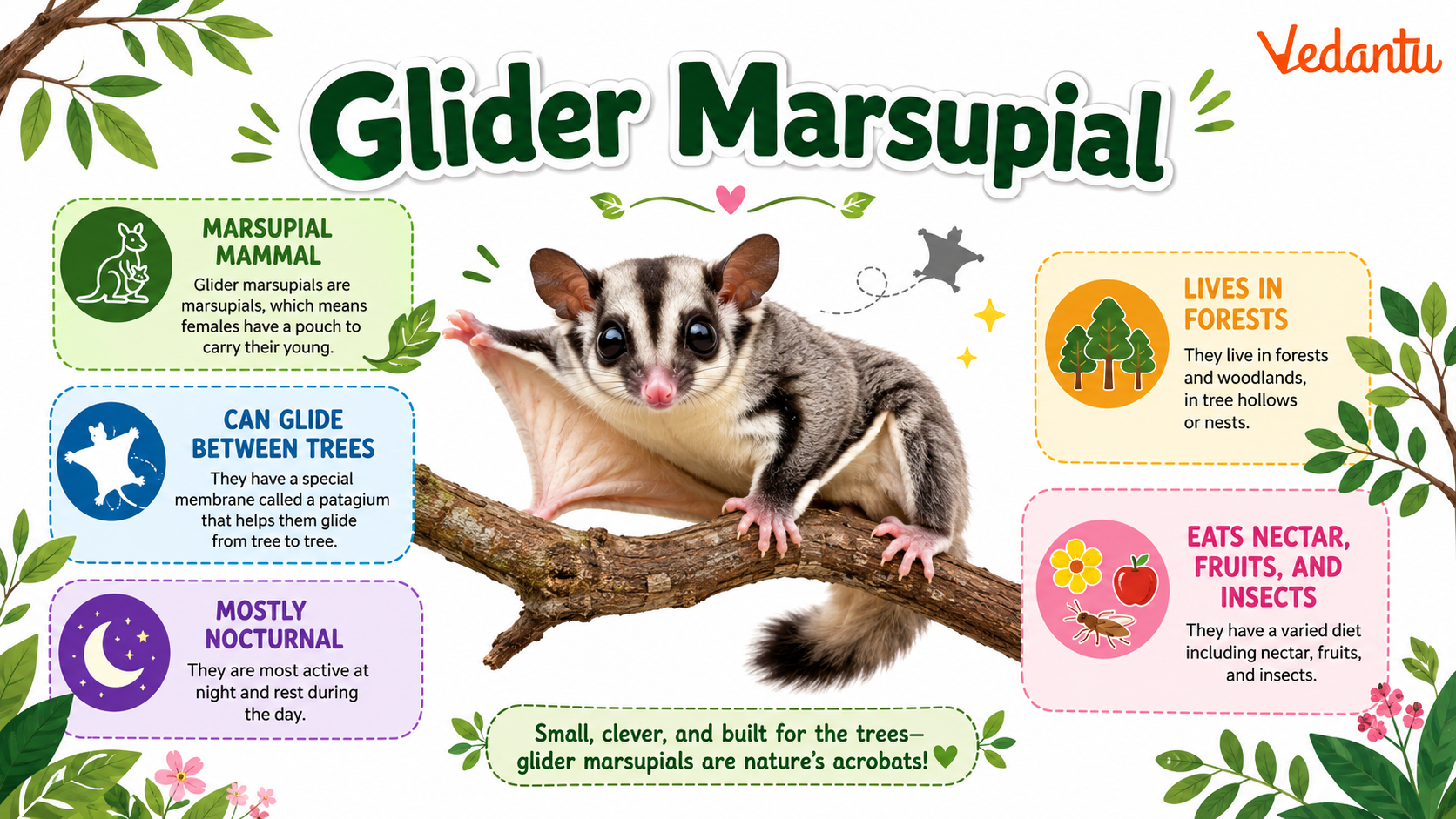
Quick Facts About Glider Marsupials
| Feature | Details |
|---|---|
| Common Name | Glider Marsupial (e.g., Sugar Glider) |
| Animal Group | Mammal (Marsupial) |
| Scientific Family | Petauridae |
| Size | 12–30 cm (body length), plus long tail |
| Weight | 80–600 grams (varies by species) |
| Lifespan | 10–15 years (in captivity) |
| Habitat | Forests, woodlands, rainforests |
| Diet | Omnivore (nectar, insects, fruits) |
| Movement | Gliding between trees |
| Conservation Status | Varies by species (Some threatened) |
Appearance and Physical Characteristics
- Small, lightweight body with soft fur.
- Large, round eyes for excellent night vision.
- Long bushy tail for balance and steering.
- Skin membrane called patagium stretches from wrist to ankle.
- Sharp claws for climbing tree bark.
- Females have a pouch to carry and protect their young.
Habitat and Distribution
- Mainly found in Australia, New Guinea, and nearby islands.
- Prefer eucalyptus forests, tropical rainforests, and woodlands.
- Live high up in trees and rarely come to the ground.
- Stay in tree hollows during the day for safety.
Diet and Feeding Habits
- Omnivores – eat both plants and small animals.
- Feed on nectar, sap, fruits, pollen, and insects.
- Use sharp teeth to chew tree bark and collect sap.
- Actively search for food at night.
Behaviour and Lifestyle
- Nocturnal – active mostly at night.
- Social animals – often live in small family groups.
- Communicate through soft calls, chirps, and scent markings.
- Glide to escape predators like owls and snakes.
- Sleep curled up together in tree hollows during the day.
Life Cycle of a Glider Marsupial
- Birth: Baby (called a joey) is born very tiny and underdeveloped.
- Pouch Stage: Joey crawls into the mother’s pouch and stays there for several weeks.
- Growing Up: After leaving the pouch, the joey stays close to the mother.
- Adult Stage: Becomes independent and joins the group.
Flight Adaptations (Gliding Ability)
Stretchy skin between limbs helps them glide.
Small size reduces air resistance.
Works like a rudder for steering.
Powerful legs help them leap into the air.
Importance and Role in Nature
Amazing Glider Marsupial Facts
- They do not truly fly – they glide.
- The sugar glider is the most famous type.
- Their large eyes help them see clearly in the dark.
- They can rotate their ankles to climb down trees head-first.
- They groom each other to strengthen social bonds.
- Some species are endangered due to habitat loss.
Fun Facts for Kids
FAQs on Glider Marsupial: Fascinating Facts About These Tree-Gliding Mammals
1. What is a Glider Marsupial?
A glider marsupial is a small mammal that can glide through the air and carries its babies in a pouch.
- Marsupials are mammals with a special pouch for raising young.
- They have a thin skin membrane called a patagium that helps them glide.
- Popular examples include the Sugar Glider and Feathertail Glider.
- They are often searched as “flying possum” or “gliding mammal.”
2. Where do Glider Marsupials live?
Glider marsupials mainly live in the forests of Australia and New Guinea.
- They prefer eucalyptus forests and woodlands.
- They live high in trees to stay safe from predators.
- Tree hollows are used as nests and shelters.
- People also ask: “Do sugar gliders live in the wild?” – Yes, mostly in Australian forests.
3. How do Glider Marsupials glide?
Glider marsupials glide using a special skin flap that stretches between their legs.
- The patagium acts like a parachute.
- They spread their limbs to glide from tree to tree.
- Some can glide up to 150 feet (45 meters).
- Their long tail helps them steer and balance.
4. What do Glider Marsupials eat?
Glider marsupials eat a mix of sweet plant foods and small insects.
- They enjoy nectar and tree sap.
- They eat fruits and pollen.
- Some species eat insects and tiny animals.
- The Sugar Glider gets its name from its love of sugary foods.
5. Are Glider Marsupials nocturnal?
Yes, most glider marsupials are nocturnal, meaning they are active at night.
- They sleep during the day in tree hollows.
- They search for food after sunset.
- Large eyes help them see in the dark.
- People also search: “Are sugar gliders active at night?” – Yes.
6. How do baby Glider Marsupials grow?
Baby glider marsupials grow safely inside their mother’s pouch after birth.
- Newborns are tiny and underdeveloped.
- They crawl into the mother’s pouch right after birth.
- They stay in the pouch for several weeks.
- This is a key feature of all marsupials.
7. What are the main types of Glider Marsupials?
There are several types of glider marsupials found in Australia and nearby regions.
- Sugar Glider
- Squirrel Glider
- Greater Glider
- Feathertail Glider
- Each species differs in size, color, and gliding distance.
8. Are Glider Marsupials endangered?
Some glider marsupial species are threatened due to habitat loss and climate change.
- Deforestation reduces their forest homes.
- Wildfires can destroy nesting trees.
- Predators like cats and foxes pose dangers.
- Conservation efforts help protect species like the Greater Glider.
9. Can Glider Marsupials be kept as pets?
Some people keep Sugar Gliders as exotic pets, but they need special care.
- They require a large cage for climbing and gliding.
- They need a balanced diet of fruits, nectar, and protein.
- They are social animals and prefer living in groups.
- Always check local laws before keeping one as a pet.
10. How are Glider Marsupials different from flying squirrels?
Glider marsupials and flying squirrels both glide, but they belong to different animal groups.
- Glider marsupials are marsupials with pouches.
- Flying squirrels are placental mammals without pouches.
- They evolved gliding ability separately (called convergent evolution).
- Both use a skin membrane to glide between trees.
