






What Do Fruit Bats Eat and Where Do They Live?
Fruit bats, also known as flying foxes, are large bats famous for their big eyes, wide wings, and fruit-based diet. Unlike many bats, they do not use echolocation but rely on strong eyesight and smell. Fruit bat facts show that they play a very important role in nature by spreading seeds and pollinating flowers. Let’s explore fruit bat habitat, diet, characteristics, life cycle, and why these amazing mammals are so important.
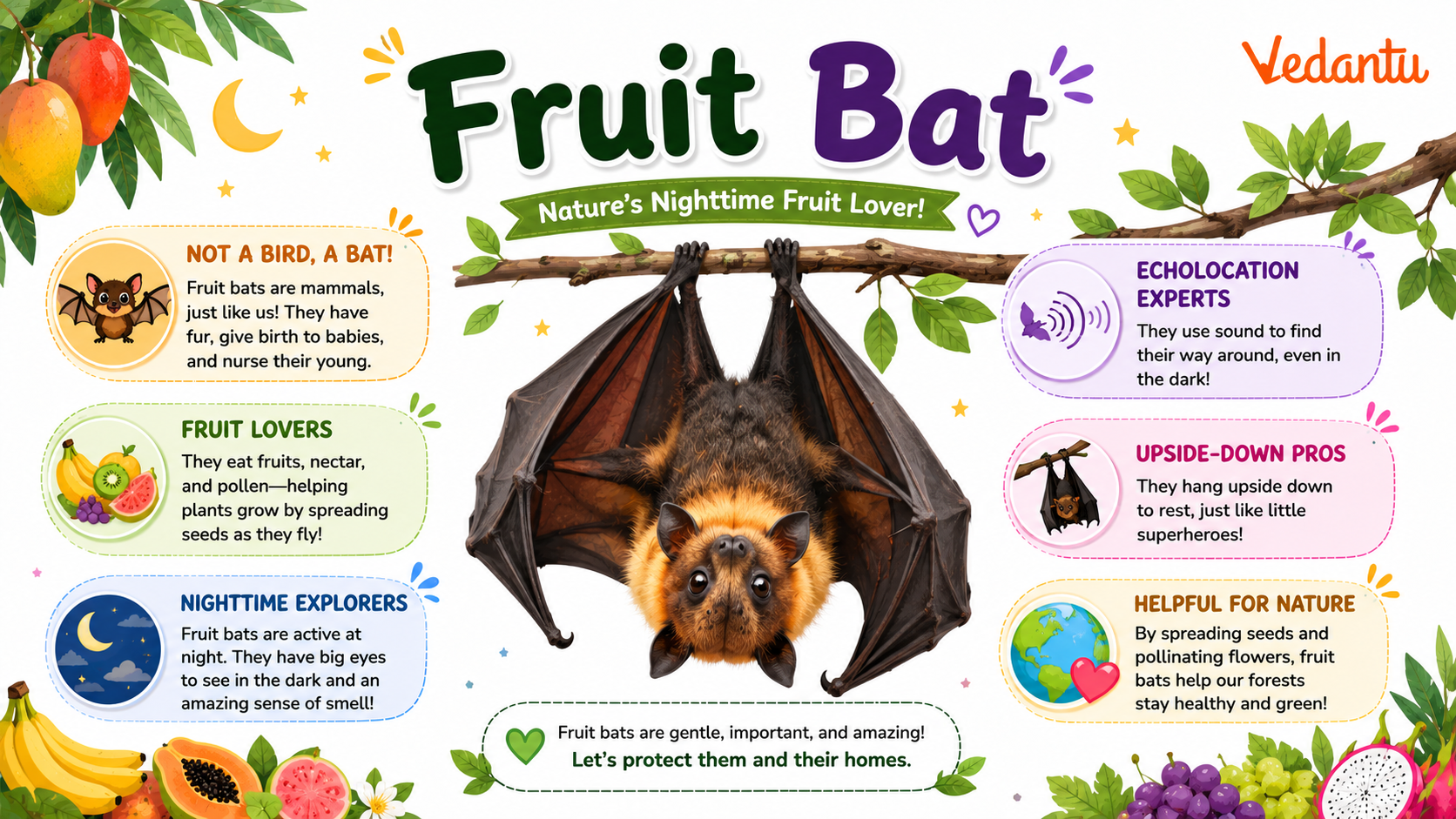
Quick Facts About Fruit Bat
| Feature | Details |
|---|---|
| Common Name | Fruit Bat / Flying Fox |
| Scientific Family | Pteropodidae |
| Animal Group | Mammal |
| Size | 15–40 cm body length |
| Wingspan | Up to 1.5 metres (in large species) |
| Weight | 300 grams to 1.5 kg |
| Diet | Fruits, nectar, flowers |
| Habitat | Tropical and subtropical forests |
| Lifespan | 15–30 years |
| Activity Time | Mostly active at night |
Appearance and Physical Characteristics
- Large eyes and sharp eyesight.
- Fox-like face, which is why they are called “flying foxes”.
- Long wings made of thin skin stretched over long fingers.
- Fur is usually brown, black, grey, or reddish.
- Strong claws for hanging upside down from trees.
Habitat and Distribution
Fruit bat habitat includes warm tropical and subtropical regions. They are commonly found in:
- Asia
- Africa
- Australia
- Pacific Islands
They prefer forests, mangroves, orchards, and areas with plenty of fruit trees. During the day, they hang in large groups called colonies on tall trees.
Diet and Feeding Habits
What Do Fruit Bats Eat?
Behaviour and Lifestyle
- Mostly nocturnal – active at night.
- Rest during the day by hanging upside down.
- Live in large colonies that may include thousands of bats.
- Communicate using squeaks and body movements.
- Can fly long distances (up to 50 km) in search of food.
Life Cycle of a Fruit Bat
- Mating: Usually happens once a year.
- Pregnancy: Lasts about 4–6 months.
- Birth: Female gives birth to one baby (called a pup).
- Baby Stage: The pup clings to its mother for weeks.
- Growth: Starts flying at around 2–3 months.
- Adult Stage: Becomes fully independent and joins the colony.
Flight Adaptations
What Makes Fruit Bats Special?
Importance and Role in Nature
- Help in pollination of fruits like bananas and mangoes.
- Spread seeds, helping new trees grow.
- Maintain forest balance.
- Support biodiversity in tropical ecosystems.
Amazing Fruit Bat Facts
Interesting Facts About Fruit Bat
- They clean themselves just like cats.
- Baby bats hold tightly to their mothers while flying.
- Some species are endangered due to habitat loss.
- They prefer sweet-smelling fruits.
Fun Facts for Kids
FAQs on Fruit Bat: Fascinating Flying Mammals Explained
1. What is a fruit bat?
A fruit bat is a large bat that mainly eats fruit and belongs to the family Pteropodidae.
- Also called flying foxes
- Found in tropical and subtropical regions
- Have excellent eyesight and sense of smell
- Are important pollinators and seed dispersers
2. Where do fruit bats live?
Fruit bats live in warm climates across the world.
- Common in Africa, Asia, Australia, and Pacific Islands
- Prefer rainforests, woodlands, and mangroves
- Roost in large groups in trees
3. What do fruit bats eat?
Fruit bats mainly eat sweet plant foods.
- Fruits like mangoes, bananas, and figs
- Nectar from flowers
- Pollen and sometimes soft leaves
4. Why are fruit bats important to the environment?
Fruit bats are important because they help forests grow and stay healthy.
- Spread seeds through their droppings
- Help with pollination of flowers
- Support growth of new trees and plants
5. How big are fruit bats?
Fruit bats are some of the largest bats in the world.
- Wingspan can reach up to 5–6 feet (1.5–1.8 meters)
- Can weigh up to 2–3 pounds (1–1.5 kg)
- The largest species is the Giant Golden-Crowned Flying Fox
6. Are fruit bats dangerous to humans?
Fruit bats are generally not dangerous and prefer to avoid humans.
- They are shy and gentle animals
- Do not attack people
- Should not be touched in the wild
7. Do fruit bats use echolocation?
Most fruit bats rely more on sight and smell than echolocation.
- Have large eyes for night vision
- Use a strong sense of smell to find ripe fruit
- Some smaller species use simple click sounds
8. Why are fruit bats called flying foxes?
Fruit bats are called flying foxes because their faces look like foxes.
- Have a dog-like or fox-like face
- Have large eyes and pointed ears
- Belong to the genus Pteropus
9. How long do fruit bats live?
Fruit bats can live a long time compared to many small animals.
- Live up to 20–30 years in the wild
- May live longer in protected environments
- Have few natural predators
10. Are fruit bats endangered?
Some fruit bat species are endangered due to human activities.
- Loss of forest habitats
- Hunting and wildlife trade
- Climate change impacts
