






Where Do Foxes Live, What Do They Eat, and How Do They Survive?
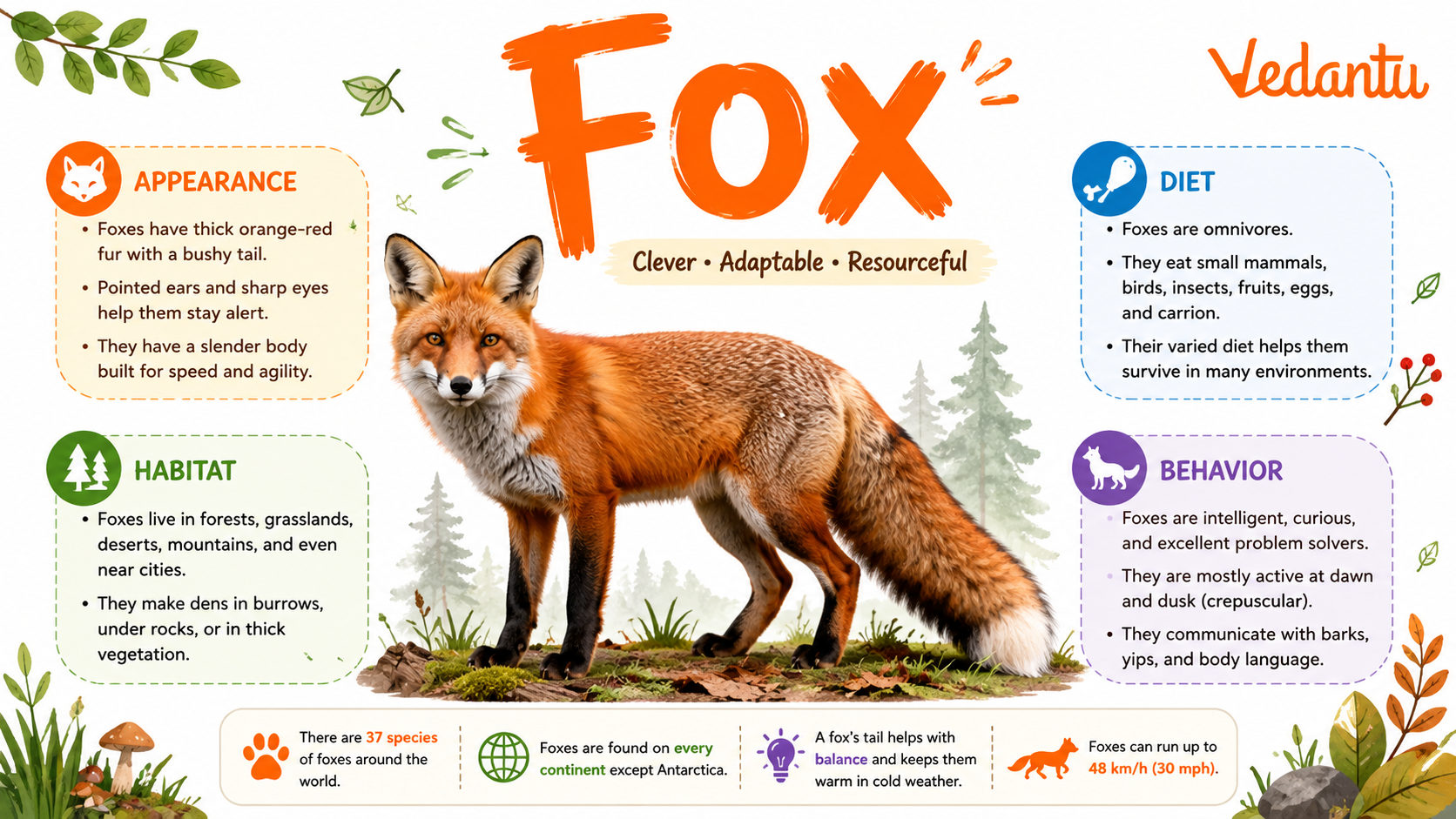
Quick Facts About Fox
| Feature | Details |
|---|---|
| Common Name | Fox |
| Scientific Genus | Vulpes (most common foxes) |
| Animal Group | Mammal |
| Size | 45–90 cm (body length) |
| Weight | 2–14 kg (varies by species) |
| Lifespan | 3–10 years in the wild |
| Diet | Omnivore (small animals, fruits, insects) |
| Habitat | Forests, grasslands, deserts, mountains, cities |
| Young One | Cub or Kit |
| Conservation Status | Most species: Least Concern |
Appearance and Physical Characteristics
- Slender body with a long, bushy tail.
- Pointed nose and upright, triangular ears.
- Sharp teeth designed for tearing food.
- Soft, thick fur that changes with seasons in some species.
- Usually reddish-brown, but can be white, grey, black, or silver.
Fox Habitat and Distribution
- Found in North America, Europe, Asia, and parts of Africa.
- Arctic foxes live in freezing polar regions.
- Fennec foxes survive in hot deserts.
- Red foxes even live near towns and cities.
- They live in underground dens called burrows.
The fox habitat is very diverse. Their ability to adjust to forests, snowy lands, grasslands, and urban areas makes them one of the most adaptable wild animals in the world.
Diet and Feeding Habits
Fox diet includes rabbits, mice, birds, insects, fruits, and berries.
They use sharp hearing to detect animals underground.
Foxes quietly approach prey before pouncing quickly.
Sometimes they bury extra food to eat later.
Behaviour and Lifestyle
- Mostly nocturnal (active at night).
- Usually solitary but may live in small family groups.
- Communicate using barks, screams, and body language.
- Very territorial and mark areas with scent.
- Fast runners and skilled jumpers.
Life Cycle of a Fox
- Mating Season: Usually in winter.
- Birth: Mother gives birth to 2–6 cubs in a den.
- Baby Stage: Cubs are born blind and depend on their mother.
- Growing Up: Cubs start exploring outside the den after a few weeks.
- Adult Stage: They become independent within 6–7 months.
What Makes Fox Special?
Can hear small animals moving underground.
Survives in extreme cold and hot climates.
Keeps them warm in icy regions.
Known for clever hunting strategies.
Types of Foxes
- Red Fox: Most common and widely distributed.
- Arctic Fox: White fur, lives in polar regions.
- Fennec Fox: Smallest fox with very large ears.
- Grey Fox: Can climb trees.
Importance and Role in Nature
Helps control rodent populations.
Spreads seeds by eating fruits.
Acts as both predator and prey.
Keeps animal populations balanced.
Amazing Fox Facts
- Foxes can run up to 50 km per hour.
- They have whiskers on their legs to help them navigate.
- Arctic fox fur changes colour with seasons.
- Fennec fox ears help release body heat.
- Foxes use over 20 different sounds to communicate.
- They can leap high into the air to catch prey.
Fun Facts for Kids
FAQs on Fox Animal Guide: Amazing Facts About Foxes
1. What is a fox?
A fox is a small to medium-sized wild animal known for its intelligence and bushy tail.
- It belongs to the Canidae family, like dogs and wolves
- The most common species is the Red Fox (Vulpes vulpes)
- Foxes are found in forests, grasslands, deserts, and even cities
- They are known for being clever and adaptable animals
2. Where do foxes live?
Foxes live in many different habitats around the world because they are highly adaptable animals.
- They are found in North America, Europe, Asia, and Africa
- Common habitats include forests, grasslands, mountains, and deserts
- Some foxes live in urban areas near humans
- They sleep in underground homes called dens
3. What do foxes eat?
Foxes are omnivores, which means they eat both plants and animals.
- They hunt small animals like mice, rabbits, and birds
- They eat insects, frogs, and eggs
- They also enjoy fruits, berries, and vegetables
- In cities, they may eat leftover food
4. Are foxes dangerous to humans?
Foxes are generally not dangerous to humans and prefer to avoid people.
- They are usually shy and cautious
- Fox attacks on humans are very rare
- Like all wild animals, they should not be touched or fed
- Some foxes can carry diseases like rabies
5. How long do foxes live?
Foxes have different lifespans depending on where they live.
- In the wild, most foxes live about 3 to 6 years
- In safe environments like zoos, they can live up to 10–14 years
- Predators, illness, and habitat loss affect their lifespan
6. What are baby foxes called?
Baby foxes are called kits, and they are born in underground dens.
- A female fox is called a vixen
- A male fox is called a dog fox or tod
- Kits are born blind and depend on their mother
- Both parents often help raise the young
7. What are the different types of foxes?
There are about 37 species of foxes found around the world.
- The most common is the Red Fox
- The Arctic Fox lives in cold snowy regions
- The Fennec Fox has large ears and lives in deserts
- The Gray Fox can climb trees
8. Why are foxes considered clever animals?
Foxes are considered clever because they are smart problem-solvers and skilled hunters.
- They use sharp hearing to find prey under snow
- They adapt easily to new environments
- They are often featured as trickster characters in stories and folklore
- The phrase "sly as a fox" shows their reputation for intelligence
9. Do foxes hibernate in winter?
Foxes do not hibernate, but they stay active all year round.
- The Arctic Fox grows thick fur for warmth
- Foxes may store extra food during cold months
- They hunt even in snow and icy weather
- Their bushy tail helps keep them warm while sleeping
10. How do foxes communicate?
Foxes communicate using sounds, body language, and scent marking.
- They make different noises like barks, screams, and howls
- They use their tail and ears to show feelings
- Foxes mark territory with scent glands
- Communication helps them find mates and protect their area
