






How Flying Squirrels Glide, What They Eat, and Where They Live
Flying squirrels are small, tree-living mammals known for their amazing gliding ability. Even though they are called “flying” squirrels, they do not truly fly like birds. Instead, they glide from tree to tree using a special skin membrane. These cute and active animals are mostly seen at night and live high up in forests. Learning about flying squirrel facts, habitat, diet, and life cycle helps us understand how beautifully nature designs animals for survival.
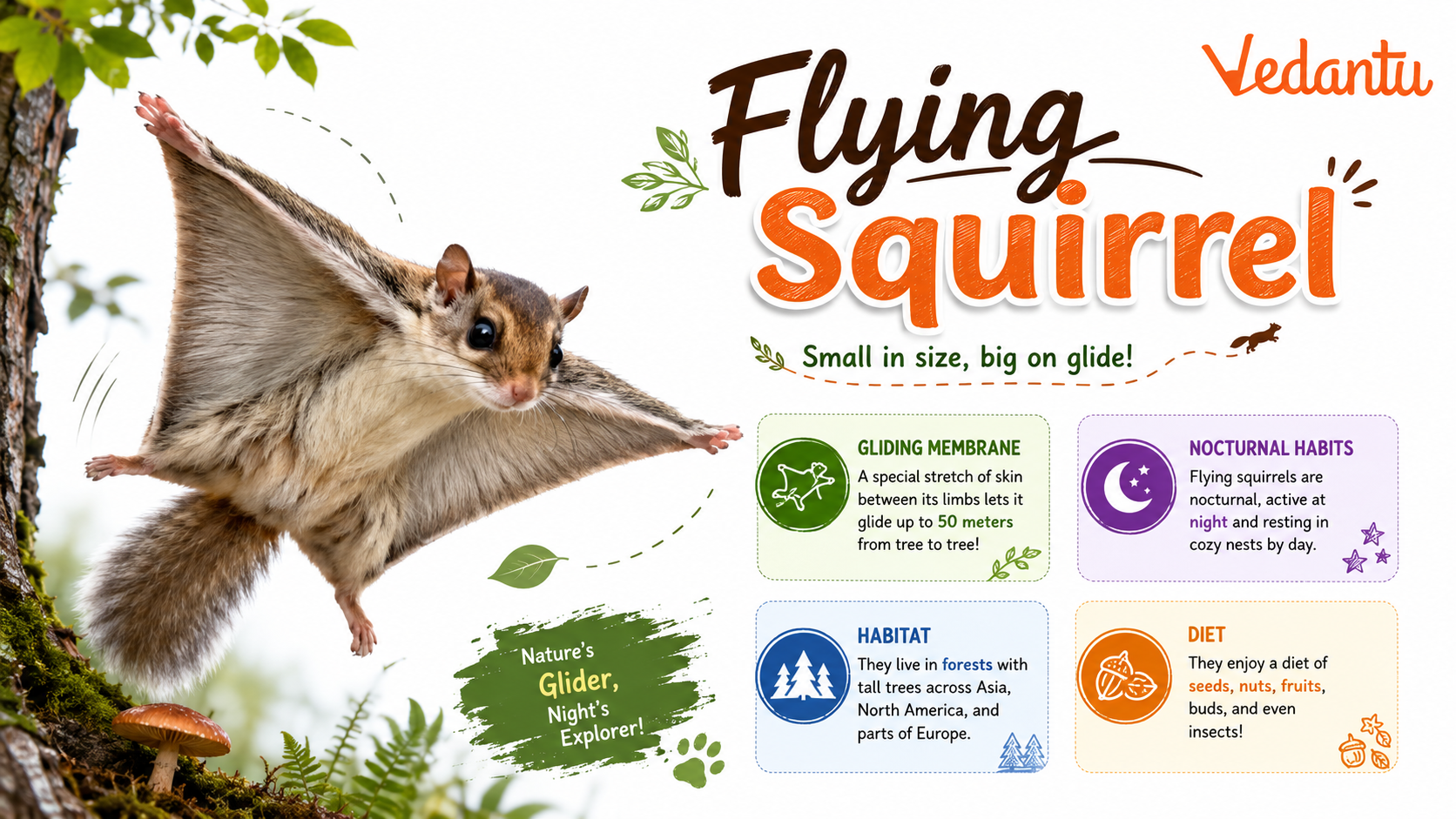
Quick Facts and Statistics
| Feature | Details |
|---|---|
| Common Name | Flying Squirrel |
| Scientific Group | Pteromyini Tribe |
| Animal Group | Mammal |
| Size | 20–30 cm (including tail) |
| Weight | About 100–170 grams |
| Lifespan | 5–10 years (in the wild) |
| Habitat | Forests and woodlands |
| Diet | Omnivore (nuts, fruits, insects) |
| Special Feature | Gliding membrane called patagium |
Appearance and Physical Characteristics
- Small, soft-bodied squirrel with large, round eyes.
- Usually grey, brown, or reddish fur with a lighter belly.
- Long, bushy tail for balance and steering.
- Big eyes help in seeing clearly at night.
- Loose fold of skin (patagium) stretches between front and back legs.
Habitat and Distribution
- Found in North America, Europe, and Asia.
- Live in dense forests with tall trees.
- Prefer mixed forests with plenty of nuts and fruits.
- Make nests in tree holes or abandoned woodpecker nests.
- Active mainly during the night.
Diet and Feeding Habits
- Omnivores – eat both plant and animal matter.
- Feed on nuts, seeds, fruits, berries, and tree sap.
- Also eat insects, bird eggs, and small fungi.
- Store food in tree holes for winter.
Behaviour and Lifestyle
- Nocturnal – active at night.
- Shy and quiet animals.
- Glide from tree to tree to escape predators.
- Use tail to steer while gliding.
- Communicate through soft chirps and squeaks.
Life Cycle and Reproduction
- Mating Season: Usually in late winter or early spring.
- Birth: Mother gives birth to 2–6 babies in a tree nest.
- Baby Stage: Born blind and hairless.
- Growing Up: Start gliding after about 6–8 weeks.
- Adult Stage: Become fully independent within a few months.
What Makes Flying Squirrels Special?
Gliding Adaptations
- Patagium acts like a parachute.
- Lightweight body reduces falling speed.
- Flattened tail helps in steering.
- Strong hind legs push off from trees.
Importance and Role in Nature
Amazing Flying Squirrel Facts
- There are more than 50 species of flying squirrels worldwide.
- They cannot truly fly like birds or bats.
- Their gliding skin stretches from wrist to ankle.
- They rotate their body mid-air to land safely.
- They use smell to find stored food.
- Some species glow pink under ultraviolet light.
Fun Facts for Kids
FAQs on Flying Squirrel: Amazing Gliding Mammal Facts Explained
1. What is a flying squirrel?
A flying squirrel is a small nocturnal rodent that can glide through the air using a special skin flap called a patagium.
- It does not truly fly like a bird or bat.
- It spreads its legs to stretch the patagium for gliding.
- It belongs to the squirrel family (Sciuridae).
- There are more than 50 species of flying squirrels worldwide.
2. How do flying squirrels fly or glide?
Flying squirrels glide by stretching a loose flap of skin between their front and back legs.
- The patagium acts like a parachute.
- They leap from tall trees to start gliding.
- Their flat tail helps with steering and balance.
- They can glide up to 150 feet (45 meters) or more.
3. Where do flying squirrels live?
Flying squirrels live in forests and woodlands across different parts of the world.
- Found in North America, Europe, and Asia.
- Prefer dense forests with tall trees.
- Live in tree holes, nests, or woodpecker cavities.
- Some species live in tropical rainforests.
4. What do flying squirrels eat?
Flying squirrels are mostly omnivores and eat a mix of plant and animal foods.
- Nuts, seeds, and fruits
- Mushrooms and fungi
- Tree bark and sap
- Insects, bird eggs, and small animals (sometimes)
5. Are flying squirrels nocturnal?
Yes, flying squirrels are nocturnal animals, meaning they are active at night.
- They search for food after sunset.
- Their large eyes help them see in the dark.
- They avoid daytime predators like hawks.
- They rest in nests during the day.
6. Are flying squirrels dangerous to humans?
Flying squirrels are generally not dangerous and are shy forest animals.
- They avoid humans whenever possible.
- They may bite only if scared or handled.
- They are wild animals and not typical pets.
- They play an important role in forest ecosystems.
7. How big is a flying squirrel?
Flying squirrels are small to medium-sized squirrels with long, bushy tails.
- Body length: about 8 to 12 inches (20–30 cm).
- Tail length: almost as long as their body.
- Weigh between 2 to 6 ounces depending on species.
- They are smaller than many tree squirrels.
8. What adaptations help flying squirrels survive?
Flying squirrels have special adaptations that help them glide and stay safe.
- The patagium for gliding between trees.
- Large eyes for night vision.
- Sharp claws for climbing trees.
- Soft fur for warmth in cold forests.
9. Do flying squirrels hibernate?
Most flying squirrels do not fully hibernate but reduce activity in winter.
- They may enter short periods of torpor.
- They store food for colder months.
- They share nests to stay warm.
- Activity depends on climate and species.
10. Why are flying squirrels important to the ecosystem?
Flying squirrels help keep forests healthy by spreading seeds and fungi.
- They spread tree seeds while eating.
- They help grow mushrooms and forest fungi.
- They are prey for owls and other predators.
- They support overall forest biodiversity.
