






What Do Flying Foxes Eat, Where Do They Live, and Why Are They Important?
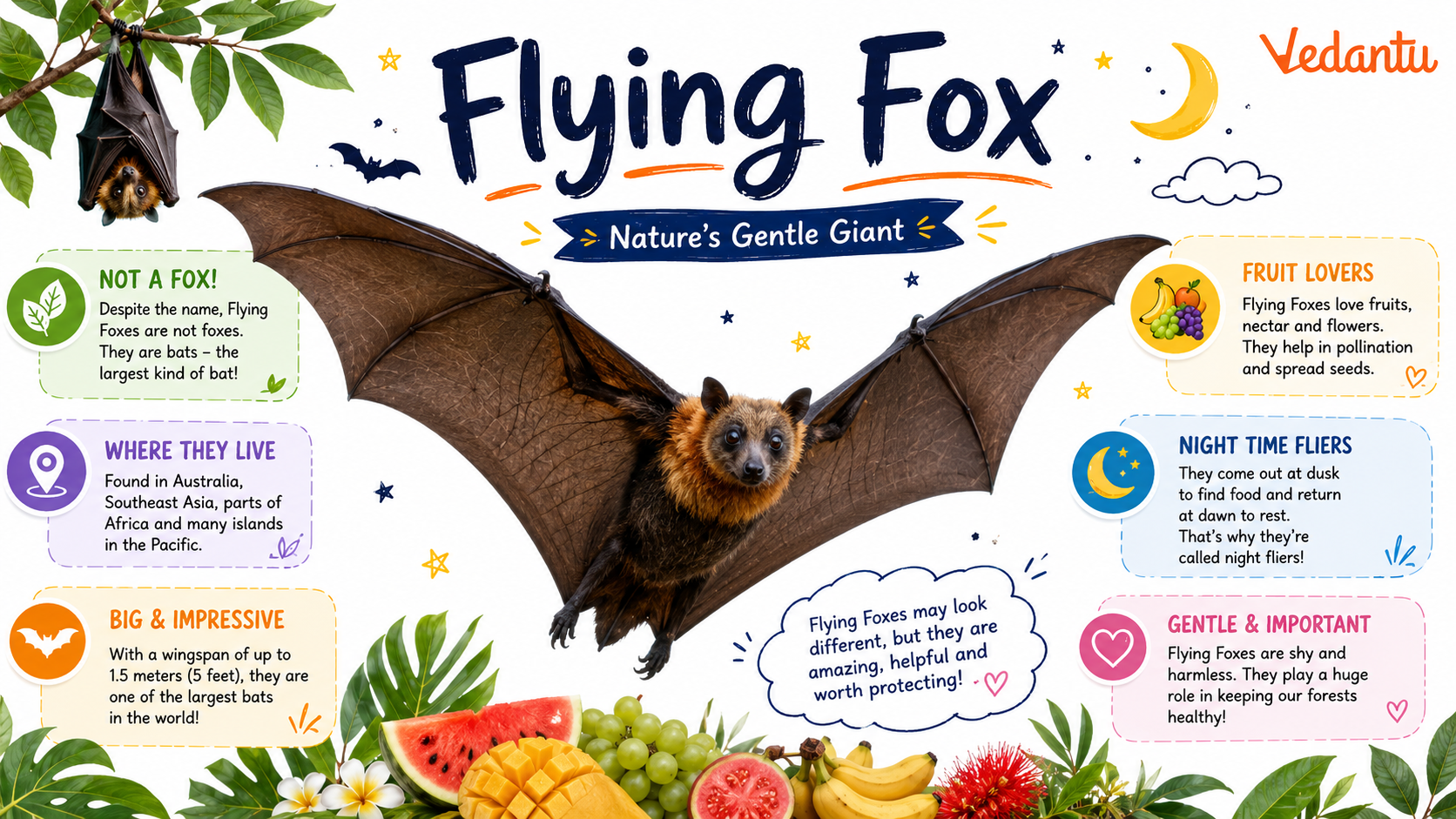
Quick Facts About Flying Fox
| Feature | Details |
|---|---|
| Common Name | Flying Fox |
| Scientific Name | Pteropus (Genus) |
| Animal Group | Mammal (Bat) |
| Wingspan | Up to 1.5 meters (about 5 feet) |
| Diet | Fruits, nectar, flowers |
| Habitat | Tropical and subtropical forests |
| Lifespan | Up to 15–30 years |
| Conservation Status | Varies by species (some threatened) |
Appearance and Physical Characteristics
- Large body with long, strong wings.
- Fox-like face with big eyes and pointed ears.
- Thick fur around the neck and shoulders.
- Colour ranges from brown and reddish to golden.
- Sharp claws to hang upside down from trees.
Flying Fox Habitat and Distribution
- Found in Australia, South Asia, Southeast Asia, and parts of Africa.
- Prefer tropical and subtropical forests.
- Often live near rivers, mangroves, and coastal areas.
- Rest in large groups called colonies or camps.
- Hang upside down on tall trees during the day.
Flying Fox Diet and Feeding Habits
- Herbivores – mainly eat fruits.
- Also drink nectar and eat flowers.
- Use strong teeth to chew fruit and suck out juice.
- Can travel long distances at night to find food.
Behaviour and Lifestyle
Flying Fox Life Cycle
- Birth: Female usually gives birth to one baby per year.
- Baby (Pup): The baby clings to its mother for several weeks.
- Growing Stage: Learns to fly after a few months.
- Adult: Becomes fully grown and joins the colony.
Flight Adaptations
- Large wings made of skin stretched between long fingers.
- Lightweight skeleton for easier flight.
- Strong chest muscles to power their wings.
- Excellent eyesight for night flying.
What Makes Flying Fox Special?
Importance and Role in Nature
- Pollinate flowers while drinking nectar.
- Spread seeds over long distances.
- Support forest regeneration.
- Maintain balance in tropical ecosystems.
Amazing Flying Fox Facts
Fun Facts for Kids
- Flying Foxes are bats, not foxes!
- They look like tiny foxes with wings.
- They love sweet fruits like mangoes and bananas.
- They use their feet to hang like superheroes.
- They help grow new forests without planting seeds!
FAQs on Flying Fox: Fascinating Facts About These Giant Fruit Bats
1. What is a Flying Fox?
A Flying Fox is a large fruit bat known for its fox-like face and wide wings.
- It belongs to the bat family (Pteropodidae).
- Also called a fruit bat.
- Has a wingspan of up to 1.5 meters.
- Feeds mainly on fruits, nectar, and flowers.
- Found in Australia, Asia, and Africa.
2. Why is it called a Flying Fox?
It is called a Flying Fox because its face looks like a small fox and it can fly.
- Has a pointed snout like a fox.
- Has large eyes and furry head.
- Uses strong bat wings to glide in the sky.
- Name is common in Australia and nearby regions.
3. Where do Flying Foxes live?
Flying Foxes live in warm regions with plenty of fruit trees.
- Found in tropical and subtropical forests.
- Live in Australia, India, Southeast Asia, and Africa.
- Sleep in large groups called colonies or camps.
- Rest on tall trees during daytime.
4. What do Flying Foxes eat?
Flying Foxes mainly eat fruits and help nature grow more trees.
- Love mangoes, bananas, figs, and guavas.
- Drink flower nectar.
- Help in pollination and seed spreading.
- Known as important ecosystem helpers.
5. Are Flying Foxes dangerous to humans?
Flying Foxes are generally not dangerous and avoid humans.
- They are shy and gentle animals.
- Do not attack unless threatened.
- Should not be touched in the wild.
- Play a key role in maintaining forest ecosystems.
6. How big is a Flying Fox?
Flying Foxes are among the largest bats in the world.
- Wingspan can reach up to 1.5 meters (5 feet).
- Body length is about 15–30 cm.
- Weigh between 0.6 to 1.5 kg.
- Bigger than most microbats.
7. Do Flying Foxes sleep upside down?
Yes, Flying Foxes sleep hanging upside down from trees.
- Use strong clawed feet to grip branches.
- Rest during the daytime.
- Are nocturnal animals (active at night).
- Fly out at dusk to find food.
8. How do Flying Foxes help the environment?
Flying Foxes help forests grow by spreading seeds and pollinating flowers.
- Carry seeds over long distances.
- Help plants grow in new areas.
- Support biodiversity in forests.
- Important for healthy rainforests and woodlands.
9. What is the difference between a Flying Fox and a zipline?
A Flying Fox can also mean a playground zipline, but it is different from the bat.
- Flying Fox (animal) is a large fruit bat.
- Flying Fox (zipline) is a cable ride in parks.
- Zipline is used for fun and adventure sports.
- The name comes from the idea of gliding through the air.
10. Are Flying Foxes endangered?
Some species of Flying Foxes are threatened due to habitat loss and hunting.
- Loss of forests reduces food and shelter.
- Affected by climate change.
- Protected under wildlife laws in many countries.
- Conservation helps protect these important fruit bats.
