






Types of Finches, Diet, Habitat, and Interesting Facts
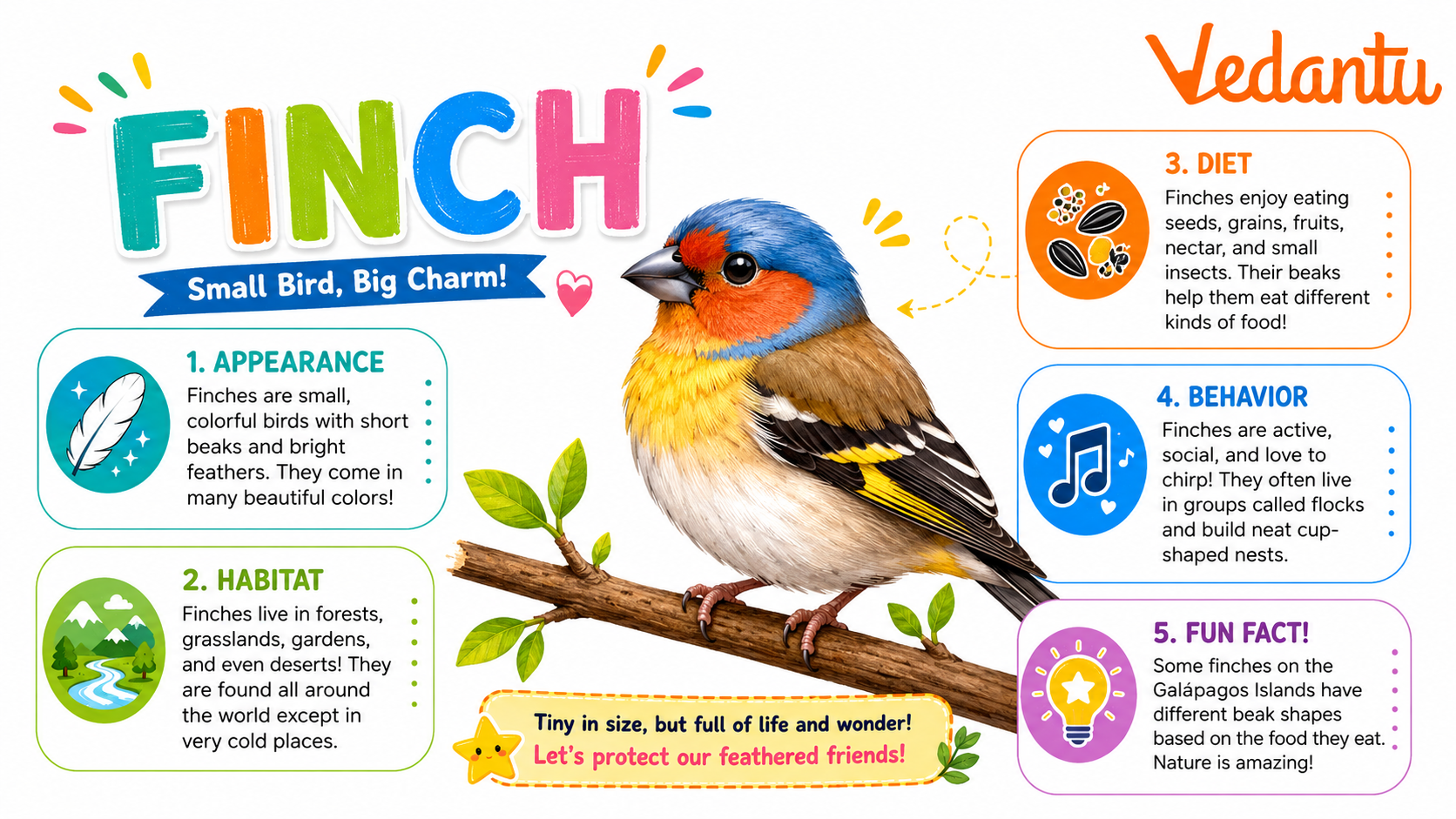
Quick Facts About Finch
| Feature | Details |
|---|---|
| Common Name | Finch |
| Scientific Family | Fringillidae (true finches) |
| Animal Group | Bird (Songbird) |
| Size | 8–15 cm long (varies by species) |
| Weight | 10–30 grams |
| Lifespan | 4–10 years (some live longer in captivity) |
| Diet | Mainly seeds; also fruits and insects |
| Habitat | Forests, grasslands, gardens, deserts |
| Special Feature | Thick, cone-shaped beak |
| Famous Example | Darwin’s finches (Galápagos Islands) |
Appearance and Physical Characteristics
- Body Shape: Small, rounded body with a short tail.
- Beak: Short, thick and powerful for breaking seeds.
- Feathers: Soft and smooth.
- Colours: Brown, red, yellow, orange, or mixed patterns depending on the species.
- Size: Usually as small as a sparrow.
Habitat and Distribution
Finch habitat varies widely depending on the species. These adaptable birds are found almost all over the world.
- Forests and woodlands
- Grasslands and meadows
- Deserts (like the Galápagos Islands)
- Mountains and cold regions
- Urban gardens and parks
Diet and Feeding Habits
- Primary Food: Seeds and grains
- Also Eats: Fruits, buds, and small insects
- Feeding Style: Picks seeds from plants or the ground
- Role in Nature: Helps in seed dispersal
Behaviour and Lifestyle
- Social Nature: Many finches live in small flocks.
- Activity: Mostly active during the day (diurnal).
- Movement: Quick and active flyers.
- Communication: Use chirps and sweet songs.
- Migration: Some species migrate in winter.
Life Cycle of a Finch
- Egg Stage: Female lays 2–6 small eggs in a nest.
- Incubation: Eggs hatch in about 12–14 days.
- Chick Stage: Parents feed chicks seeds and insects.
- Fledgling: Young birds learn to fly after 2–3 weeks.
- Adult: Fully grown and ready to reproduce.
Flight Adaptations
Sound and Call
Finches are known for their pleasant chirping sounds and songs.
- Short, high-pitched chirps
- Melodious songs by males
- Used to attract mates and mark territory
Types of Finches
Importance and Role in Nature
- Help control plant growth by eating seeds.
- Assist in spreading seeds to new areas.
- Provide food for larger birds and animals.
- Important in scientific studies of evolution.
Amazing Finch Facts
Fun Facts for Kids
- Finches love sunflower seeds!
- They are about the size of your palm.
- Some finches have red faces and yellow wings.
- They build cosy nests with soft grass.
- Baby finches grow very fast.
FAQs on Finch Bird: Complete Guide to Types, Habitat, and Behavior
1. What is a finch?
A finch is a small, colorful bird known for its cheerful songs and strong beak.
- Finches belong to the bird family called Fringillidae.
- They are famous for their short, cone-shaped beaks.
- Most finches eat seeds, grains, and small insects.
- They are found in many parts of the world, including forests, gardens, and grasslands.
2. Where do finches live?
Finches live in many different habitats around the world.
- They are commonly found in woodlands, grasslands, and gardens.
- Some species live in mountains and tropical areas.
- The famous Darwin’s finches live on the Galápagos Islands.
- Finches build small nests in trees or bushes.
3. What do finches eat?
Finches mainly eat seeds but may also enjoy insects and fruits.
- Their strong beaks help them crack open hard seeds.
- Some finches eat berries and small fruits.
- During breeding season, they may feed chicks insects for protein.
- Many pet finches eat special birdseed mixes.
4. Why are Darwin’s finches important?
Darwin’s finches are important because they helped explain the theory of evolution.
- Charles Darwin studied them in 1835.
- He noticed their beaks were shaped differently depending on their food.
- This helped him develop the idea of natural selection.
- They are a key example in science and biology studies.
5. What do finches look like?
Finches are small birds with bright feathers and thick beaks.
- They usually have a short, cone-shaped beak.
- Many species are colorful, with red, yellow, or green feathers.
- Males are often more brightly colored than females.
- They have compact bodies and short wings.
6. Are finches good pets?
Yes, finches are popular pet birds because they are small and easy to care for.
- They are quiet compared to parrots.
- Zebra finches and society finches are common pet types.
- They need a roomy cage and fresh food daily.
- Finches prefer living in pairs or small groups.
7. How do finches build their nests?
Finches build small, safe nests to protect their eggs and chicks.
- They use grass, twigs, and soft plant fibers.
- Nests are usually built in trees, bushes, or shrubs.
- The female lays several small eggs.
- Both parents may help feed the baby birds.
8. How long do finches live?
Finches can live several years depending on their species and environment.
- Wild finches usually live around 4 to 7 years.
- Pet finches may live up to 10 years with good care.
- Proper diet and safe shelter help them live longer.
- Predators and harsh weather affect wild finches.
9. What sounds do finches make?
Finches are known for their sweet and cheerful songs.
- They make soft chirping and trilling sounds.
- Male finches sing to attract females.
- Each species has its own unique song pattern.
- Pet finches often sing during the day.
10. How many types of finches are there?
There are more than 200 species of finches around the world.
- Examples include the house finch, goldfinch, and zebra finch.
- Some finches live in cold regions, while others prefer warm climates.
- Different species have different beak shapes and colors.
- All finches share similar traits like seed-eating habits.
