






What Is a Feline? Meaning, Types, Behavior, and Daily Care Tips
Felines are a group of mammals that belong to the cat family. From tiny domestic cats to powerful lions and speedy cheetahs, felines are known for their sharp senses, flexible bodies, and excellent hunting skills. They are found in many parts of the world and play an important role in maintaining balance in nature. Let’s explore interesting feline facts, their habitat, diet, characteristics, life cycle, and importance in the ecosystem.
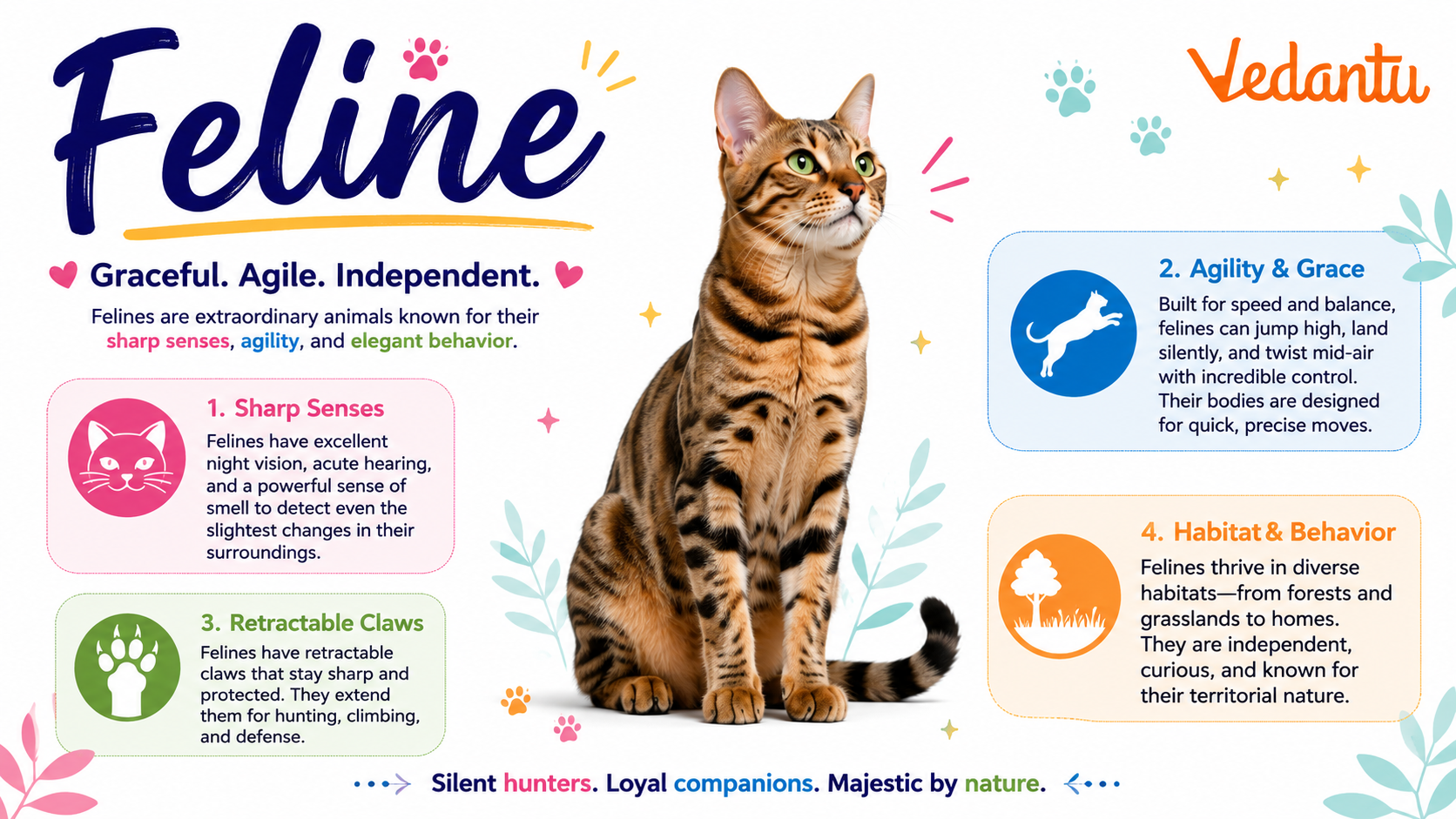
Quick Facts About Felines
| Feature | Details |
|---|---|
| Animal Group | Mammal |
| Scientific Family | Felidae |
| Diet | Carnivore (meat-eater) |
| Habitat | Forests, grasslands, mountains, deserts, and homes |
| Lifespan | 10–20 years (varies by species) |
| Young One | Kitten or Cub |
| Special Feature | Retractable claws and night vision |
Appearance and Physical Characteristics
- Soft fur covering the body.
- Sharp, retractable claws for hunting and climbing.
- Strong jaws with pointed canine teeth.
- Long tail for balance.
- Whiskers that help sense movement and space.
- Eyes adapted for night vision.
Feline Habitat and Distribution
The feline habitat varies widely depending on the species. Felines are found on almost every continent except Antarctica.
- Forests: Tigers and leopards.
- Grasslands: Lions and cheetahs.
- Mountains: Snow leopards.
- Deserts: Sand cats.
- Homes: Domestic cats.
Diet and Feeding Habits
The feline diet mainly consists of meat. They are strict carnivores and depend on animal protein to survive.
Behaviour and Lifestyle
- Most felines are solitary animals.
- Lions are the only felines that live in groups called prides.
- Many species are nocturnal (active at night).
- They communicate through growls, roars, meows, and body language.
- Excellent climbers and swimmers (especially tigers).
Life Cycle of a Feline
- Birth: Born as kittens or cubs, usually blind and helpless.
- Infancy: Mother feeds them milk and protects them.
- Learning Stage: Cubs learn hunting skills by observing their mother.
- Adulthood: Become independent hunters.
- Old Age: Activity reduces as they age.
What Makes Felines Special?
Importance and Role in Nature
- Maintain balance in the ecosystem.
- Control herbivore and rodent populations.
- Keep prey species healthy by hunting weak animals.
- Attract tourism and support wildlife conservation.
Amazing Feline Facts
Interesting Facts About Felines
- All felines share a common ancestor.
- They walk on their toes (digitigrade movement).
- Their rough tongue helps clean fur and remove meat from bones.
- Some big cats cannot roar, while others cannot purr.
Fun Facts for Kids
FAQs on Feline Guide: Behavior, Traits, and Care Essentials
1. What is a feline?
A feline is a member of the cat family known for agility, sharp senses, and hunting skills.
- Feline refers to animals in the Felidae family.
- It includes domestic cats, lions, tigers, leopards, and cheetahs.
- They are carnivorous mammals with sharp claws and teeth.
- Felines are known for excellent night vision and flexible bodies.
2. What animals belong to the feline family?
The feline family includes both big and small wild cats as well as pet cats.
- Big cats: lions, tigers, jaguars, leopards.
- Small wild cats: lynx, ocelot, bobcat.
- Domestic cats: common household pets.
- All belong to the scientific family Felidae.
3. What do felines eat?
Felines are carnivores, which means they eat mostly meat.
- They hunt animals like birds, fish, and small mammals.
- Big cats hunt deer, zebras, or buffalo.
- Pet cats eat specially prepared cat food rich in protein.
- They need nutrients like taurine found in meat.
4. Where do felines live?
Felines live in many different habitats around the world.
- Lions live in African grasslands.
- Tigers live in forests and jungles in Asia.
- Snow leopards live in cold mountains.
- Domestic cats live in homes with humans.
5. What makes felines different from other animals?
Felines are unique because of their sharp claws, strong senses, and graceful movement.
- They have retractable claws for hunting and climbing.
- Their night vision helps them see in the dark.
- They have flexible spines for jumping and running.
- Most felines are quiet and stealthy hunters.
6. Are felines good pets?
Yes, domestic felines like cats can be loving and playful pets.
- They are independent but enjoy human companionship.
- Cats help control pests like mice.
- They need proper care, food, and regular vet visits.
- Some wild felines are not safe as pets.
7. How do felines communicate?
Felines communicate using sounds, body language, and scent.
- Meowing and purring are common in domestic cats.
- Roaring is typical of big cats like lions.
- They use tail movements and ear positions to show feelings.
- Scent marking helps them claim territory.
8. Why are felines important to the ecosystem?
Felines play an important role in keeping ecosystems balanced.
- They control populations of prey animals.
- Big cats maintain healthy wildlife numbers.
- They are part of the natural food chain.
- Protecting felines supports biodiversity and conservation.
9. How fast can felines run?
Some felines are among the fastest land animals in the world.
- The cheetah can run up to 70 mph (112 km/h).
- Lions can reach speeds of 50 mph (80 km/h).
- Domestic cats can run up to 30 mph (48 km/h).
- They use speed to catch prey and escape danger.
10. What are baby felines called?
Baby felines are usually called kittens or cubs depending on the species.
- Baby domestic cats are called kittens.
- Baby lions, tigers, and leopards are called cubs.
- They are born blind and depend on their mother.
- Young felines learn hunting and survival skills as they grow.
