






Ermine Mammal Habitat, Diet, Behavior, and Winter Adaptations
The ermine mammal is a small, fast, and clever predator known for its magical colour change. Also called the stoat in many regions, this animal becomes pure white in snowy winters and brown in warmer months. Ermine facts reveal that it is fearless despite its tiny size and plays an important role in controlling rodent populations. Let’s explore the ermine habitat, diet, characteristics, life cycle, and why this little hunter is so special.
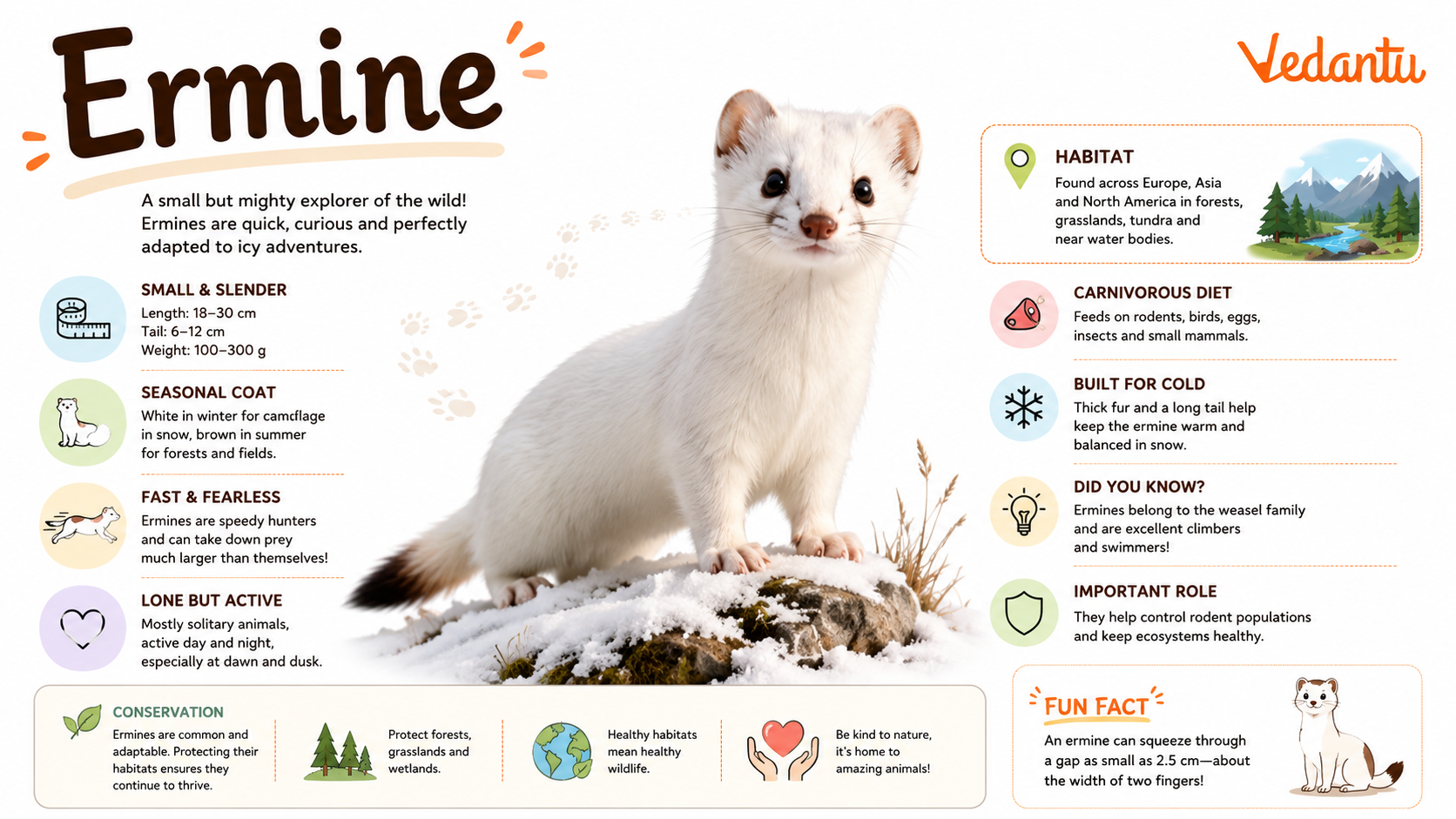
Quick Facts About the Ermine
| Feature | Details |
|---|---|
| Common Name | Ermine (also called Stoat) |
| Scientific Name | Mustela erminea |
| Animal Group | Mammal |
| Size | 17–33 cm (body length) |
| Weight | 200–450 grams |
| Lifespan | 4–7 years in the wild |
| Habitat | Forests, grasslands, tundra, and farmlands |
| Diet | Carnivore (mainly small rodents) |
| Special Feature | Turns white in winter (in cold regions) |
Appearance and Physical Characteristics
- Long, slim body with short legs.
- Pointed face and small rounded ears.
- Sharp teeth and claws for hunting.
- Long tail with a black tip (all year round).
- Soft fur that changes colour in winter.
Ermine Habitat and Distribution
The ermine habitat includes cold and temperate regions across:
- North America
- Europe
- Asia
They prefer:
- Woodlands and forests
- Grasslands and meadows
- Tundra regions
- Farmlands and hedgerows
Ermine Diet and Feeding Habits
The ermine diet mainly includes small animals. It is a strict carnivore.
- Mice
- Voles
- Rabbits
- Small birds
- Eggs
In the food chain, ermines help control rodent populations, which protects crops and maintains ecosystem balance.
Behaviour and Lifestyle
- Mostly solitary animals.
- Active during both day and night.
- Very fast runners and good climbers.
- Highly territorial.
- Use scent markings to communicate.
Ermine Life Cycle
- Mating: Usually in summer.
- Delayed Implantation: The fertilised egg waits before developing.
- Birth: Babies (called kits) are born in spring.
- Young Stage: Kits are blind and hairless at birth.
- Growth: They open their eyes after a few weeks and start learning to hunt.
- Adult: Become independent in a few months.
The ermine life cycle is unique because of delayed implantation, which ensures babies are born when food is available.
What Makes the Ermine Special?
Importance of the Ermine in Nature
Amazing Ermine Facts
- Ermine fur was once used in royal clothing.
- They can run very quickly for their small size.
- Their body shape is perfect for chasing prey in tunnels.
- They are closely related to weasels and ferrets.
- They can swim when needed.
- They may store extra food for later.
Fun Facts for Kids
FAQs on Ermine Mammal: Complete Guide to This Color‑Changing Predator
1. What is an ermine mammal?
The ermine mammal is a small, slender carnivorous animal also known as the stoat (Mustela erminea).
- Belongs to the weasel family (Mustelidae)
- Has a long body and short legs
- Famous for its white winter coat
- Lives in cold and temperate regions
- Also called short-tailed weasel in North America
2. Where do ermine mammals live?
Ermine mammals live in cold and northern parts of the world across forests, grasslands, and tundra.
- Found in North America, Europe, and Asia
- Prefer woodlands, meadows, and marshes
- Adapt well to Arctic tundra climates
- Often live in burrows made by other animals
3. What does an ermine look like?
An ermine has a long body, short legs, and changes fur color with the seasons.
- Brown fur in summer
- White fur in winter (called ermine coat)
- Always has a black tip on its tail
- Small head with round ears and bright eyes
4. Why do ermines turn white in winter?
Ermines turn white in winter for camouflage and survival in snowy habitats.
- The white coat helps them blend into snow
- Protects them from predators like foxes and owls
- Helps them sneak up on prey
- This seasonal change is called molting
5. What do ermine mammals eat?
Ermines are carnivores that mainly hunt small animals.
- Eat mice, voles, and rabbits
- Sometimes eat birds and eggs
- May catch insects and amphibians
- Are skilled and fast hunters
6. Are ermines dangerous to humans?
Ermines are not dangerous to humans and usually avoid people.
- They are small wild mammals
- Prefer to hide rather than attack
- May bite only if they feel threatened
- Play an important role in controlling rodent populations
7. How big does an ermine grow?
An ermine is a small mammal that grows to about the size of a squirrel.
- Body length: 6–13 inches
- Tail length: 3–5 inches
- Weighs less than 1 pound
- Males are usually larger than females
8. What is the difference between a stoat and an ermine?
A stoat and an ermine are the same animal, but the name changes with the season.
- Stoat refers to the brown summer coat
- Ermine refers to the white winter coat
- Scientific name: Mustela erminea
- Also known as the short-tailed weasel
9. How long do ermine mammals live?
Ermine mammals usually live a few years in the wild.
- Average lifespan: 1–3 years in nature
- Can live longer in safe environments
- Face threats from predators and harsh weather
- High energy lifestyle affects lifespan
10. Why was ermine fur important in history?
Ermine fur was historically a symbol of royalty and wealth.
- Used in royal robes and crowns
- White fur symbolized purity and power
- Popular in European monarchies
- Now protected in many areas to prevent overhunting
