






Where Do Elk Live? Diet, Behavior, and Lifespan Explained
Elk are large and powerful members of the deer family known for their impressive antlers and loud bugling calls. Found mainly in North America and parts of Asia, elk are famous for their strength, speed, and graceful movement. These amazing mammals play an important role in forest ecosystems. Learning about elk facts, elk habitat, elk diet, and elk characteristics helps us understand why they are one of the most admired wild animals.
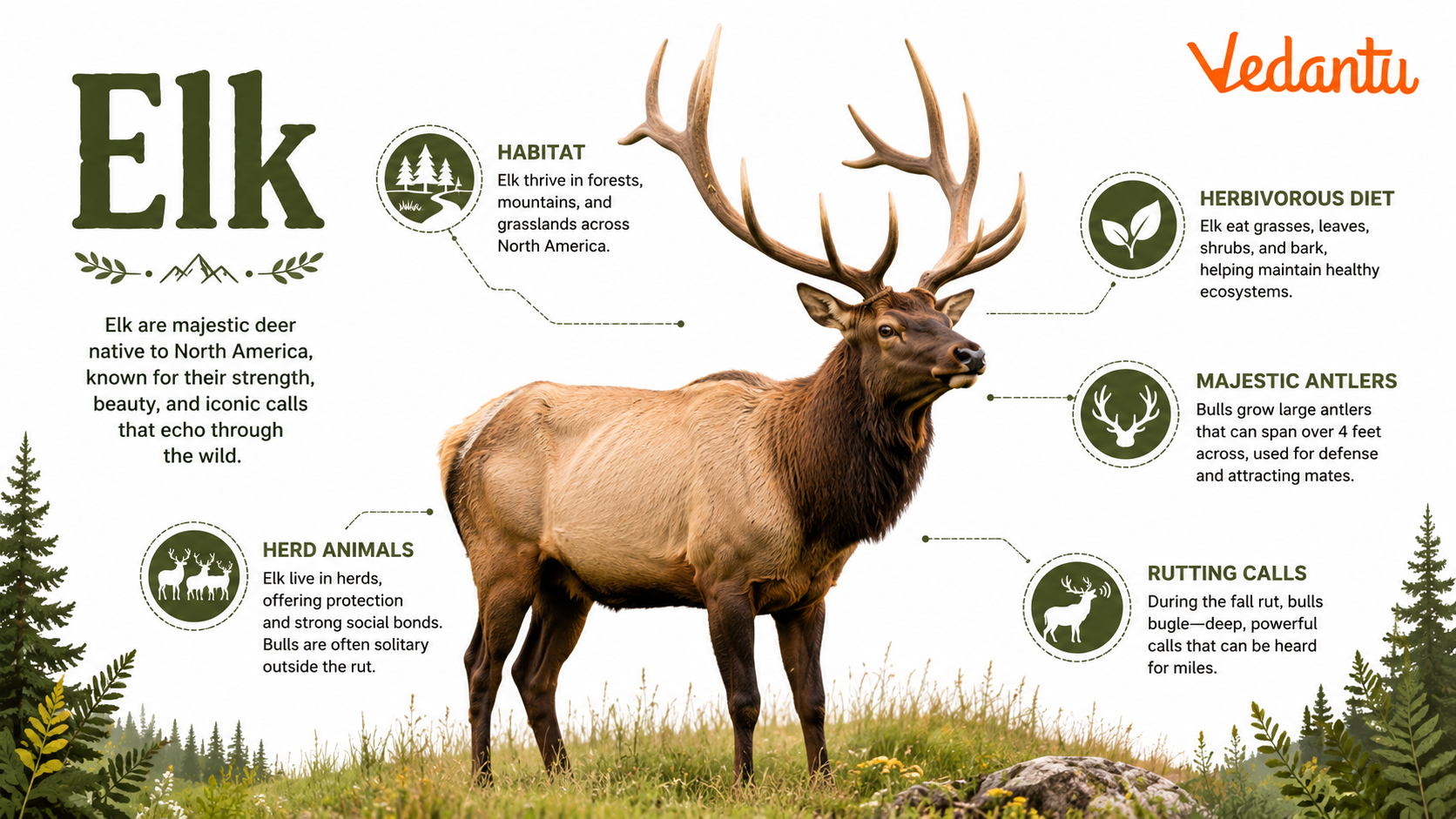
Quick Facts About Elk
| Feature | Details |
|---|---|
| Common Name | Elk |
| Scientific Name | Cervus canadensis |
| Animal Group | Mammal (Deer family) |
| Average Height | 1.2–1.5 meters at the shoulder |
| Weight | 225–500 kg (males heavier) |
| Lifespan | 10–13 years in the wild |
| Diet | Grass, leaves, bark, shrubs |
| Habitat | Forests, grasslands, mountains |
| Conservation Status | Least Concern |
Appearance and Physical Characteristics
- Large, strong body with long legs built for running.
- Reddish-brown coat in summer; thicker and darker in winter.
- Light-colored rump patch near the tail.
- Males (bulls) grow huge branching antlers every year.
- Sharp hooves help them move easily on rocky and snowy land.
Elk Habitat and Distribution
- Found mainly in North America (USA and Canada).
- Also seen in parts of eastern Asia.
- Prefer forests, mountain regions, meadows, and open grasslands.
- Migrate between high mountains in summer and lower valleys in winter.
- Need areas with plenty of grass and fresh water.
Elk Diet and Feeding Habits
Type of Eater
Elk are herbivores. They eat only plants and do not hunt other animals.Main Food
Grasses, leaves, shrubs, tree bark, and young plant shoots.Feeding Time
Most active during early morning and evening.Role in Nature
Help control plant growth and serve as prey for predators like wolves.Behaviour and Lifestyle
- Live in herds, especially females and young ones.
- Males often form separate groups except during breeding season.
- Very fast runners; can run up to 70 km/h.
- Excellent swimmers.
- Use loud bugling calls during mating season to attract females.
Elk Sound or Call
Elk Life Cycle
- Birth: Female elk give birth to one calf in late spring.
- Calf Stage: Calves have white spots for camouflage.
- Young Elk: Stay close to the mother for protection.
- Adult: Males grow antlers after about one year.
- Maturity: Ready to breed at 2–3 years of age.
What Makes Elk Special?
Importance and Role in Nature
- Maintain balance in forests by grazing on plants.
- Provide food for large predators like wolves and bears.
- Help spread plant seeds through movement.
- Support tourism and wildlife education.
Amazing Elk Facts
Fun Facts for Kids
- Elk babies are called calves.
- Only male elk grow big antlers.
- Elk can swim across rivers easily.
- They change their fur thickness in winter.
- Elk communicate using body posture and sounds.
FAQs on Elk: Complete Guide to Size, Diet, and Habitat
1. What is an elk?
An elk is a large wild deer known for its impressive antlers and loud bugling call.
- Scientific name: Cervus canadensis
- Belongs to the deer family (Cervidae)
- Also called wapiti, meaning “light-colored deer”
- Found in North America and parts of Asia
2. Where do elk live?
Elk live in forests, mountains, and grasslands where they can find plenty of food and space to roam.
- Common in Rocky Mountains and western North America
- Prefer woodlands, meadows, and national parks
- Migrate seasonally between summer and winter ranges
- Need open areas for grazing and forests for shelter
3. What do elk eat?
Elk are herbivores, which means they only eat plants.
- Graze on grasses in spring and summer
- Eat leaves, bark, and shrubs in fall and winter
- May feed on twigs and tree shoots
- Spend many hours a day grazing
4. How big can an elk grow?
Elk are one of the largest deer species in the world.
- Males (bull elk) can weigh 700–1,100 pounds
- Females (cow elk) are smaller
- Can stand about 5 feet tall at the shoulder
- Male elk grow large antlers each year
5. Why do elk have antlers?
Male elk grow antlers mainly to compete for mates.
- Antlers are used during the rut (mating season)
- Bulls fight other males to protect their herd
- Antlers fall off each winter and regrow in spring
- Bigger antlers often attract more female elk
6. What is the elk rut?
The elk rut is the mating season when bulls compete for females.
- Happens in fall (September–October)
- Bulls make a loud bugling sound
- Males may fight using their antlers
- Herds gather during this time
7. What predators hunt elk?
Elk have natural predators, especially when they are young or weak.
- Wolves are their main predators
- Also hunted by bears, mountain lions, and coyotes
- Calves are more vulnerable than adults
- Humans also hunt elk in regulated seasons
8. How do elk communicate?
Elk communicate using sounds, body language, and scent.
- Bulls use a high-pitched bugle call
- Cows and calves make softer sounds
- Use body posture to show dominance
- Mark areas with scent during mating season
9. How long do elk live?
Elk usually live between 10 and 15 years in the wild.
- Life span depends on predators and environment
- Some elk live longer in protected areas
- Calves are born in late spring
- Females often give birth to one calf at a time
10. Are elk different from moose?
Yes, elk and moose are different species of large deer.
- Moose are larger and have wide, flat antlers
- Elk have long, pointed antlers
- Moose prefer wetter habitats like swamps
- Elk are more likely to live in mountains and grasslands
