






What Makes the Drongo Bird Unique? Diet, Mimicry and Survival Skills
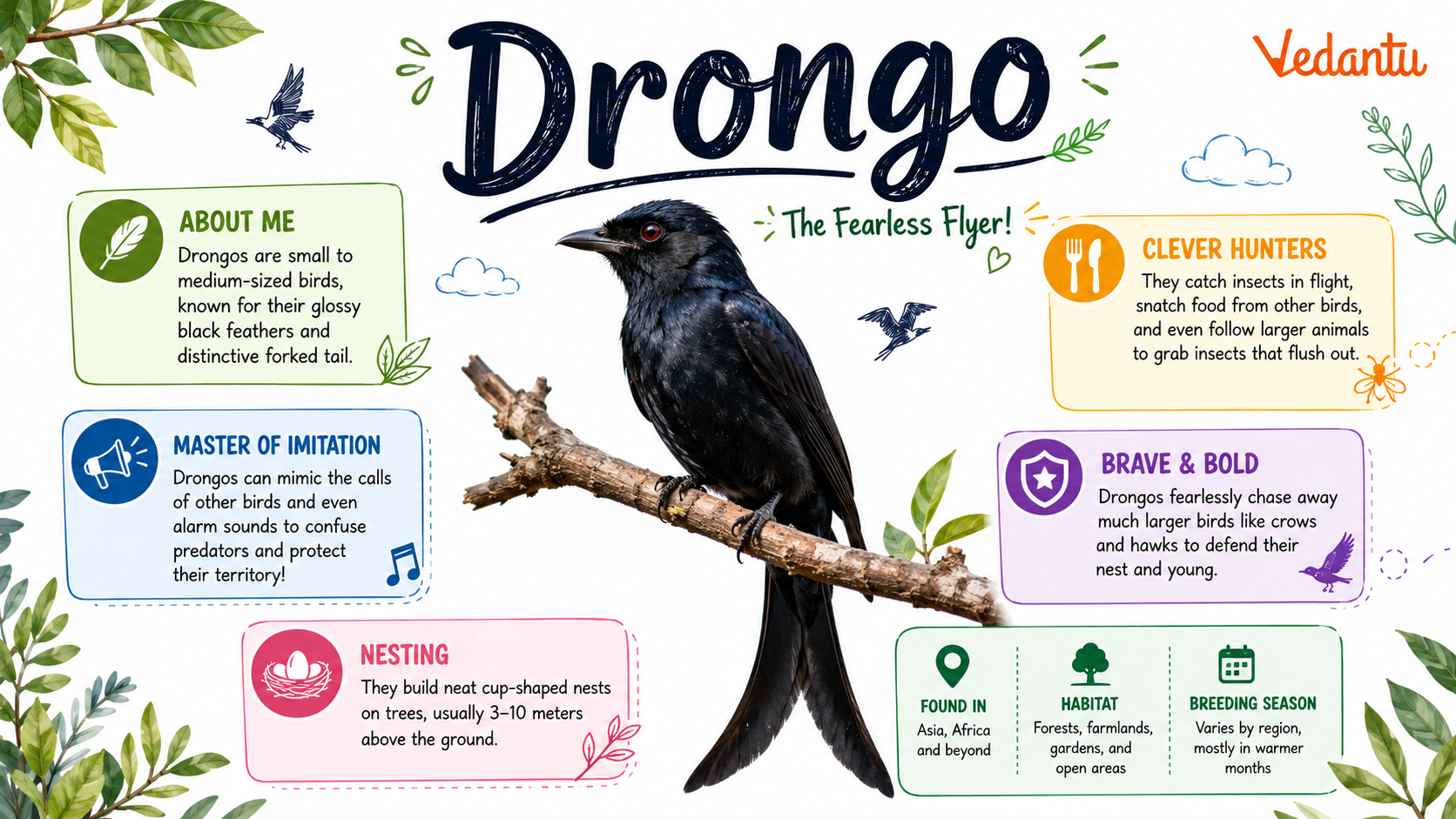
Quick Facts About Drongo
| Feature | Details |
|---|---|
| Common Name | Drongo |
| Scientific Family | Dicruridae |
| Animal Group | Bird |
| Size | About 18–28 cm long |
| Weight | 30–80 grams (varies by species) |
| Diet | Insects, small animals |
| Habitat | Forests, grasslands, gardens |
| Special Feature | Deeply forked tail |
| Conservation Status | Mostly Least Concern |
Appearance and Physical Characteristics
- Mostly shiny black or dark metallic blue feathers.
- Long, deeply forked tail that looks like a “V”.
- Strong, slightly curved beak for catching insects.
- Bright red or dark eyes in some species.
- Slim body with strong wings for fast flying.
Habitat and Distribution
- Found in Asia, Africa, and Australia.
- Common in India, Sri Lanka, Southeast Asia, and parts of Africa.
- Lives in forests, open woodlands, grasslands, and farmlands.
- Often seen sitting on electric wires, fences, or tree branches.
- Builds small cup-shaped nests high in trees.
The Drongo habitat is usually warm and tropical. It prefers open spaces where it can easily spot flying insects.
Diet and Feeding Habits
Type: Carnivorous (mainly insectivore)
- Eats flies, beetles, ants, grasshoppers, and termites.
- Sometimes eats small birds or reptiles.
- Catches insects in mid-air with quick, sharp movements.
- May follow grazing animals to catch insects they disturb.
The Drongo diet helps control insect populations, making it very useful for farmers and ecosystems.
Behaviour and Lifestyle
Drongos fearlessly chase away birds much bigger than themselves.
They are diurnal, meaning they hunt and fly mostly in daylight.
Some species can copy the calls of other birds and animals.
They strongly protect their nesting area from intruders.
Life Cycle of a Drongo
- Egg Stage: Female lays 2–4 eggs in a tree nest.
- Incubation: Parents take turns keeping the eggs warm.
- Chick Stage: Eggs hatch after about 14–18 days.
- Fledgling: Young birds learn to fly in a few weeks.
- Adult Stage: Fully grown drongos live up to 10–15 years in the wild.
Flight Adaptations
- Long, pointed wings for quick turns.
- Forked tail helps in balance and sharp direction changes.
- Lightweight body makes flying energy-efficient.
- Strong chest muscles support powerful wing beats.
Sound and Call
Drongos make sharp whistles, metallic notes, and harsh scolding sounds. Some species are excellent mimics and can copy alarm calls of other birds to scare them away from food. This clever trick shows their intelligence and adaptability.
What Makes Drongo Special?
Importance and Role in Nature
- Controls harmful insect populations.
- Protects crops by eating pests.
- Maintains ecological balance.
- Acts as an indicator of a healthy environment.
Amazing Drongo Facts
- There are about 29 different species of Drongos.
- Most species have glossy black feathers.
- Some Drongos trick other animals by giving false alarm calls.
- They can perform quick aerial acrobatics.
- They are often seen alone or in pairs.
- They sometimes follow cattle to catch insects.
Fun Facts for Kids
FAQs on Drongo Bird: Fascinating Facts, Behavior and Natural Habitat
1. What is a Drongo?
A Drongo is a small to medium-sized, clever bird known for its shiny black feathers and forked tail.
- Belongs to the bird family Dicruridae
- Found mainly in Africa, Asia, and Australia
- Famous for its loud calls and mimicry skills
- Often seen sitting on trees or flying quickly to catch insects
2. Where do Drongos live?
Drongos live in warm regions with trees, forests, and open woodlands.
- Common in tropical forests and savannas
- Found in countries across India, Africa, Southeast Asia, and Australia
- Prefer areas with plenty of insects to eat
- Some species live near farms and villages
3. What do Drongos eat?
Drongos mainly eat insects and are excellent hunters.
- Feed on flies, beetles, ants, and grasshoppers
- Catch insects while flying (called hawking)
- Sometimes eat small birds or nectar
- Help control pest insects in farms
4. Why are Drongos called clever birds?
Drongos are called clever because they can copy other animals’ sounds and trick them.
- Known for amazing mimicry abilities
- Imitate alarm calls of other birds and animals
- Scare animals away to steal their food
- Show smart survival behavior in the wild
5. What does a Drongo look like?
A Drongo usually has shiny dark feathers and a unique forked tail.
- Mostly black or dark blue in color
- Bright red or brown eyes in some species
- Long, deeply forked tail
- Strong, slightly curved beak
6. How many types of Drongos are there?
There are about 25 different species of Drongos around the world.
- Famous species include the Black Drongo
- Greater Racket-tailed Drongo has long tail streamers
- Ashy Drongo is gray instead of black
- Each species lives in slightly different habitats
7. Are Drongos friendly to humans?
Drongos are not pets but often live close to humans without fear.
- Common near farms and open fields
- Help farmers by eating harmful insects
- Can be brave and chase bigger birds away
- Usually avoid direct human contact
8. Do Drongos migrate?
Some Drongo species migrate while others stay in one place all year.
- Black Drongo migrates in parts of Asia
- Move to warmer places during winter
- Other species are resident birds
- Migration depends on food availability
9. How do Drongos protect themselves?
Drongos protect themselves by being bold and using clever tricks.
- Chase away larger birds like hawks
- Use loud alarm calls to scare enemies
- Hide nests high in trees
- Fly quickly and change direction fast
10. Why is the Drongo important in nature?
Drongos are important because they help keep the ecosystem balanced.
- Control insect populations naturally
- Support healthy forest and farmland ecosystems
- Serve as part of the food chain
- Indicate a healthy environment when present
