






How Big Was Diplodocus? Size, Diet, Habitat, and Fun Facts
Diplodocus was one of the longest dinosaurs that ever lived on Earth. This massive, plant-eating dinosaur roamed the planet during the Late Jurassic Period, around 154–152 million years ago. With its extremely long neck and whip-like tail, Diplodocus looked very different from most other dinosaurs. Its fossils have helped scientists understand more about dinosaur life, habitat, and behaviour. Let’s explore amazing Diplodocus facts, characteristics, habitat, and life cycle in a fun and easy way!
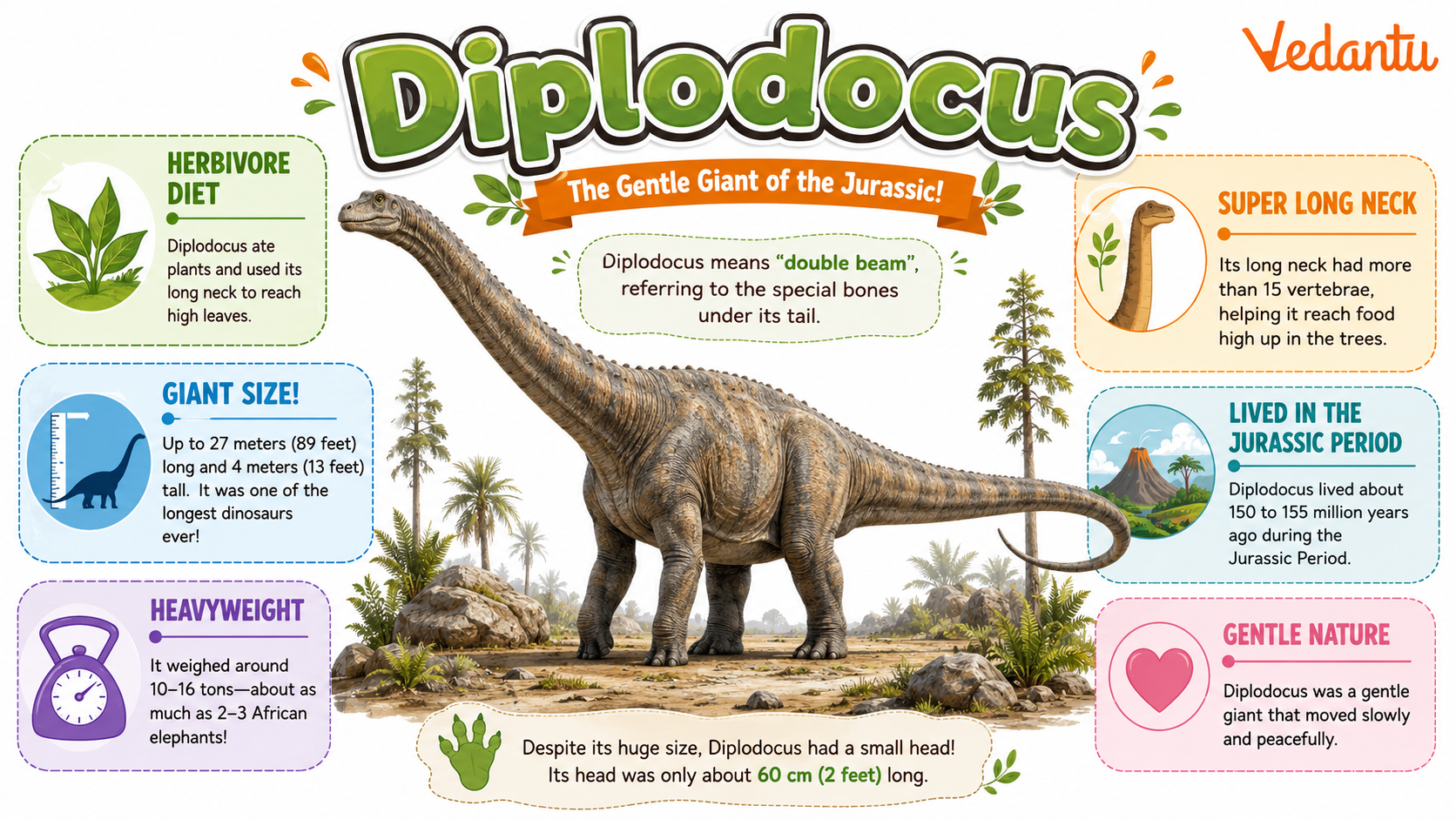
Quick Facts About Diplodocus
| Feature | Details |
|---|---|
| Common Name | Diplodocus |
| Scientific Meaning | “Double beam” (refers to special tail bones) |
| Animal Group | Dinosaur (Sauropod) |
| Period | Late Jurassic (154–152 million years ago) |
| Length | Up to 27 metres (about 88 feet) |
| Weight | 10–16 tonnes |
| Diet | Herbivore (plants) |
| Fossils Found In | North America (USA) |
Appearance and Physical Characteristics
- Very long neck to reach tall plants and trees.
- Extremely long, thin tail like a whip.
- Small head compared to its huge body.
- Peg-like teeth at the front of its mouth.
- Four strong, pillar-like legs to support its heavy body.
Diplodocus Habitat and Distribution
- Fossils found mainly in western North America.
- Lived near rivers and floodplains.
- Preferred areas with plenty of low and tall plants.
- Shared its habitat with dinosaurs like Allosaurus and Stegosaurus.
Diplodocus Diet and Feeding Habits
- Ate leaves, ferns, shrubs, and soft plants.
- Used its long neck to reach vegetation easily.
- Did not chew food much; swallowed plants quickly.
- May have swallowed small stones (gastroliths) to help digest food.
In the food chain, Diplodocus was a plant-eater, but it could become prey for large meat-eating dinosaurs like Allosaurus.
Behaviour and Lifestyle
Diplodocus Life Cycle
- Egg Stage: Females laid eggs in nests on land.
- Hatching: Baby Diplodocus hatched small and vulnerable.
- Growth: Grew rapidly to avoid predators.
- Adult Stage: Reached full length of up to 27 metres.
Scientists study fossils to understand more about the Diplodocus life cycle and growth patterns.
What Makes Diplodocus Special?
Amazing Diplodocus Facts
- Its name means “double beam” because of special bones in its tail.
- It lived over 150 million years ago.
- Despite its size, it had a very small head.
- It may have used its tail to create a loud cracking sound.
- Diplodocus fossils are among the most complete dinosaur skeletons found.
- It was longer but lighter than many other giant dinosaurs.
- Its nostrils were placed high on its head.
Interesting Facts About Diplodocus
Fun Facts for Kids
Importance of Diplodocus in Science
- Helps study Jurassic ecosystems.
- Provides information about herbivorous dinosaur diet.
- Improves understanding of dinosaur body structure and movement.
FAQs on Diplodocus: Fascinating Facts About This Giant Long-Neck Dinosaur
1. What is a Diplodocus?
A Diplodocus was a giant plant-eating dinosaur that lived millions of years ago during the Late Jurassic Period.
- It was a long-necked dinosaur called a sauropod.
- Lived about 154–152 million years ago.
- Fossils were found in North America.
- Its name means "double beam", referring to bones in its tail.
2. How big was Diplodocus?
The Diplodocus was one of the longest dinosaurs ever discovered.
- Length: about 85 feet (26 meters).
- Weight: around 10–16 tons.
- Had a very long neck and whip-like tail.
- Smaller in body compared to other giant sauropods like Brachiosaurus.
3. What did Diplodocus eat?
The Diplodocus was a gentle herbivore that ate only plants.
- Fed on leaves, ferns, and shrubs.
- Used its long neck to reach low and medium-height plants.
- Did not chew food but swallowed it whole.
- May have used gastroliths (stomach stones) to help digest food.
4. Where did Diplodocus live?
The Diplodocus lived in what is now western North America.
- Fossils found in Colorado, Utah, Wyoming, and Montana.
- Lived in floodplains and forested areas.
- Shared its habitat with dinosaurs like Stegosaurus and Allosaurus.
5. When was Diplodocus discovered?
The first Diplodocus fossil was discovered in 1877.
- Found by paleontologist Othniel Charles Marsh.
- Discovered during the famous Bone Wars.
- Helped scientists learn more about giant sauropod dinosaurs.
6. What did Diplodocus look like?
The Diplodocus had a long, slim body with a tiny head.
- Very long neck for reaching plants.
- Long, thin whip-like tail for defense.
- Four thick, pillar-like legs.
- Small head with simple, peg-like teeth.
7. How did Diplodocus protect itself?
The Diplodocus likely used its size and tail to stay safe from predators.
- Its massive size scared smaller predators.
- Could swing its tail like a whip.
- Lived in groups for extra protection.
- Main predator was Allosaurus.
8. Is Diplodocus the longest dinosaur?
The Diplodocus is one of the longest dinosaurs, but not the absolute longest ever found.
- Reached up to 85 feet long.
- Longer than many dinosaurs like Tyrannosaurus rex.
- Some sauropods like Argentinosaurus may have been heavier.
9. How did Diplodocus move?
The Diplodocus walked on four strong legs in a slow and steady way.
- Moved like other quadruped dinosaurs.
- Likely traveled in herds.
- Its long tail helped with balance.
10. Why is Diplodocus important to scientists?
The Diplodocus helps scientists understand how giant dinosaurs lived and grew.
- One of the most complete sauropod skeletons ever found.
- Displayed in museums around the world.
- Provides clues about dinosaur evolution and prehistoric life.
- Important for studying the Jurassic ecosystem.
