






Where Do Dholes Live and How Do They Hunt in Packs?
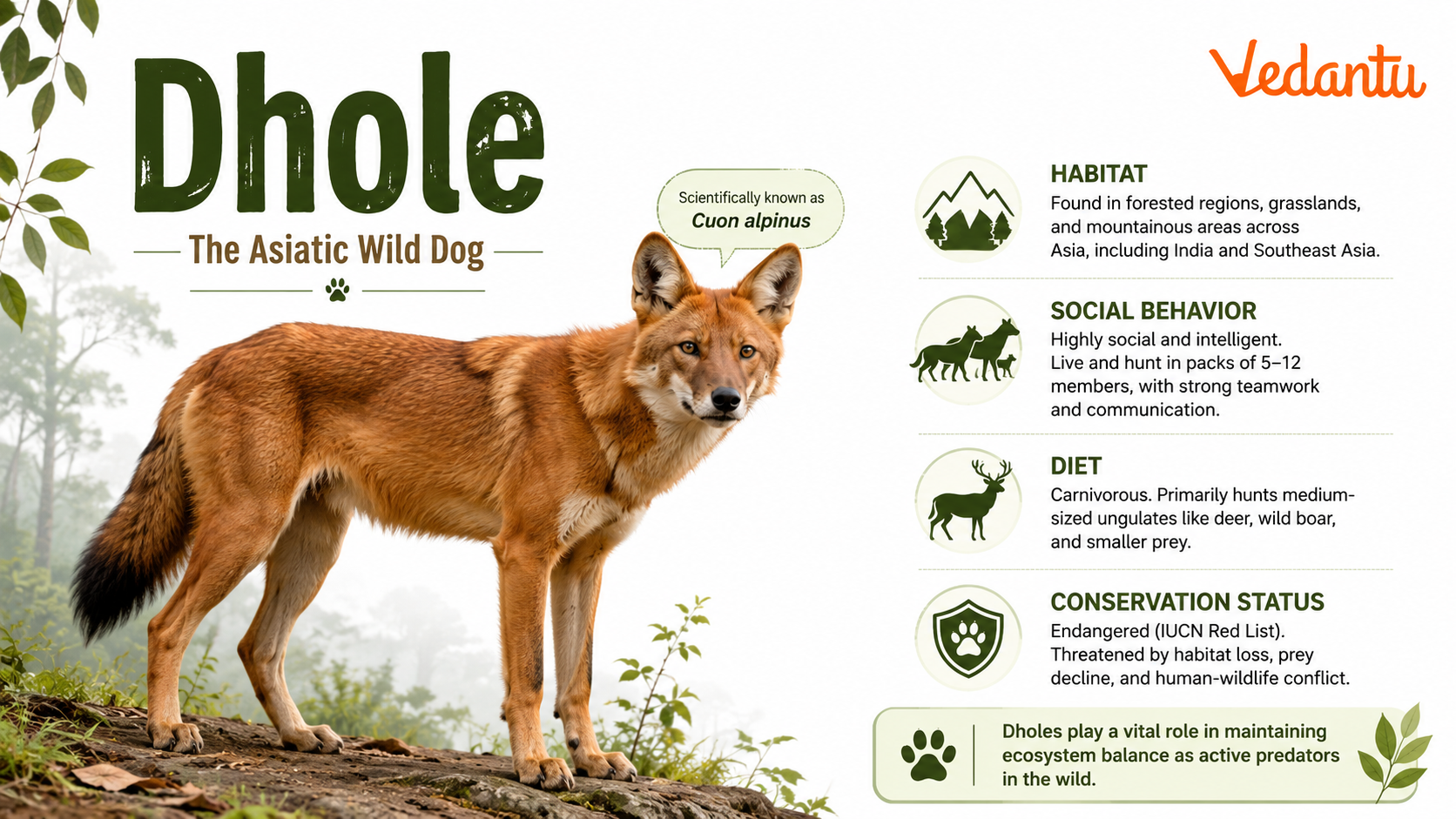
Quick Facts About Dhole
| Feature | Details |
|---|---|
| Common Name | Dhole (Asian Wild Dog) |
| Scientific Name | Cuon alpinus |
| Animal Group | Mammal |
| Diet | Carnivore |
| Lifespan | 10–13 years (in the wild) |
| Habitat | Forests, grasslands, and mountains |
| Conservation Status | Endangered |
| Found In | India, Southeast Asia, China, and nearby regions |
Appearance and Physical Characteristics
- Reddish-brown fur with a lighter belly.
- Bushy black-tipped tail.
- Rounded ears and a pointed muzzle.
- Long legs for fast running.
- Sharp teeth designed for tearing meat.
Dhole Habitat and Distribution
The Dhole habitat includes dense forests, dry deciduous forests, grasslands, and even mountainous regions. They prefer areas with enough prey and water sources.
- Mainly found in India and Southeast Asia.
- Also seen in parts of China and Russia.
- Live in protected forests and wildlife reserves.
- Use caves, burrows, or thick bushes for resting.
Dhole Diet and Feeding Habits
The Dhole diet mainly consists of meat. They are active and cooperative hunters.
- Eat deer, wild boar, and other medium-sized animals.
- Sometimes hunt smaller animals like rabbits.
- Hunt in packs to catch bigger prey.
- Chase prey over long distances until it gets tired.
Behaviour and Lifestyle
- Highly social animals living in packs of 5–20 members.
- Communicate using whistles, screams, and squeaks.
- Active during the day (diurnal).
- Care for injured or weak pack members.
- Strong bond between pack members.
Life Cycle of a Dhole
- Mating Season: Usually once a year.
- Birth: Female gives birth to 4–6 pups in a safe den.
- Pup Stage: Pups are blind at birth and depend on the mother.
- Growing Up: Entire pack helps feed and protect the pups.
- Adult Stage: Young Dholes join hunting activities.
What Makes Dhole Special?
Importance and Role in Nature
Amazing Dhole Facts
- Dholes can take down prey much larger than themselves.
- They are not closely related to wolves, even though they look similar.
- Their scientific name is Cuon alpinus.
- They are excellent swimmers.
- Each pack has a strong leadership structure.
- Dholes are listed as endangered due to habitat loss.
Interesting Facts About Dhole
Fun Facts for Kids
- Dholes look like a mix between a fox and a dog.
- They are brave enough to challenge even tigers in groups.
- Their bushy tail helps them balance while running.
- Baby Dholes are called pups.
- They love living and hunting with their family pack.
FAQs on Dhole (Asian Wild Dog): Diet, Behavior & Survival Guide
1. What is a Dhole?
A Dhole is a wild dog species found in Asia, known for its teamwork and loud whistles.
- The scientific name of the dhole is Cuon alpinus.
- It is also called the Asiatic wild dog, Indian wild dog, or red dog.
- Dholes live and hunt in groups called packs.
- They are strong, fast, and very social animals.
2. Where do Dholes live?
Dholes live mainly in the forests and grasslands of Asia.
- They are found in India, China, Thailand, and other Asian countries.
- Dholes prefer dense forests, mountain regions, and grasslands.
- They need areas with enough prey like deer and wild boar.
3. What do Dholes eat?
Dholes are carnivores, which means they eat meat.
- Their main prey includes deer, wild boar, and small mammals.
- They hunt in packs to catch larger animals.
- Sometimes they eat birds and reptiles.
4. Are Dholes dangerous to humans?
Dholes are generally not dangerous to humans and avoid people.
- They are shy and prefer staying deep inside forests.
- There are very few reports of dhole attacks on humans.
- They focus mainly on hunting wild animals for food.
5. Why are Dholes endangered?
Dholes are endangered because their population is decreasing.
- Habitat loss due to deforestation reduces their living space.
- Poaching and hunting affect their numbers.
- Diseases from domestic dogs can spread to dholes.
6. How do Dholes communicate?
Dholes communicate using whistles, sounds, and body language.
- They make unique whistling calls to find pack members.
- They also use growls, squeaks, and tail movements.
- These sounds help them during hunting and protecting pups.
7. How big is a Dhole?
A dhole is medium-sized, smaller than a wolf but larger than a fox.
- It weighs between 12 to 20 kilograms.
- Its body length is about 90 centimeters.
- It has a bushy tail and reddish-brown fur.
8. How do Dholes hunt?
Dholes hunt in well-organized packs using teamwork and speed.
- They chase prey over long distances.
- Each pack member has a role during the hunt.
- They share food with other members, including pups.
9. How many Dholes are left in the world?
There are fewer than 2,500 adult dholes left in the wild.
- Their population is decreasing.
- Most are found in India and parts of Southeast Asia.
- Conservation programs aim to protect their habitat.
10. Why are Dholes important to the ecosystem?
Dholes help keep nature balanced by controlling prey populations.
- They prevent overpopulation of animals like deer.
- Healthy predator numbers support strong ecosystems.
- They are a key part of the food chain.
