






What Is a Damselfly? Habitat, Diet, Life Cycle, and Differences from Dragonflies
A damselfly is a delicate flying insect often seen near ponds, lakes, and rivers. It looks similar to a dragonfly but has a slimmer body and folds its wings together when resting. Damselflies are important for controlling mosquito populations and are a key part of freshwater ecosystems. Learning about damselfly habitat, diet, characteristics, and life cycle helps us understand how these tiny insects play a big role in nature.
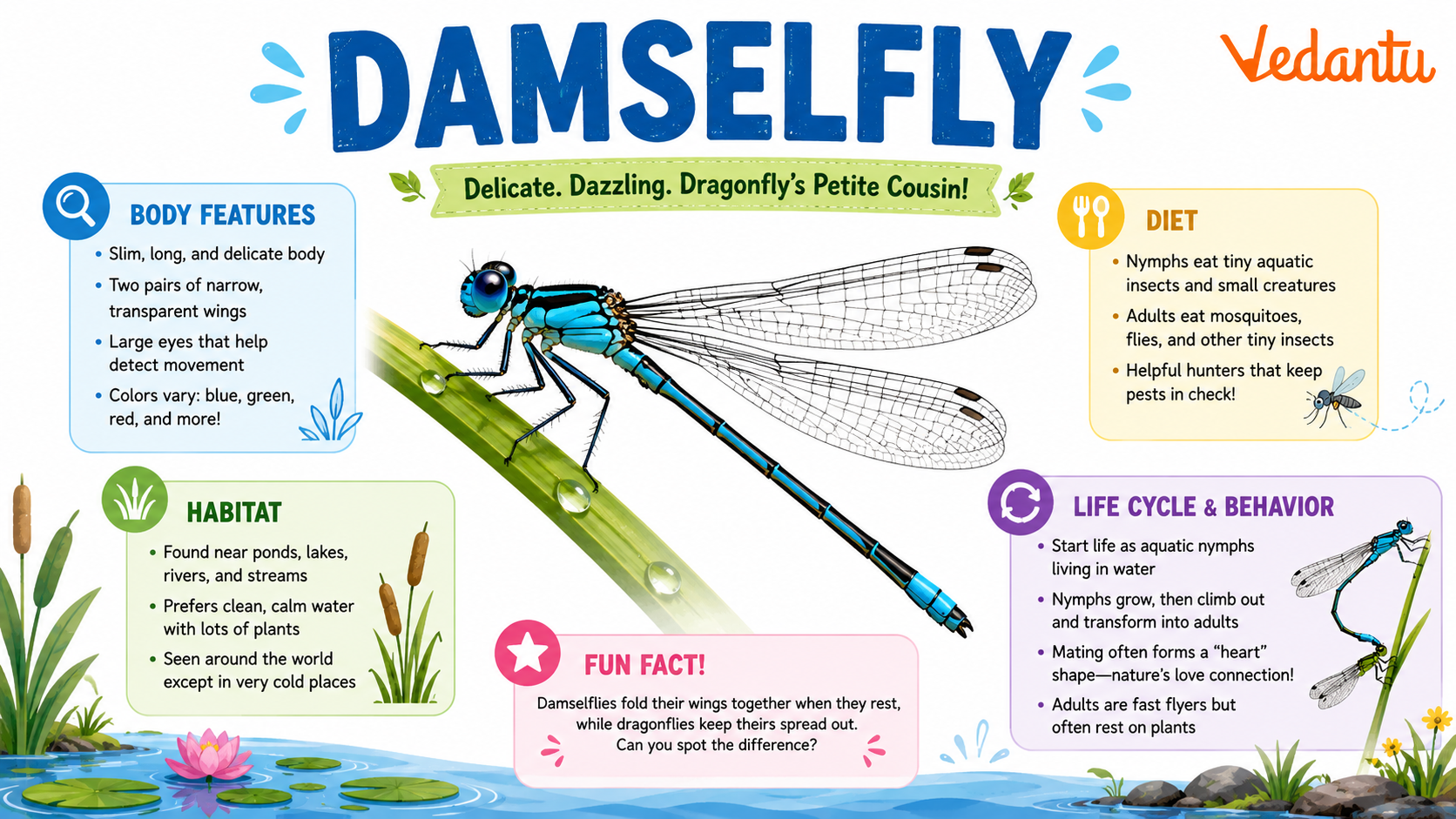
Quick Facts and Statistics
| Feature | Details |
|---|---|
| Common Name | Damselfly |
| Animal Group | Insect |
| Order | Odonata (Suborder: Zygoptera) |
| Size | 2–5 cm long (most species) |
| Lifespan | Few weeks to several months (adult stage) |
| Habitat | Ponds, lakes, rivers, wetlands |
| Diet | Small insects, especially mosquitoes |
| Movement | Fast, agile flight |
Appearance and Physical Characteristics
- Long, thin and delicate body.
- Two pairs of narrow wings of similar size.
- Large compound eyes placed on the sides of the head.
- Bright colours like blue, green, red, or metallic shades.
- Wings fold together above the body when resting.
Habitat and Distribution
- Freshwater ponds and lakes
- Slow-moving rivers and streams
- Marshes and wetlands
- Gardens with water features
Diet and Feeding Habits
- Eat mosquitoes and flies
- Catch small insects in mid-air
- Use strong jaws to chew prey
Behaviour and Lifestyle
- Active during the daytime.
- Excellent fliers with quick, darting movements.
- Males are often territorial and guard small water areas.
- Rest on plants near water between flights.
- Use sharp vision to spot prey and danger.
Damselfly Life Cycle
- Egg: Female lays eggs in or near water plants.
- Nymph (Larva): Lives underwater for months; breathes through gills.
- Adult: Emerges from water, develops wings, and begins flying life.
What Makes Damselflies Special?
Flight Adaptations
- Two pairs of lightweight wings.
- Strong flight muscles in the thorax.
- Slender body reduces air resistance.
- Independent wing movement for better control.
Importance and Role in Nature
Amazing Damselfly Facts
- There are more than 3,000 species of damselflies worldwide.
- They belong to the same order as dragonflies.
- Some species have bright neon-blue bodies.
- Nymphs can live underwater for up to two years.
- They are skilled aerial hunters.
- Their eyes contain thousands of tiny lenses.
Fun Facts for Kids
FAQs on Damselfly: Fascinating Facts and Identification Tips
1. What is a damselfly?
A damselfly is a small, colorful flying insect that lives near water and belongs to the order Odonata.
- Damselflies are related to dragonflies.
- They have long, thin bodies and delicate wings.
- They are often found near ponds, lakes, rivers, and wetlands.
- They are known for their bright colors like blue, green, and red.
2. What is the difference between a damselfly and a dragonfly?
The main difference between a damselfly and a dragonfly is how they hold their wings and the shape of their body.
- Damselflies fold their wings together over their backs when resting.
- Dragonflies keep their wings spread out flat.
- Damselflies have thinner, more delicate bodies.
- Dragonflies have larger eyes that touch each other.
3. Where do damselflies live?
Damselflies live near freshwater habitats because they need water to grow and survive.
- Commonly found near ponds and lakes.
- Live around streams, rivers, and marshes.
- Lay eggs in or near water plants.
4. What do damselflies eat?
Damselflies are carnivorous insects that eat small flying bugs.
- They feed on mosquitoes.
- They eat flies and tiny insects.
- Young damselflies (nymphs) eat small aquatic animals in the water.
5. What is the life cycle of a damselfly?
The damselfly life cycle has three main stages: egg, nymph, and adult.
- Egg: Laid in water or on water plants.
- Nymph (larva): Lives underwater and hunts small prey.
- Adult: Emerges from water with wings and can fly.
6. Are damselflies dangerous to humans?
Damselflies are not dangerous and do not harm humans.
- They do not sting.
- They rarely bite, and if they do, it does not hurt.
- They are shy and avoid people.
7. How long do damselflies live?
Damselflies live for several months to a few years, depending on their life stage.
- The nymph stage can last from a few months up to 2 years.
- The adult damselfly usually lives a few weeks.
8. Why are damselflies important to the environment?
Damselflies are important because they help keep ecosystems balanced.
- They control mosquito and insect populations.
- They serve as food for birds and fish.
- They indicate clean water and healthy wetlands.
9. How do damselflies fly?
Damselflies fly using two pairs of delicate wings that beat together.
- They can hover in one spot.
- They glide smoothly over water.
- Their lightweight bodies help them move quickly.
10. What colors are damselflies?
Damselflies are often bright and shiny, with metallic colors.
- Common colors include blue and green.
- Some species are red, yellow, or purple.
- Males are usually more colorful than females.
