






Where Do Cranes Live? Habitat, Migration Routes, and Diet Explained
Cranes are elegant, long-legged birds known for their height, beauty, and spectacular dances. Found in wetlands, grasslands, and open fields across the world, cranes are famous for their loud calls and long-distance migrations. These majestic birds are symbols of peace and longevity in many cultures. Let’s explore amazing crane facts, crane habitat, crane diet, crane life cycle, and what makes them so special in nature.
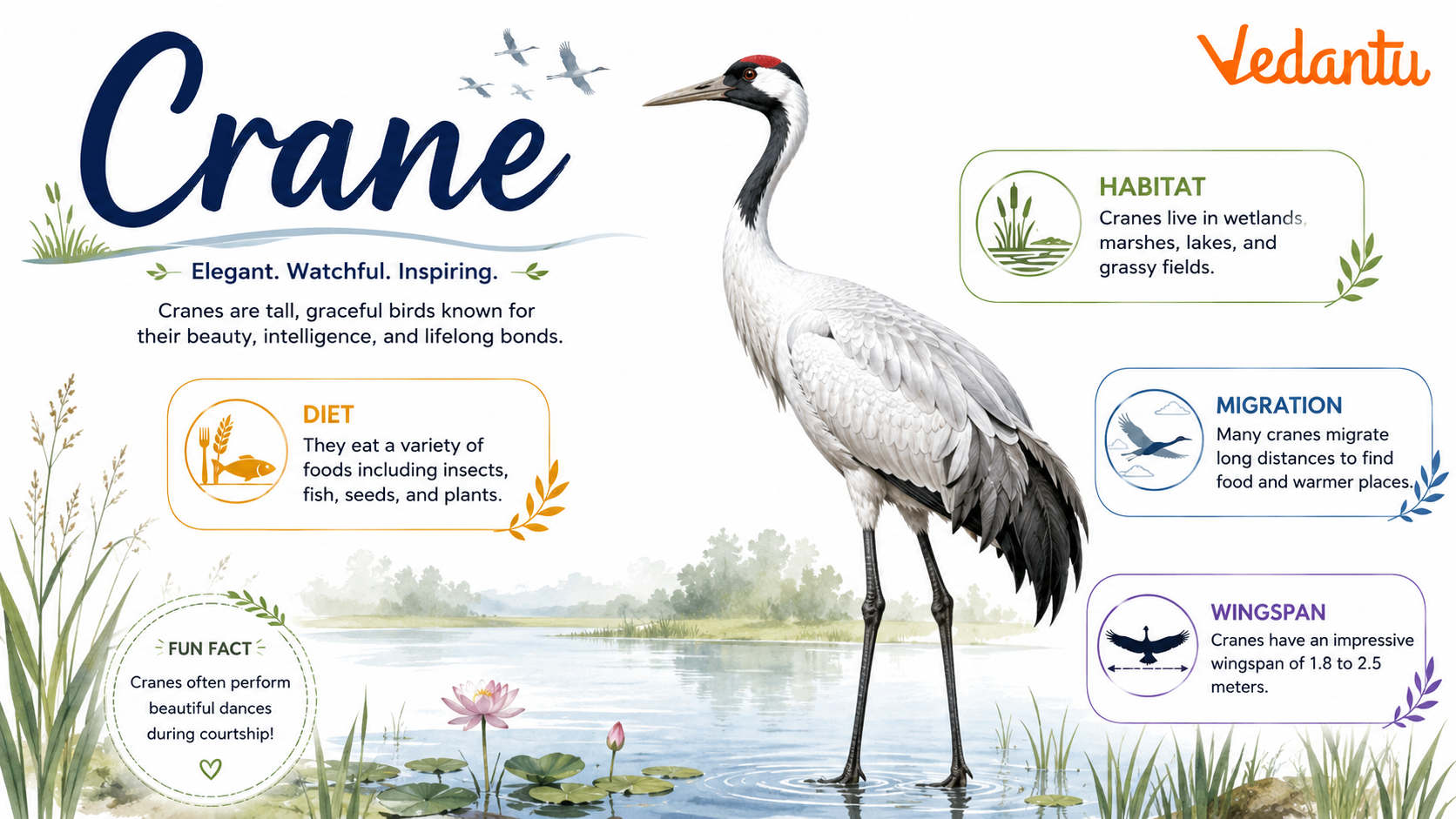
Quick Facts About Crane
| Feature | Details |
|---|---|
| Common Name | Crane |
| Scientific Family | Gruidae |
| Animal Group | Bird |
| Height | 90 cm to 1.8 m (varies by species) |
| Wingspan | Up to 2.4 metres |
| Lifespan | 20–30 years (longer in captivity) |
| Diet | Omnivore |
| Habitat | Wetlands, grasslands, marshes |
| Conservation Status | Varies by species (Some endangered) |
Appearance and Physical Characteristics
- Very tall birds with long legs and long necks.
- Strong, pointed beak for catching food.
- Broad wings for powerful flight.
- Usually grey, white, or brown feathers.
- Many species have colourful patches on the head (red or black).
Crane Habitat and Distribution
- Found on every continent except Antarctica and South America.
- Prefer wetlands, marshes, riverbanks, and open grasslands.
- Build nests near shallow water for safety.
- Migrate thousands of kilometres during winter.
Crane Diet and Feeding Habits
- Omnivores – eat both plants and animals.
- Feed on grains, seeds, berries, and roots.
- Also eat insects, frogs, small fish, and snakes.
- Use their long beaks to dig in mud and shallow water.
Behaviour and Lifestyle
Cranes perform beautiful jumping and wing-flapping dances during courtship.
Many crane pairs stay together for life.
They make trumpet-like sounds that can be heard from far away.
Fly in large flocks in V-shaped formations.
Life Cycle of a Crane
- Egg Stage: Female lays 1–3 eggs in a nest near water.
- Chick Stage: Chicks hatch covered in soft feathers and can walk soon after birth.
- Juvenile Stage: Young cranes learn to fly within a few months.
- Adult Stage: Mature in 3–5 years and begin forming lifelong pairs.
Flight Adaptations
- Large wings for soaring high in the sky.
- Light but strong bones.
- Powerful chest muscles for long-distance flying.
- Fly with neck and legs stretched straight.
Sound and Call
Cranes make loud, trumpet-like calls. These calls help them:
- Communicate with their mate.
- Warn others about danger.
- Stay connected during migration.
What Makes Cranes Special?
Importance of Crane in Nature
- Help maintain balance in wetland ecosystems.
- Control insects and small animal populations.
- Spread seeds while feeding.
- Indicate healthy wetlands.
Amazing Crane Facts
Fun Facts for Kids
- Cranes sleep standing on one leg.
- Baby cranes are called chicks.
- They can fly very high in the sky.
- Some cranes have bright red patches on their heads.
- They love to dance—even young chicks try it!
FAQs on Crane Bird: Fascinating Facts, Habitat, and Behavior
1. What is a crane?
A crane is either a tall bird with long legs or a powerful machine used to lift heavy objects.
- Bird crane: A large, long‑necked bird that lives near wetlands and rivers.
- Construction crane: A machine used to lift and move heavy materials like steel and concrete.
- Both types are known for their height and long shape.
- The word crane can mean different things depending on the context.
2. What does a crane bird look like?
A crane bird is a tall, graceful bird with long legs and a long neck.
- Usually has gray, white, or black feathers.
- Has a sharp beak for catching food.
- Some species have colorful patches on their head.
- Famous species include the Sandhill Crane and Whooping Crane.
3. Where do crane birds live?
Crane birds live in wetlands, grasslands, and near rivers across many parts of the world.
- Found in North America, Asia, Europe, and Africa.
- Prefer marshes, lakes, and open fields.
- Some cranes migrate long distances during winter.
- They build nests near water for safety.
4. What do crane birds eat?
Crane birds are omnivores, meaning they eat both plants and small animals.
- Seeds and grains
- Insects and worms
- Small fish and frogs
- Roots and plants from wetlands
5. What is a construction crane used for?
A construction crane is used to lift and move heavy materials at building sites.
- Lifts steel beams and concrete blocks.
- Helps build tall skyscrapers and bridges.
- Can rotate and move materials high into the air.
- Operated by trained crane operators.
6. How does a crane machine work?
A crane machine works using cables, pulleys, and a motor to lift heavy loads safely.
- Has a strong boom (long arm).
- Uses steel cables to raise or lower items.
- Powered by electricity or fuel.
- Balances weight with heavy counterweights.
7. What are the different types of cranes?
There are many types of cranes used for different jobs in construction and shipping.
- Tower Crane – used for tall buildings.
- Mobile Crane – mounted on trucks for easy movement.
- Crawler Crane – moves on tracks.
- Overhead Crane – used in factories and warehouses.
8. Why are crane birds important?
Crane birds are important because they help keep ecosystems balanced and healthy.
- Control insect populations.
- Spread seeds across wetlands.
- Act as indicators of healthy environments.
- Protected in many countries due to conservation efforts.
9. Are crane birds endangered?
Some crane species are endangered and need protection to survive.
- The Whooping Crane is one of the rarest birds in North America.
- Habitat loss is a major threat.
- Conservation programs help increase their population.
- Wildlife reserves protect nesting areas.
10. How high can a construction crane lift?
A construction crane can lift materials hundreds of feet into the air depending on its type.
- Tower cranes can reach over 1,000 feet.
- Mobile cranes lift heavy loads at shorter heights.
- Height depends on crane design and safety limits.
- Used in building skyscrapers and tall structures.
