






What Is a Cowrie Shell? Habitat, Uses, and Symbolism Explained
Cowrie is a small, glossy sea snail known for its smooth and shiny shell. These beautiful shells have been used as jewellery, decoration, and even money in ancient times. Found mostly in warm ocean waters, cowries are marine mollusks that play an important role in marine ecosystems. Let’s explore amazing Cowrie facts, Cowrie habitat, Cowrie diet, life cycle, and why these tiny ocean treasures are so special!
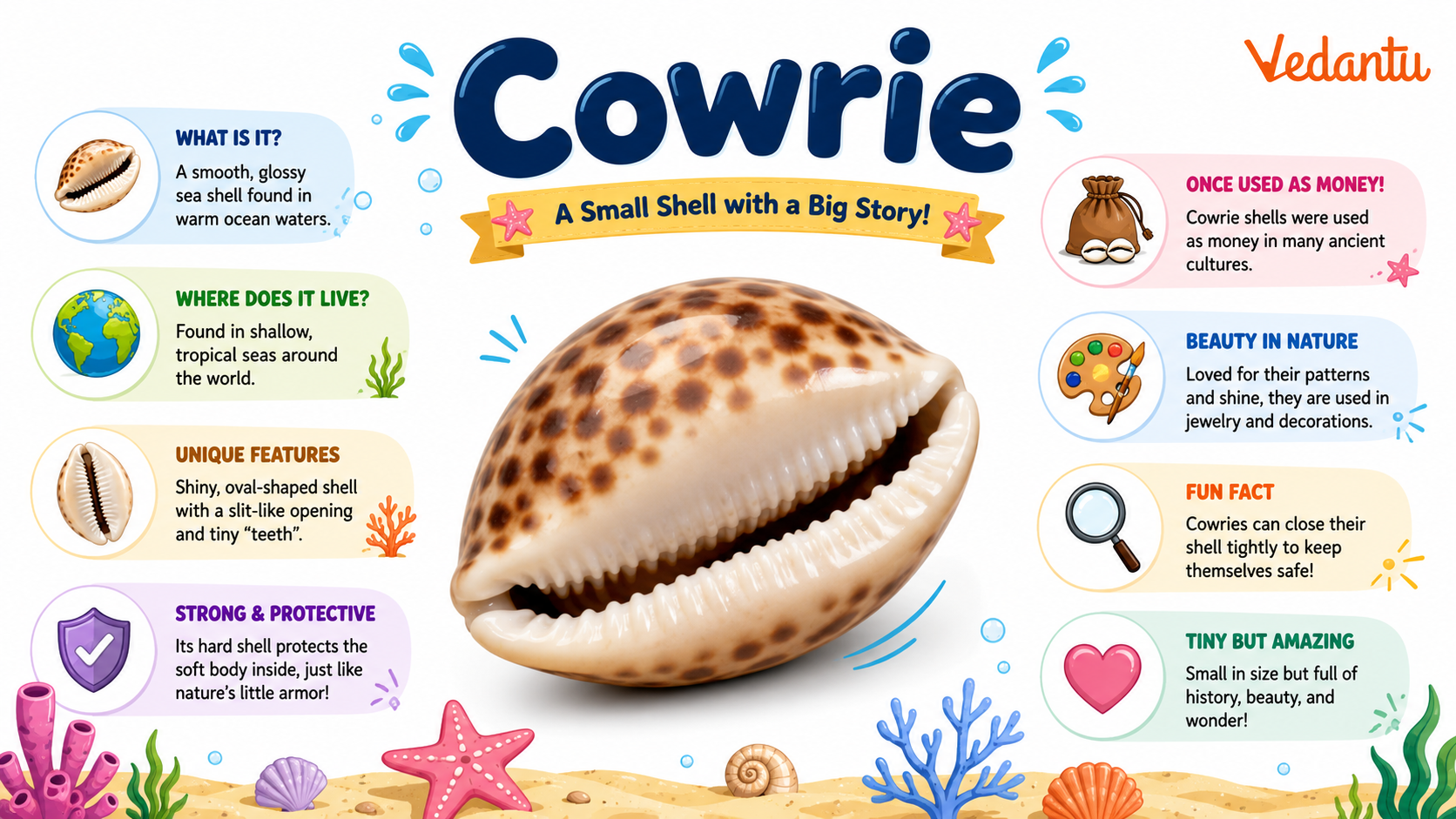
Quick Facts About Cowrie
| Feature | Details |
|---|---|
| Common Name | Cowrie |
| Scientific Family | Cypraeidae |
| Animal Group | Mollusk (Sea Snail) |
| Habitat | Warm tropical and subtropical oceans |
| Diet | Algae, sponges, small marine organisms |
| Size | 1 cm to 15 cm (varies by species) |
| Movement | Slow crawling using muscular foot |
| Special Feature | Highly polished, shiny shell |
Appearance and Physical Characteristics
- Smooth, shiny, and rounded shell.
- Shell often brightly coloured with spots or patterns.
- Long narrow opening with tiny “teeth” along the edge.
- Soft body hidden inside the shell.
- Muscular foot helps in crawling.
Cowrie Habitat and Distribution
- Warm tropical oceans.
- Coral reefs and rocky sea beds.
- Shallow coastal waters.
- Hidden under rocks or coral during daytime.
Cowrie Diet and Feeding Habits
Cowrie diet mainly includes algae, sponges, and tiny marine organisms found on rocks and corals.
They use a rough tongue-like structure called a radula to scrape food from surfaces.
Cowries help control algae growth and are food for fish and other marine animals.
Most cowries are active at night and feed after sunset.
Behaviour and Lifestyle
- Mostly nocturnal (active at night).
- Slow-moving marine creatures.
- Hide under rocks during the day for protection.
- Use their mantle to protect and clean their shell.
- Rely on hard shell for defence against predators.
Cowrie Life Cycle
- Egg Stage: Female lays eggs in clusters attached to surfaces.
- Larva Stage: Tiny larvae float in the ocean as plankton.
- Juvenile Stage: Young cowries develop small shells.
- Adult Stage: Shell grows thicker, smoother, and shinier.
What Makes Cowrie Special?
Importance and Role in Nature
- Control algae growth on coral reefs.
- Provide food for fish and crabs.
- Help maintain ecological balance.
- Contribute to cultural and historical value for humans.
Amazing Cowrie Facts
Interesting Facts About Cowrie
- Cowrie shells are often used in jewellery and crafts.
- They are popular among shell collectors.
- Some species are rare and protected.
- The shell opening has tooth-like ridges for extra strength.
- Cowries have been found in ancient archaeological sites.
Fun Facts for Kids
FAQs on Cowrie: Tiny Sea Snail with Big Cultural Impact
1. What is a Cowrie?
A Cowrie is a small, shiny sea snail shell that has been used as money and decoration for thousands of years.
- Cowrie shells come from sea snails found in warm oceans.
- They are smooth, round, and often white or cream with a slit underneath.
- In history, they were used as currency, jewelry, and religious symbols.
- They are popular in studies of marine life, ancient trade, and world history.
2. Where are Cowrie shells found?
Cowrie shells are mainly found in warm tropical oceans around the world.
- Common in the Indian Ocean and Pacific Ocean.
- Found near coral reefs and shallow coastal waters.
- Especially seen around Africa, Asia, and island regions.
- Collected from beaches or gathered by divers.
3. Why were Cowrie shells used as money?
Cowrie shells were used as money because they were durable, easy to carry, and hard to fake.
- They were small and lightweight, perfect for trade.
- Their shiny look made them attractive and valuable.
- Used as currency in Africa, China, and India.
- Played a key role in ancient trade systems before coins and paper money.
4. What do Cowrie shells look like?
Cowrie shells are smooth, oval-shaped shells with a glossy surface.
- Usually white, cream, or light brown.
- Have a long narrow slit on the underside.
- Polished by ocean waves, giving them a shiny finish.
- Often used in jewelry and crafts because of their beauty.
5. Are Cowrie shells still used today?
Yes, Cowrie shells are still used today mainly for decoration and cultural purposes.
- Used in necklaces, bracelets, and ornaments.
- Important in some African and Asian traditions.
- Symbolize wealth, fertility, and protection.
- No longer used as official money.
6. What animal lives inside a Cowrie shell?
A soft-bodied sea snail called a marine mollusk lives inside a Cowrie shell.
- It belongs to the Cypraeidae family.
- The snail uses the shell for protection.
- It can extend its colorful mantle over the shell.
- Part of the ocean’s marine ecosystem.
7. What is the cultural importance of Cowrie shells?
Cowrie shells have strong cultural and spiritual importance in many societies.
- Symbol of wealth and prosperity in African cultures.
- Used in traditional ceremonies and clothing.
- Connected with goddesses and fertility in some beliefs.
- Seen in art, dance, and storytelling.
8. How did Cowrie shells spread around the world?
Cowrie shells spread through ancient trade routes and sea travel.
- Traded along the Silk Road and African trade networks.
- Carried by merchants across continents.
- Used in exchange for goods like salt, cloth, and spices.
- Important in the history of global trade.
9. Are Cowrie shells rare?
Most common Cowrie shells are not rare, but some species are valuable to collectors.
- Common species are found easily on beaches.
- Rare types can be expensive in shell collecting.
- Value depends on size, color, and condition.
- Protected species should not be collected.
10. How can kids learn more about Cowrie shells?
Kids can learn about Cowrie shells through fun and educational activities.
- Visit a museum or aquarium.
- Read books about marine biology and ancient history.
- Collect shells responsibly at the beach.
- Explore school projects about ocean life and early money systems.
