






Canary Bird Care, Diet, Lifespan, and Singing Behavior Explained
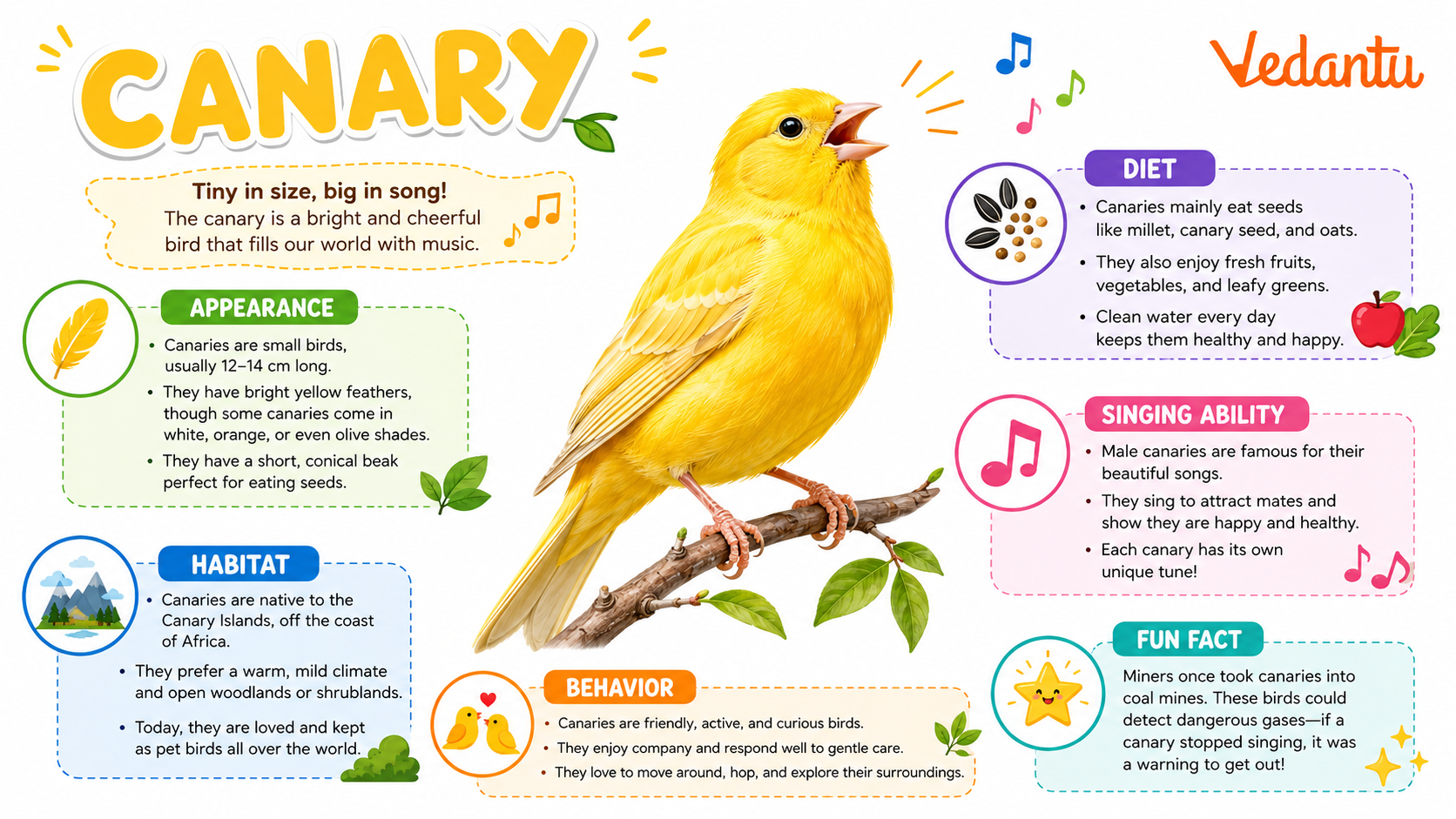
Quick Facts About Canary
| Feature | Details |
|---|---|
| Common Name | Canary |
| Scientific Name | Serinus canaria |
| Animal Group | Bird (Songbird) |
| Size | 10–12 cm long |
| Weight | 15–25 grams |
| Lifespan | 10–15 years (in captivity) |
| Habitat | Forests, gardens, and homes |
| Diet | Seeds, fruits, vegetables |
| Young One | Chick |
| Sound | Sweet chirping and singing |
Appearance and Physical Characteristics
- Small and slim body with a short neck.
- Bright yellow feathers are most common.
- Can also be white, orange, red, or mixed colours.
- Short, cone-shaped beak for eating seeds.
- Round black eyes and smooth feathers.
Habitat and Distribution
The natural Canary habitat includes the Canary Islands, Madeira, and the Azores in the Atlantic Ocean.
- Live in forests, gardens, and shrublands.
- Prefer warm and mild climates.
- Build small cup-shaped nests in trees or bushes.
- Today, many canaries live as pet birds around the world.
Diet and Feeding Habits
The Canary diet mainly includes plant-based food.
- Seeds (millet and canary seed)
- Fresh fruits like apples
- Leafy vegetables
- Occasionally small insects in the wild
Behaviour and Lifestyle
- Active and cheerful birds.
- Known for their beautiful singing.
- Males sing to attract females.
- Can live alone or in pairs as pets.
- Enjoy flying short distances inside cages or aviaries.
Life Cycle of a Canary
- Egg Stage: Female lays 3–5 eggs in a nest.
- Incubation: Eggs hatch in about 13–14 days.
- Chick Stage: Chicks are born blind and featherless.
- Growing Stage: Feathers grow within 2–3 weeks.
- Adult Stage: Young birds learn to sing and fly.
The complete Canary life cycle from egg to adult takes only a few weeks.
What Makes Canary Special?
Flight Adaptations
- Strong wings for quick short flights.
- Lightweight bones help in easy movement.
- Tail feathers help in balance and direction.
- Strong chest muscles support wing movement.
Sound and Call
The canary is famous for its musical song.
- Produces sweet chirps and trills.
- Males sing more often than females.
- Song is used to mark territory and attract mates.
Importance and Role in Nature
Amazing Canary Facts
- Canaries were first brought to Europe in the 15th century.
- Only male canaries are strong singers.
- They can learn different tunes.
- Wild canaries are usually greenish-yellow.
- They can live over 10 years in proper care.
- There are different breeds based on colour and song.
Fun Facts for Kids
FAQs on Canary Bird: Complete Guide to Care, Songs, and Fun Facts
1. What is a canary?
A canary is a small, colorful songbird known for its beautiful singing voice and bright feathers.
- Belongs to the finch family
- Originally from the Canary Islands
- Popular as a pet bird worldwide
- Famous for cheerful chirping and singing
2. Where do canaries come from?
Canaries originally come from the Canary Islands, located near the northwest coast of Africa.
- Native to Spain’s Canary Islands
- Also found in Madeira and the Azores
- Brought to Europe in the 15th century
3. What do canaries eat?
Canaries eat a healthy mix of seeds, fruits, and vegetables to stay strong and active.
- Canary seed mix and grains
- Fresh fruits like apples
- Vegetables such as spinach and carrots
- Clean, fresh water daily
4. Why do canaries sing?
Canaries sing to communicate, attract mates, and mark their territory.
- Male canaries are the best singers
- Singing shows they are healthy and happy
- They sing more during breeding season
5. What colors are canaries?
Canaries come in many bright and beautiful colors, not just yellow.
- Common yellow canary
- Orange and red shades
- White and brown varieties
- Mixed color patterns
6. How long do canaries live?
A healthy pet canary can live for about 10 to 15 years with proper care.
- Needs a clean bird cage
- Balanced diet
- Regular exercise and sunlight
- Protection from cold drafts
7. Are canaries good pets for kids?
Canaries can be good pets for kids who enjoy watching and listening to birds.
- Low maintenance compared to larger pets
- Do not need much handling
- Provide calming bird songs
- Need gentle and quiet care
8. Why were canaries used in coal mines?
Canaries were used in coal mines to detect dangerous gases like carbon monoxide.
- Very sensitive to toxic gases
- Stopped singing if air was unsafe
- Helped warn miners of danger
- Used in the 19th and early 20th century
9. How big is a canary?
A canary is a small bird that usually grows about 4 to 5 inches long.
- Lightweight body
- Small curved beak
- Wingspan of about 8 inches
- Easy to keep in a small cage
10. How do you take care of a pet canary?
Taking care of a pet canary means providing food, clean space, and daily attention.
- Spacious bird cage with perches
- Fresh food and water every day
- Regular cage cleaning
- Quiet and safe environment
