






Calotes Habitat, Diet, Behavior, and Amazing Facts
Calotes, commonly known as the garden lizard or oriental garden lizard, is a fascinating reptile often seen in gardens, trees, and bushes. Famous for its bright colours and ability to change shades during breeding season, this lizard is active, alert, and very helpful in controlling insects. Learning about Calotes habitat, diet, characteristics, and life cycle helps us understand why this small reptile plays an important role in nature.
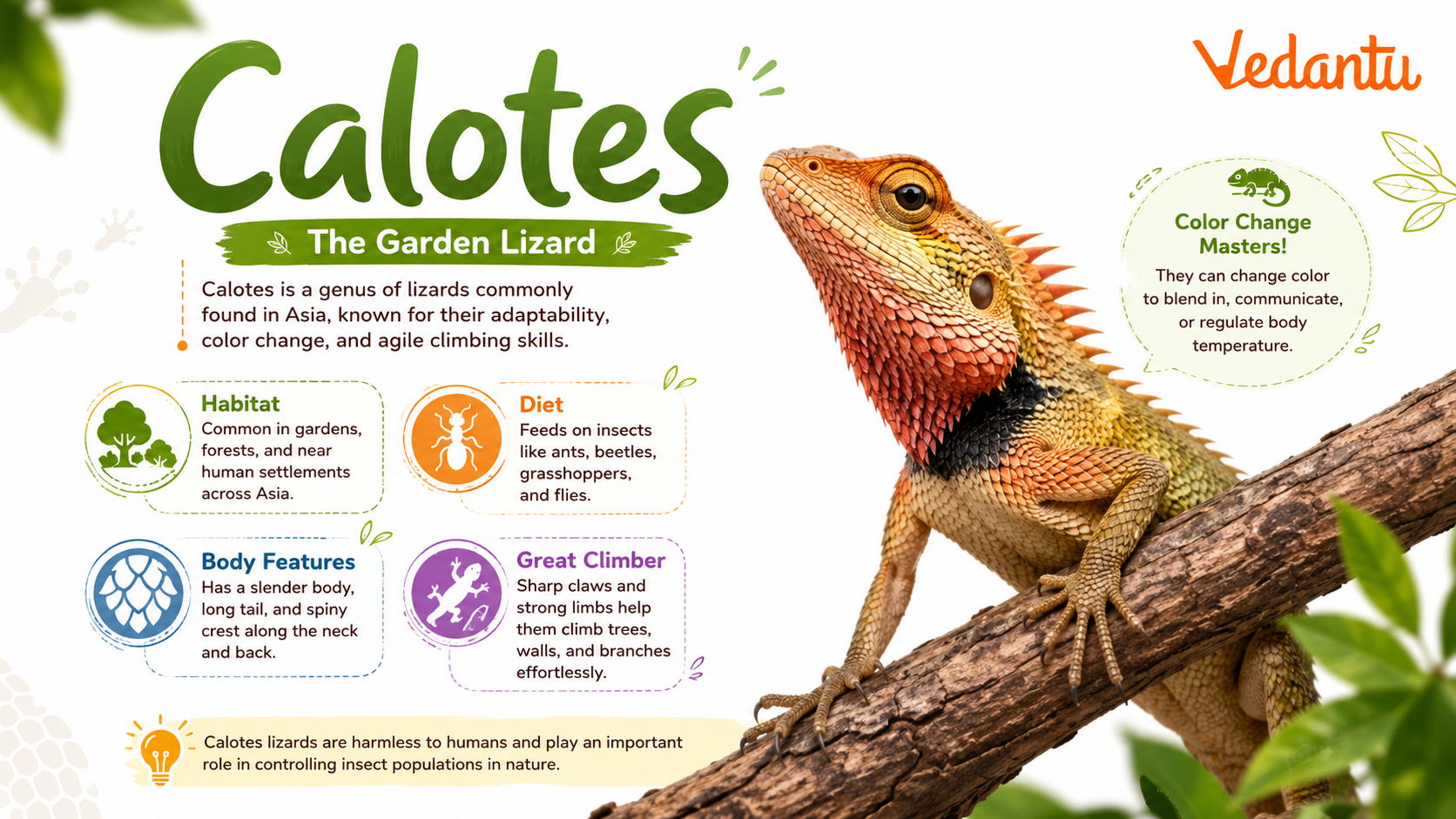
Quick Facts About Calotes
| Feature | Details |
|---|---|
| Common Name | Garden Lizard / Oriental Garden Lizard |
| Scientific Name | Calotes versicolor |
| Animal Group | Reptile |
| Size | Up to 35–40 cm (including tail) |
| Diet | Insects and small invertebrates |
| Habitat | Gardens, forests, bushes, urban areas |
| Lifespan | About 5–7 years |
| Conservation Status | Least Concern |
Appearance and Physical Characteristics
- Slender body with rough, scaly skin.
- Long tail that helps in balance while climbing.
- Strong legs with sharp claws for gripping branches.
- Spiny crest on the neck and back.
- Usually brown or grey, but males turn bright red or orange during breeding season.
Habitat and Distribution
- Common in India, Sri Lanka, and Southeast Asia.
- Lives in gardens, forests, farms, and city parks.
- Prefers trees, shrubs, fences, and walls.
- Active in warm climates and sunny areas.
Calotes are often seen basking in the sun to maintain their body temperature because they are cold-blooded animals.
Diet and Feeding Habits
Carnivorous and insectivorous reptile.
Ants, beetles, grasshoppers, spiders, and small insects.
Waits quietly and quickly catches prey with sharp movements.
Controls insect population and becomes food for birds and snakes.
Behaviour and Lifestyle
- Mostly active during the day (diurnal).
- Spends time basking in sunlight.
- Usually solitary except during breeding season.
- Displays head-bobbing movements to show dominance.
- Escapes predators by quickly climbing trees or blending into surroundings.
Life Cycle of Calotes
- Egg Stage: Female lays 10–20 eggs in soil or sand.
- Incubation: Eggs hatch after about 6–8 weeks.
- Young Lizard: Hatchlings are small but independent from birth.
- Adult Stage: Grows into a fully developed lizard in about a year.
The Calotes life cycle is simple and does not include metamorphosis like insects.
What Makes Calotes Special?
Importance and Role in Nature
- Controls harmful insect populations.
- Maintains ecological balance in gardens and farms.
- Acts as prey for birds and snakes.
- Helps farmers by reducing crop-damaging insects.
Amazing Calotes Facts
Interesting Facts About Calotes
- Belongs to the Agamidae family of lizards.
- Found both in villages and big cities.
- Male and female look different during breeding season.
- Can flatten its body to appear bigger when threatened.
Fun Facts for Kids
FAQs on Calotes Lizard: Complete Guide to the Garden Lizard
1. What is Calotes?
Calotes is a genus of colorful garden lizards commonly found in Asia.
- Belongs to the Agamidae family (agamid lizards)
- Commonly called garden lizards or bloodsuckers
- Cold-blooded reptiles
- Often seen in gardens, forests, and bushes
- Famous species: Calotes versicolor (Oriental Garden Lizard)
2. Where do Calotes lizards live?
Calotes lizards mainly live in warm tropical regions of Asia.
- Found in India, Sri Lanka, Nepal, and Southeast Asia
- Prefer gardens, forests, farmlands, and urban areas
- Like sunny spots because they are cold-blooded reptiles
- Often sit on trees, fences, and walls
3. What do Calotes eat?
Calotes are insect-eating lizards that help control pests in gardens.
- Eat insects like ants, beetles, and grasshoppers
- Sometimes eat small worms and spiders
- Use their quick tongue to catch prey
- Are helpful for natural pest control
4. Why do Calotes change color?
Calotes change color mainly to show mood and attract mates, not for full camouflage like chameleons.
- Males turn bright red or orange during breeding season
- Color change shows strength and dominance
- Helps in communication with other lizards
- Not as dramatic as a chameleon’s color change
5. Are Calotes dangerous to humans?
Calotes are harmless garden lizards and are not dangerous to humans.
- They are non-venomous reptiles
- Do not attack people
- May bite only if frightened
- Helpful because they eat harmful insects
6. What is the most common species of Calotes?
The most common species is Calotes versicolor, also called the Oriental Garden Lizard.
- Widely found in South and Southeast Asia
- Known for bright red head during breeding season
- Lives near human homes and gardens
- Popular in studies about reptile behavior
7. How do Calotes reproduce?
Calotes reproduce by laying eggs after mating during the breeding season.
- Female lays 5–20 eggs in soil
- Eggs hatch after a few weeks
- Baby lizards are independent from birth
- Breeding season usually occurs in summer or monsoon
8. How big can Calotes grow?
Calotes lizards are medium-sized reptiles that grow up to about 30–40 cm long.
- Length includes their long tail
- Males are usually larger and brighter than females
- Have a triangular head and rough scales
- Strong limbs help them climb trees easily
9. How are Calotes different from chameleons?
Calotes and chameleons are different types of lizards with unique features.
- Calotes cannot change colors as fully as chameleons
- Chameleons have independent moving eyes
- Calotes belong to the Agamidae family
- Chameleons belong to the Chamaeleonidae family
10. Why are Calotes important for the environment?
Calotes play an important role in maintaining ecological balance in gardens and forests.
- Control insect populations
- Serve as food for birds and snakes
- Help maintain the food chain
- Indicate a healthy ecosystem
