






What Is a Bustard? Size, Diet, Habitat, and Behavior Explained
The Bustard is a large, ground-living bird known for its impressive size and strong flight. Found mainly in grasslands and open plains, bustards are among the heaviest birds capable of flying. They are famous for their long legs, broad wings, and beautiful courtship displays. Sadly, many bustard species are now endangered. Learning about bustard facts, habitat, diet, and life cycle helps us understand why protecting these magnificent birds is so important.
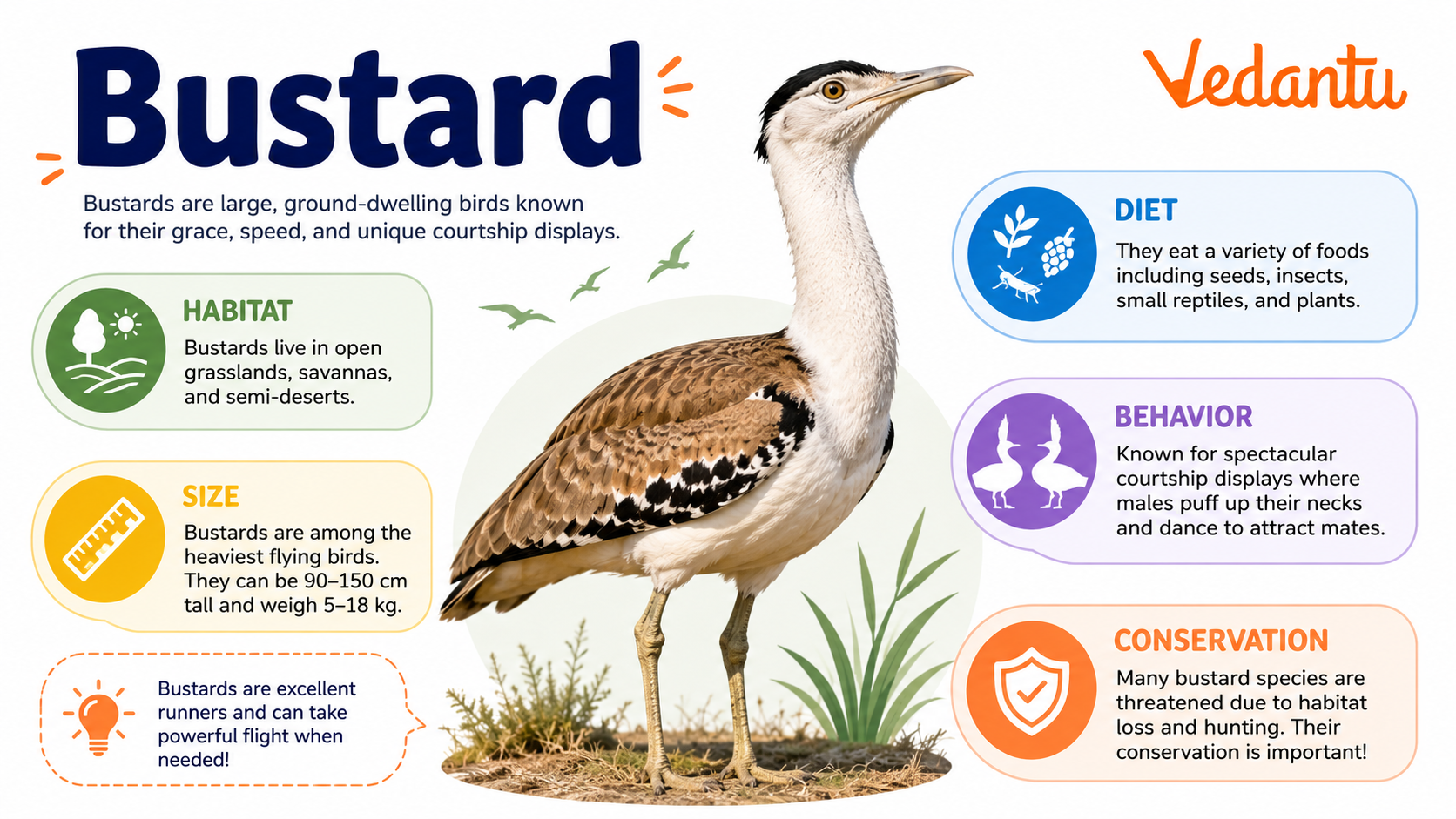
Quick Facts About Bustard
| Feature | Details |
|---|---|
| Common Name | Bustard |
| Scientific Family | Otididae |
| Animal Group | Bird |
| Size | Up to 1.2 metres tall (varies by species) |
| Weight | Up to 18 kg (Great Bustard males) |
| Habitat | Grasslands, semi-deserts, open plains |
| Diet | Omnivore – plants, seeds, insects, small animals |
| Lifespan | 10–20 years (depending on species) |
| Conservation Status | Many species Endangered or Vulnerable |
Appearance and Physical Characteristics
- Large, heavy-bodied birds with long necks and long legs.
- Broad and strong wings for powerful flight.
- Usually brown, sandy, or buff-coloured feathers for camouflage.
- White patches often visible on wings during flight.
- Males are usually bigger and heavier than females.
Bustard Habitat and Distribution
- Found in Africa, Europe, Asia, and parts of Australia.
- Prefer open landscapes like grasslands and dry plains.
- Avoid forests and thick vegetation.
- Build nests directly on the ground.
The bustard habitat is usually dry and open, which helps them spot predators from far away. Their sandy feathers blend perfectly with the grass and soil.
Diet and Feeding Habits
Bustards eat both plants and animals.
Seeds, grains, berries, leaves, and roots.
Insects, beetles, grasshoppers, lizards, and small rodents.
Walk slowly and pick food from the ground.
Bustards play an important role in controlling insect populations and spreading seeds in their ecosystem.
Behaviour and Lifestyle
- Mostly active during the day (diurnal).
- Spend much of their time walking rather than flying.
- Strong but slow wingbeats during takeoff.
- Males perform dramatic courtship displays to attract females.
- Usually shy and alert birds.
Life Cycle of a Bustard
- Egg Stage: Female lays 1–3 eggs directly on the ground.
- Incubation: Eggs hatch after about 3–4 weeks.
- Chicks: Baby bustards can walk soon after hatching.
- Growth: Chicks stay with the mother for protection.
- Adult Stage: Mature birds develop full size and breeding features.
Flight Adaptations
- Large and powerful wings to lift heavy bodies.
- Strong chest muscles for sustained flight.
- Lightweight bones like other birds.
- Wide wingspan helps in gliding over open land.
What Makes Bustards Special?
Importance and Role in Nature
- Control insects and pests.
- Help in seed dispersal.
- Part of the food chain.
- Symbol of grassland biodiversity.
Amazing Bustard Facts
Fun Facts for Kids
- Bustards look like giant chickens of the grasslands.
- They can hide easily because of their sandy colours.
- Baby bustards can walk almost immediately after hatching.
- They need a running start to take off into the air.
- Some bustards are taller than many school children!
FAQs on Bustard Bird: Facts, Habitat, and Fascinating Traits
1. What is a Bustard?
A Bustard is a large, ground‑dwelling bird known for its strong legs and impressive size.
- Bustards belong to the bird family Otididae.
- They live mostly in grasslands, savannas, and open plains.
- They are among the heaviest flying birds in the world.
- They prefer running or walking instead of flying long distances.
2. Where do Bustards live?
Bustards live in open, dry habitats across parts of Africa, Europe, Asia, and Australia.
- Found in grasslands and savannas.
- Some species live in deserts and semi‑arid regions.
- The Great Indian Bustard lives in India.
- The Kori Bustard lives in Africa.
3. What do Bustards eat?
Bustards are omnivores, which means they eat both plants and animals.
- They eat insects like grasshoppers and beetles.
- They feed on seeds, grains, and berries.
- Sometimes they eat small reptiles and rodents.
- Their diet changes with the season and food availability.
4. How big can a Bustard grow?
Some Bustards are among the largest and heaviest flying birds on Earth.
- The Kori Bustard can weigh up to 18 kg (40 pounds).
- Males are usually bigger than females.
- They can grow over 1 meter tall.
- Despite their size, they can still fly short distances.
5. Why are Bustards endangered?
Many Bustard species are endangered because their habitats are shrinking.
- Habitat loss due to farming and construction.
- Collisions with power lines.
- Hunting and poaching in some regions.
- Low reproduction rate, meaning they lay few eggs.
6. What is the Great Indian Bustard?
The Great Indian Bustard is a rare and critically endangered bird found in India.
- It is one of the heaviest flying birds.
- Lives in dry grasslands and deserts.
- It is the state bird of Rajasthan.
- Fewer than a few hundred remain in the wild.
7. Can Bustards fly?
Yes, Bustards can fly, but they prefer walking or running on the ground.
- They need a running start to take off.
- Their wings are large and powerful.
- They usually fly to escape danger or predators.
- Most of their time is spent on land.
8. How do Bustards protect themselves?
Bustards protect themselves by staying alert and blending into their surroundings.
- Their brown feathers provide camouflage.
- They run very fast to escape threats.
- They live in open areas to spot predators early.
- Some males use display behaviors to appear larger.
9. How do Bustards reproduce?
Bustards lay eggs on the ground and care for their chicks carefully.
- Females usually lay 1 to 3 eggs.
- Nests are simple spots on the ground.
- Chicks can walk soon after hatching.
- The mother protects and teaches the young birds.
10. Why are Bustards important to the ecosystem?
Bustards play an important role in keeping grassland ecosystems healthy.
- They control insect populations.
- They help spread seeds through their droppings.
- They are indicators of grassland health.
- Protecting Bustards also protects other wildlife species.
