






Is the Boomslang Venomous? Habitat, Diet, and Bite Facts Explained
The Boomslang is one of the most fascinating and misunderstood snakes in the world. Known for its powerful venom and sharp eyesight, this slender tree-dwelling snake is found in Africa. Despite being highly venomous, it is shy and rarely attacks humans unless threatened. Learning about Boomslang facts, habitat, diet, and characteristics helps us understand why this snake plays an important role in nature.
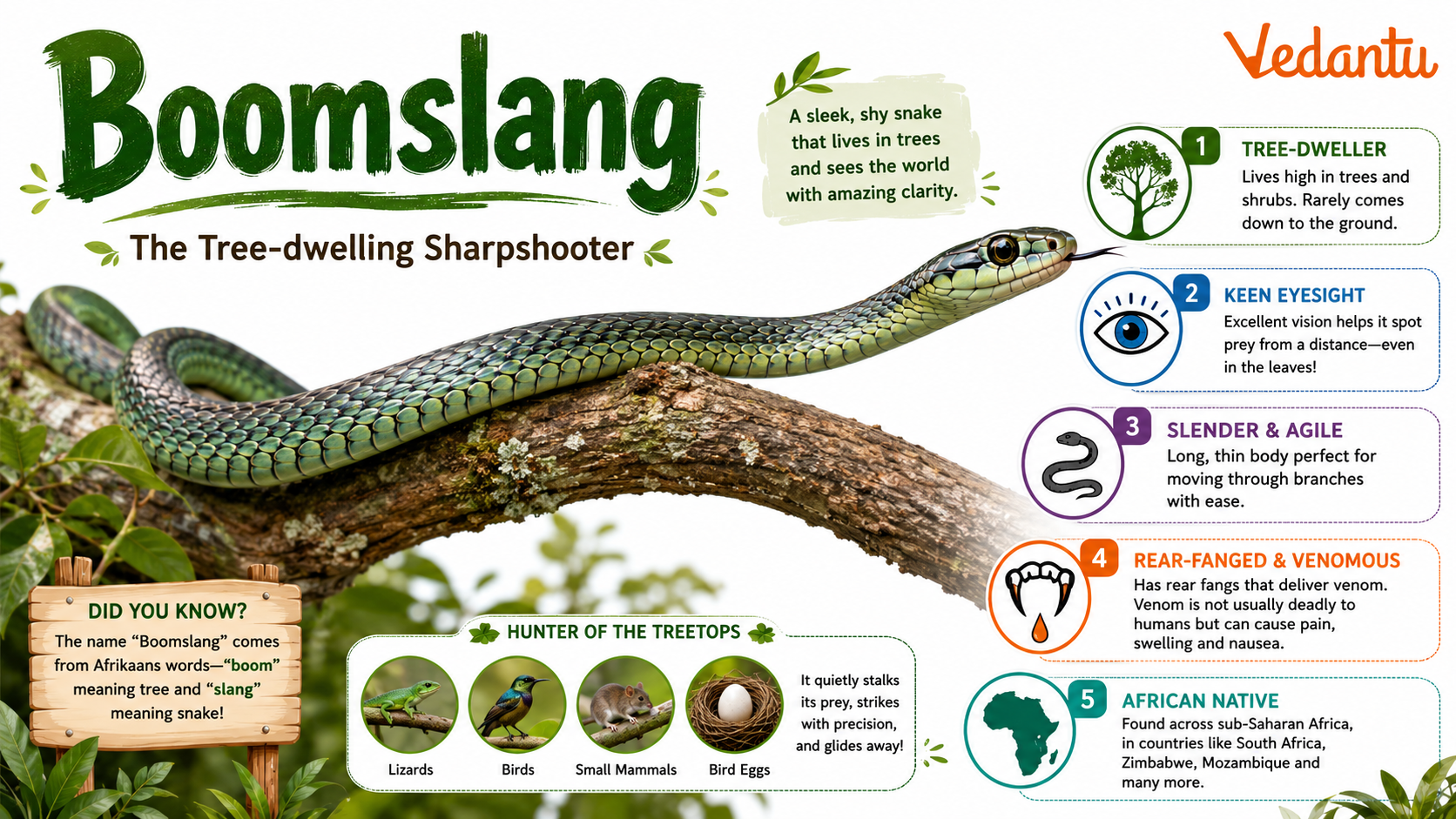
Quick Facts About Boomslang
| Feature | Details |
|---|---|
| Common Name | Boomslang |
| Scientific Name | Dispholidus typus |
| Animal Group | Reptile |
| Type | Venomous snake |
| Length | 1.2 – 1.6 meters (can grow longer) |
| Habitat | Forests, savannas, and woodlands |
| Diet | Birds, eggs, lizards, frogs |
| Lifespan | Up to 8–10 years in the wild |
| Conservation Status | Least Concern |
| Found In | Sub-Saharan Africa |
Appearance and Physical Characteristics
- Slender and long body built for climbing trees.
- Large eyes with round pupils for sharp vision.
- Smooth scales that shine in sunlight.
- Males are often bright green with black markings.
- Females are usually brown or grey.
One of the most unique Boomslang characteristics is its oversized eyes. These help it spot prey easily among tree branches. Its body is lightweight, making it an expert climber.
Boomslang Habitat and Distribution
- Lives mainly in trees and shrubs.
- Found in forests, grasslands, and savannas.
- Prefers warm climates.
- Common across many parts of Sub-Saharan Africa.
The Boomslang habitat includes areas with plenty of trees where it can hide and hunt. It rarely comes to the ground unless searching for food or moving between trees.
Boomslang Diet and Feeding Habits
The Boomslang diet mainly includes birds, bird eggs, lizards, frogs, and small mammals.
It uses its sharp eyesight to carefully watch and track prey from tree branches.
It delivers venom through fangs located at the back of its mouth.
It moves slowly and quietly before striking suddenly.
Behaviour and Lifestyle
- Mostly solitary and shy.
- Active during the day (diurnal).
- Rarely aggressive unless threatened.
- Expands its neck slightly when feeling danger.
Even though it is highly venomous, the Boomslang usually avoids humans. Many Boomslang facts show that bites are rare because the snake prefers escaping over attacking.
Boomslang Life Cycle
- Egg Stage: Female lays 8–27 eggs in tree hollows or leaf piles.
- Hatching: Eggs hatch after about 2–3 months.
- Young Snakes: Baby Boomslangs are grey or brown.
- Adult Stage: Males turn bright green as they mature.
The Boomslang life cycle shows clear colour changes from young to adult, especially in males.
What Makes the Boomslang Special?
Its venom affects blood clotting and can cause serious bleeding.
One of the best eyesight abilities among snakes.
Perfectly adapted for life in branches.
Males and females look very different.
Importance and Role in Nature
- Controls populations of birds and small reptiles.
- Maintains balance in forest ecosystems.
- Part of the food chain as both predator and prey.
The Boomslang importance lies in maintaining ecological balance. Removing predators like this can disturb the natural food web.
Amazing Boomslang Facts
Fun Facts for Kids
- The word Boomslang means “tree snake.”
- Male Boomslangs are bright green and easier to spot.
- They love climbing and rarely stay on the ground.
- They use their eyes more than most snakes do.
- They are shy and prefer hiding over fighting.
FAQs on Boomslang Snake Guide: Identification, Behavior, and Safety
1. What is a Boomslang?
The Boomslang is a venomous tree-dwelling snake found in Africa.
- Its scientific name is Dispholidus typus.
- The name “Boomslang” means “tree snake” in Afrikaans.
- It belongs to the colubrid snake family.
- It is known for its large eyes and excellent vision.
- It is one of the few rear-fanged venomous snakes in Africa.
2. Where do Boomslangs live?
Boomslangs live mainly in sub-Saharan Africa, especially in trees and forests.
- Found in countries like South Africa, Kenya, Tanzania, and Zimbabwe.
- Prefer woodlands, savannas, and forests.
- Spend most of their time high up in trees.
- Rarely come to the ground unless hunting or laying eggs.
3. Is a Boomslang snake dangerous to humans?
Yes, the Boomslang is highly venomous, but it is usually shy and avoids people.
- Its venom affects blood clotting (hemotoxic venom).
- Bites are rare because it is not aggressive.
- It must chew to inject venom due to its rear fangs.
- Medical treatment with antivenom can save lives.
4. What does a Boomslang look like?
The Boomslang is a slender snake with very large eyes and bright colors.
- Males are often bright green with black scales.
- Females are usually brown or olive-colored.
- They can grow up to 1.2–1.8 meters (4–6 feet) long.
- Have excellent eyesight for spotting prey.
5. What do Boomslangs eat?
Boomslangs are carnivores that eat small animals, especially those found in trees.
- Eat birds and bird eggs.
- Also hunt lizards, frogs, and small mammals.
- Sometimes eat chameleons and insects.
- Use their strong vision to carefully stalk prey.
6. How does Boomslang venom work?
Boomslang venom stops blood from clotting properly, which can cause serious bleeding.
- It is a type of hemotoxic venom.
- Can cause internal and external bleeding.
- Symptoms may appear hours after a bite.
- Quick treatment with Boomslang antivenom is important.
7. Are Boomslangs aggressive snakes?
No, Boomslangs are shy and non-aggressive snakes that prefer to escape.
- They avoid humans whenever possible.
- They may inflate their neck and open their mouth if threatened.
- Bites usually happen only when handled or provoked.
- They rely on camouflage to stay hidden.
8. How do Boomslangs reproduce?
Boomslangs reproduce by laying eggs, like many other snakes.
- They are oviparous (egg-laying reptiles).
- Females lay about 8–27 eggs at a time.
- Eggs are usually hidden in tree hollows or leaf piles.
- Baby Boomslangs hatch fully independent.
9. How big can a Boomslang grow?
A Boomslang can grow up to 6 feet long, making it a medium-sized snake.
- Average length is about 4–5 feet.
- Females are usually larger than males.
- They have long, slim bodies perfect for climbing trees.
- Their lightweight body helps them move quickly among branches.
10. Why is the Boomslang important in the ecosystem?
The Boomslang helps keep nature balanced by controlling animal populations.
- Controls numbers of birds, lizards, and rodents.
- Serves as prey for larger animals like eagles.
- Plays a key role in the African food chain.
- Helps maintain a healthy forest and savanna ecosystem.
