






Where Do Bison Live? Habitat, Diet, Behavior, and Key Facts Explained
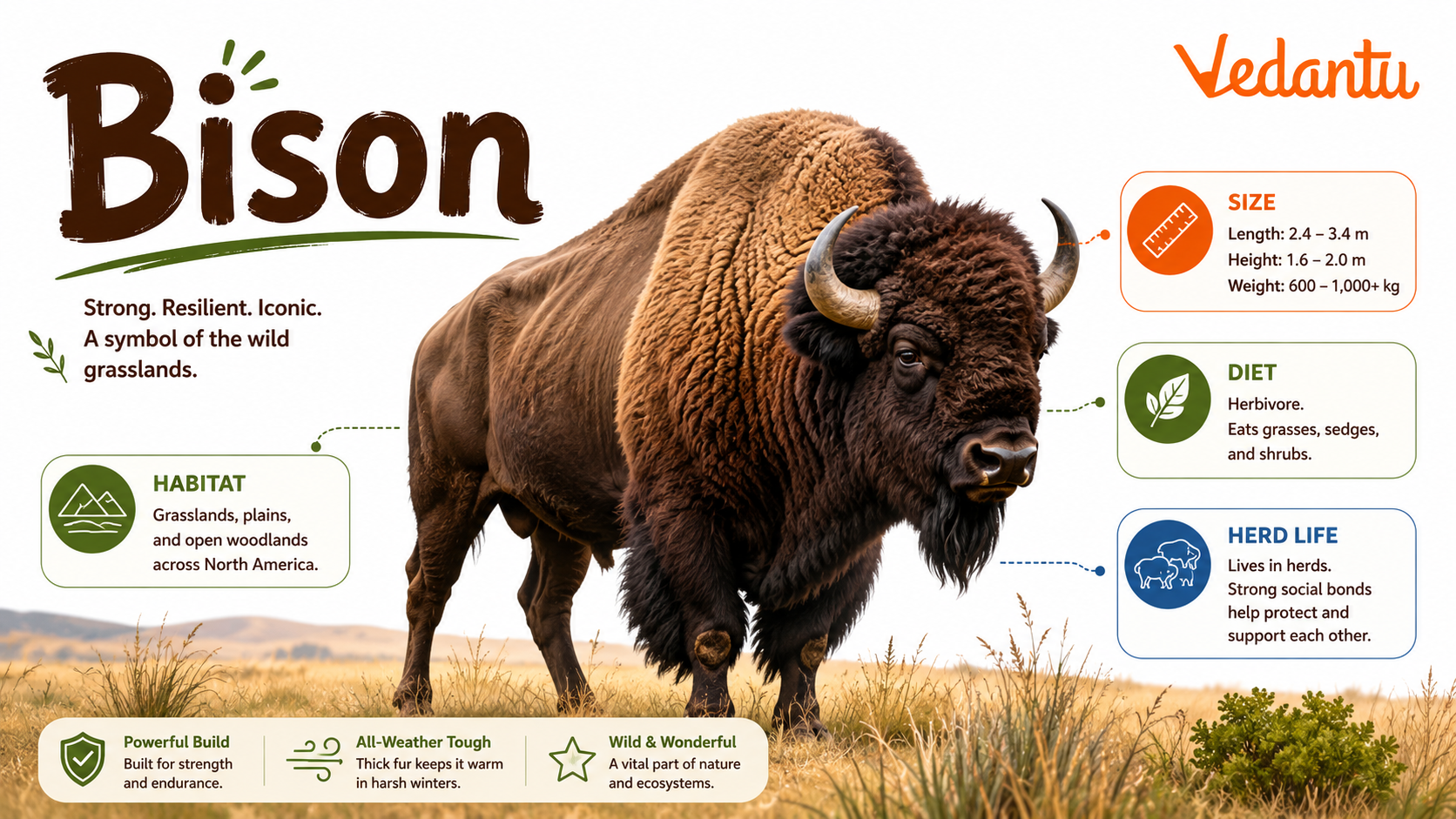
Quick Facts About Bison
| Feature | Details |
|---|---|
| Common Name | Bison |
| Scientific Name | Bison bison (American Bison) |
| Animal Group | Mammal |
| Size | Up to 3.5 metres long |
| Weight | 450–1,000 kg |
| Lifespan | 15–25 years |
| Habitat | Grasslands, plains, and prairies |
| Diet | Grass, shrubs, and herbs |
| Conservation Status | Near Threatened |
Appearance and Physical Characteristics
- Huge, muscular body with a large shoulder hump.
- Thick brown fur, especially around the head and neck.
- Short, curved horns in both males and females.
- Beard-like hair under the chin.
- Strong legs built for running and charging.
Bison Habitat and Distribution
- Found mainly in North America (USA and Canada).
- Live in grasslands, prairies, and open plains.
- Prefer wide, open spaces with plenty of grass.
- Can survive cold winters and hot summers.
Bison Diet and Feeding Habits
What Do Bison Eat?
- Mainly grasses.
- Also eat shrubs and small plants.
- Drink water daily from rivers or ponds.
Behaviour and Lifestyle
- Live in large herds for safety.
- Males often form separate groups from females.
- Communicate using grunts and snorts.
- Very protective of calves.
- Can charge quickly if they feel threatened.
Bison Life Cycle
- Birth: A baby bison is called a calf. It is usually born in spring.
- Calf Stage: Calves are reddish-brown and can stand within hours of birth.
- Growing Up: They stay close to their mothers for protection.
- Adult Stage: Fully grown by 2–3 years of age.
What Makes Bison Special?
Importance and Role in Nature
Amazing Bison Facts
- Once, millions of bison roamed North America.
- They are the national mammal of the United States.
- Bison can jump nearly 2 metres high.
- Their thick fur keeps them warm in snowstorms.
- They shed their winter coat in spring.
- Bison roll in dust to protect themselves from insects.
Interesting Facts About Bison
- Bison are sometimes confused with buffalo, but they are different animals.
- Both male and female bison have horns.
- They use body language to communicate within the herd.
- Bison calves can run within a few hours of birth.
Fun Facts for Kids
FAQs on Bison: Complete Guide to Their Habitat, Diet, and Life in the Wild
1. What is a bison?
A bison is a large, powerful mammal that lives in North America and Europe.
- The American bison is often called a buffalo, but it is not a true buffalo.
- It has a big head, shaggy fur, and a hump on its shoulders.
- Bison are part of the mammal family, meaning they have fur and feed milk to their babies.
- They are one of the largest land animals in North America.
2. Where do bison live?
Bison mainly live in open grasslands and plains.
- The American bison lives in North American prairies and national parks like Yellowstone.
- The European bison lives in forests in parts of Europe.
- They prefer wide spaces with lots of grass to eat.
- Bison can survive in cold winters and hot summers.
3. What do bison eat?
Bison are herbivores that mostly eat grass and plants.
- Their main food is prairie grass and wild plants.
- In winter, they may eat shrubs and twigs.
- Bison use their strong heads to push snow away to find food.
- They spend many hours grazing each day.
4. What is the difference between bison and buffalo?
Bison and buffalo are different animals, even though people often mix up their names.
- Bison live in North America and Europe.
- Buffalo live mainly in Africa and Asia, like the water buffalo and Cape buffalo.
- Bison have a large shoulder hump and thick fur.
- Buffalo usually have longer, curved horns and less shaggy hair.
5. How big can a bison grow?
Bison are among the biggest land animals in North America.
- An adult American bison can weigh up to 2,000 pounds (900 kg).
- They can stand about 6 feet tall at the shoulder.
- Males, called bulls, are larger than females, called cows.
- Despite their size, they can run very fast.
6. How fast can a bison run?
Bison can run surprisingly fast for their large size.
- They can reach speeds up to 35 miles per hour (55 km/h).
- This is faster than most humans can run.
- They use speed to escape danger.
- Bison are also strong swimmers.
7. Are bison endangered?
Bison were once endangered but are now protected and increasing in number.
- In the 1800s, millions were hunted almost to extinction.
- Conservation efforts helped save the American bison.
- Today, many live in protected parks and reserves.
- The European bison is still considered vulnerable.
8. Why are bison important to Native American tribes?
Bison are very important in the culture and history of many Native American tribes.
- They provided food, clothing, and shelter materials.
- Almost every part of the bison was used.
- Bison are respected as sacred animals in many traditions.
- They remain a symbol of strength and survival.
9. What are baby bison called?
A baby bison is called a calf.
- Calves are usually born in the spring.
- They have reddish-brown fur at birth.
- The mother, called a cow, protects her calf carefully.
- Calves can stand and walk within a few hours.
10. What are some interesting facts about bison?
Bison have many amazing features that make them unique animals.
- The American bison is the national mammal of the United States.
- They have thick fur that keeps them warm in snowy winters.
- Bison live in groups called herds.
- They play an important role in keeping grassland ecosystems healthy.
