






What Do Batfish Eat and Where Do They Live?
Batfish are unusual marine fish known for their flat bodies, triangular shapes, and sometimes bright red lips. Instead of swimming like most fish, many batfish prefer to “walk” along the ocean floor using their fins. These fascinating creatures are found in warm seas and deep ocean waters. With their unique appearance and clever hunting tricks, batfish facts make them one of the most interesting and mysterious fishes in the underwater world.
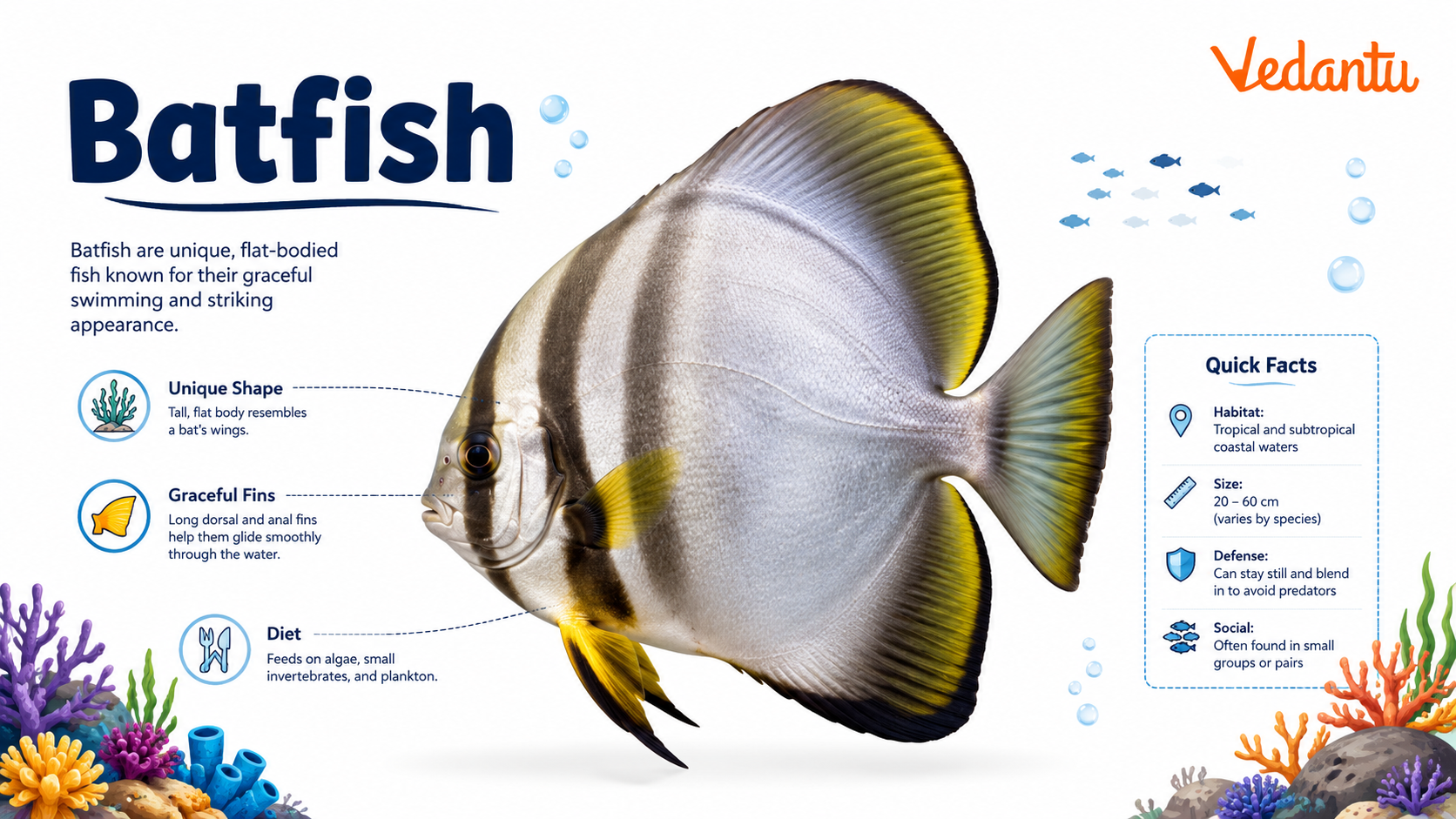
Quick Facts About Batfish
| Feature | Details |
|---|---|
| Common Name | Batfish |
| Scientific Family | Ogcocephalidae |
| Animal Group | Fish |
| Size | Up to 35 cm (varies by species) |
| Habitat | Tropical and subtropical oceans |
| Diet | Small fish, crustaceans, worms |
| Movement | Walks on fins, slow swimmer |
| Special Feature | Lure-like structure to attract prey |
Appearance and Physical Characteristics
- Flattened body adapted to stay on the ocean floor.
- Large head with a small mouth.
- Some species have bright red or orange lips.
- Pectoral fins act like “legs” for walking.
- Rough skin, often covered with tiny spines.
- Colour ranges from brown and grey to reddish tones for camouflage.
Batfish Habitat and Distribution
- Found in the Atlantic, Pacific, and Indian Oceans.
- Often live near coral reefs or sandy ocean floors.
- Some species prefer deep waters.
- Usually stay close to the seabed rather than swimming in open water.
Diet and Feeding Habits
The batfish diet mainly consists of small marine animals. They are carnivorous and use a clever hunting method.
Small fish, shrimp, crabs, molluscs, and marine worms.
They use a small lure (like a fishing rod) on their head to attract prey.
Wait patiently and quickly suck in prey when it comes close.
Help control populations of small sea creatures.
Behaviour and Lifestyle
- Slow movers compared to other fish.
- Prefer walking over swimming.
- Usually solitary animals.
- Rely on camouflage to avoid predators.
- Stay still for long periods while waiting for prey.
Batfish Life Cycle
- Egg Stage: Females lay eggs in the water.
- Larval Stage: Tiny larvae float freely in the ocean.
- Juvenile Stage: Young fish settle near the ocean floor.
- Adult Stage: Develop walking fins and hunting lure.
What Makes Batfish Special?
Importance and Role in Nature
Amazing Batfish Facts
- Not related to bats; the name comes from their shape.
- Some species live at depths of over 100 meters.
- Their lure is called an “illicium.”
- They are poor swimmers.
- Red-lipped batfish are found near the Galápagos Islands.
- Their body helps them blend perfectly with the seabed.
Fun Facts for Kids
FAQs on Batfish: Fascinating Facts, Habitat, and Behavior
1. What is a batfish?
A batfish is a unique ocean fish known for its flat body and unusual shape that sometimes looks like bat wings.
- Batfish belong to different families, including the reef Platax batfish and deep-sea batfish.
- They are found in tropical and subtropical oceans around the world.
- Some species live near coral reefs, while others live in the deep sea.
- They are popular in marine biology because of their strange appearance.
2. Where do batfish live?
Batfish live in warm ocean waters, especially around coral reefs and deep-sea floors.
- Reef batfish are common in the Indo-Pacific Ocean.
- They swim near coral reefs, lagoons, and coastal waters.
- Deep-sea batfish live on the ocean floor at great depths.
- They prefer areas with plenty of food and hiding places.
3. Why is it called a batfish?
The name batfish comes from its wing-like fins or bat-shaped body.
- Some species have large, flat fins that look like bat wings.
- Deep-sea batfish may look unusual, almost like a small bat resting on the ocean floor.
- The name helps describe their unique body shape.
4. What do batfish eat?
Batfish are omnivores or carnivores that eat small sea creatures and plants.
- They feed on small fish, plankton, algae, and crustaceans.
- Deep-sea batfish use a special lure on their head to attract prey.
- They help keep the marine ecosystem balanced.
5. Are batfish dangerous to humans?
Batfish are generally harmless and not dangerous to humans.
- They are calm and shy around divers and swimmers.
- They do not attack people.
- Some species may have mild defenses, but they are not aggressive.
6. How big do batfish grow?
Batfish size depends on the species, but many can grow quite large.
- Reef batfish can reach up to 24 inches (60 cm) long.
- Deep-sea batfish are usually much smaller.
- Young batfish often look different from adult batfish.
7. What is special about the red-lipped batfish?
The red-lipped batfish is famous for its bright red lips and unusual walking behavior.
- It lives near the Galápagos Islands.
- Instead of swimming well, it uses its fins to walk on the ocean floor.
- It has a small lure (illicium) to attract prey.
8. How do batfish protect themselves?
Batfish protect themselves using camouflage and body shape.
- Their flat bodies help them blend into reefs or sandy bottoms.
- Juvenile batfish may mimic floating leaves for safety.
- They often swim in groups to avoid predators.
9. Are batfish important to the ocean ecosystem?
Yes, batfish play an important role in keeping ocean ecosystems healthy.
- They help control populations of small fish and invertebrates.
- They are part of the marine food chain.
- Their presence shows a healthy coral reef environment.
10. Can batfish be kept in an aquarium?
Some reef batfish can live in large aquariums, but they need special care.
- They require a large saltwater tank with proper filtration.
- They need a balanced diet of marine foods.
- Deep-sea batfish are rarely kept because they need special deep-water conditions.
