






Barn Owl Habitat, Diet, Behavior, and Fun Facts for Kids
The Barn Owl is one of the most fascinating birds of prey in the world. Known for its heart-shaped face and ghostly white appearance, this owl is famous for hunting silently in the dark. Barn Owl facts show that it has powerful hearing, excellent night vision, and special feathers that help it fly without making a sound. Found across many continents, the Barn Owl plays an important role in controlling pests and maintaining balance in nature.
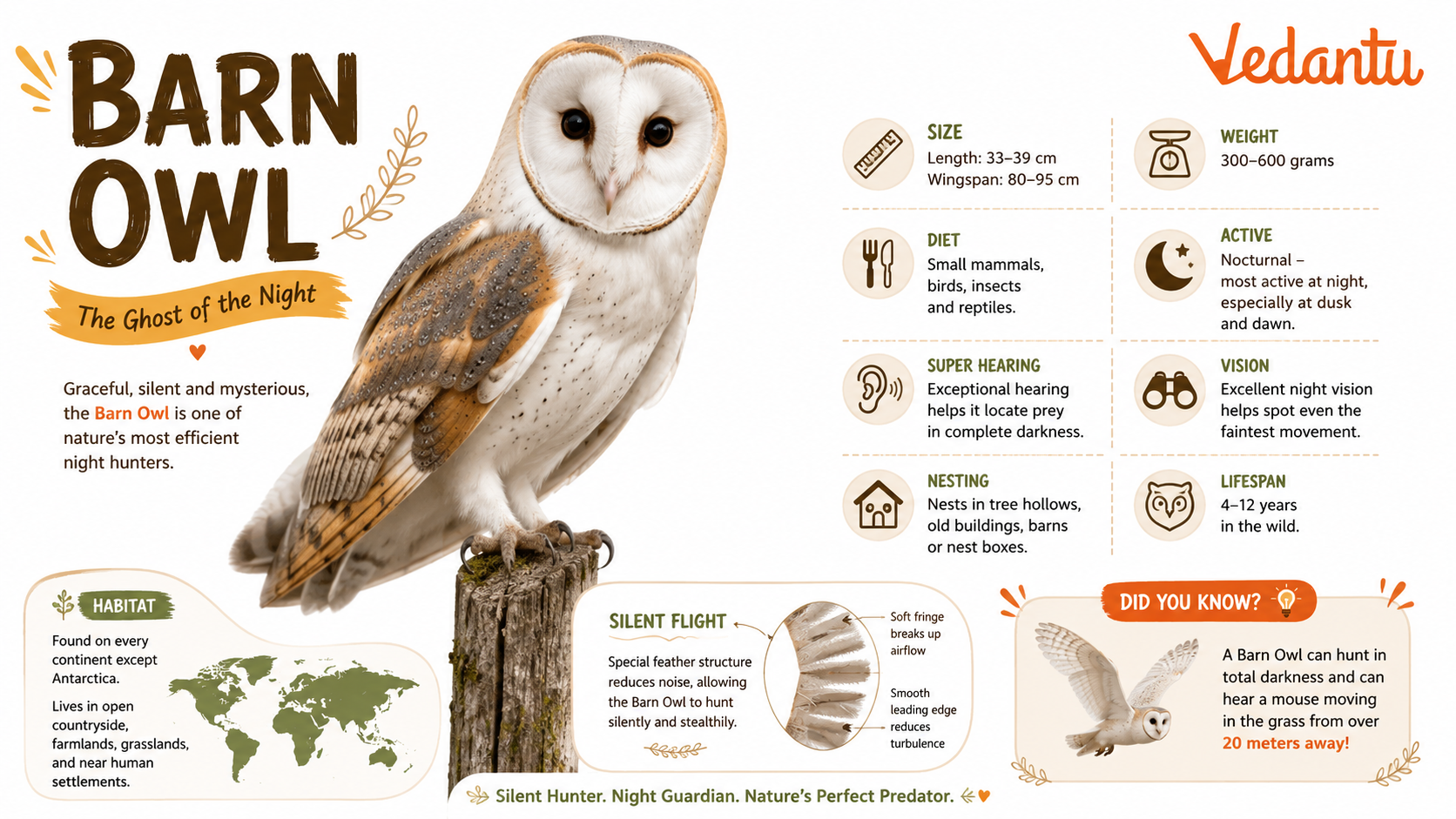
Quick Facts About Barn Owl
| Feature | Details |
|---|---|
| Common Name | Barn Owl |
| Scientific Name | Tyto alba |
| Animal Group | Bird (Bird of Prey) |
| Size | 33–39 cm long |
| Wingspan | 80–95 cm |
| Weight | 400–700 grams |
| Diet | Rodents, small mammals |
| Habitat | Grasslands, farms, barns, open countryside |
| Lifespan | 4–10 years (wild) |
| Conservation Status | Least Concern |
Appearance and Physical Characteristics
- Heart-shaped white face.
- Golden-brown back with grey patterns.
- White or pale chest and belly.
- Dark eyes (most owls have yellow eyes).
- Long legs and strong curved claws.
Barn Owl Habitat and Distribution
The Barn Owl habitat includes open areas where it can easily hunt small animals. It prefers places with wide fields and fewer tall trees.
- Found on every continent except Antarctica.
- Lives in grasslands, farmlands, marshes, and countryside.
- Often nests in barns, church towers, old buildings, and tree holes.
- Prefers mild climates and open hunting grounds.
Barn Owl Diet and Feeding Habits
The Barn Owl diet mainly includes rats, mice, voles, and small birds.
Hunts mostly at night using sharp hearing and night vision.
Flies quietly and grabs prey with strong talons.
Helps control rodent populations in farms and fields.
Behaviour and Lifestyle
- Mostly solitary except during breeding season.
- Active at night (nocturnal).
- Rests quietly during the day in dark shelters.
- Uses screeching sounds instead of hooting.
- Territorial and protects nesting areas.
Barn Owl Life Cycle
- Egg Stage: Female lays 4–7 white eggs in a nest.
- Incubation: Eggs hatch after about 30–34 days.
- Chicks: Covered in white fluffy feathers.
- Growing Up: Learn to fly in about 8–10 weeks.
- Adult Stage: Become skilled hunters and reproduce.
Flight Adaptations
- Soft-edged feathers reduce flying noise.
- Broad wings for slow and steady flight.
- Lightweight body structure.
- Strong chest muscles for powerful wing beats.
Sound or Call
Unlike many owls that hoot, the Barn Owl makes a long, harsh screeching sound. It uses this call to communicate with its mate or to warn others about its territory.
What Makes Barn Owl Special?
Importance and Role in Nature
- Controls rodent populations naturally.
- Protects crops by reducing pests.
- Maintains balance in ecosystems.
- Acts as an indicator of environmental health.
Amazing Barn Owl Facts
- Barn Owls can swallow small prey whole.
- They can hear sounds from both ears at slightly different times to find exact prey location.
- Their feathers feel softer than most birds.
- They can fly extremely low over fields.
- Chicks compete for food in the nest.
- They regurgitate pellets of bones and fur after eating.
Interesting Facts About Barn Owl
Fun Facts for Kids
- Barn Owls do not build fancy nests.
- They are active when most people are asleep.
- Their face looks like a white heart.
- They can turn their head very far to look around.
- They are found in many countries around the world.
FAQs on Barn Owl: Complete Guide to This Silent Night Hunter
1. What is a Barn Owl?
Barn Owl is a medium-sized owl known for its heart-shaped face and silent flight.
- Scientific name: Tyto alba
- Belongs to the Tytonidae family
- Found on every continent except Antarctica
- Often lives near farms, grasslands, and open countryside
- Also called white owl or ghost owl
2. Why are Barn Owls called ghost owls?
Barn Owls are called ghost owls because of their pale white color and silent flight at night.
- Light-colored feathers glow in moonlight
- Fly very quietly due to special wing feathers
- Often seen floating silently over fields
- Active during the night (nocturnal birds)
3. Where do Barn Owls live?
Barn Owls live in open habitats where they can easily hunt small animals.
- Grasslands and farmlands
- Barns, church towers, and old buildings
- Tree cavities and nest boxes
- Regions across North America, Europe, Asia, Africa, and Australia
4. What do Barn Owls eat?
Barn Owls mainly eat small mammals, especially rodents.
- Mice and rats
- Voles and shrews
- Small birds
- Occasionally insects and frogs
- Help farmers by controlling pest populations
5. How do Barn Owls hunt at night?
Barn Owls use excellent hearing and silent flight to hunt in complete darkness.
- Heart-shaped face helps collect sound
- Asymmetrical ears locate prey precisely
- Soft feathers reduce flying noise
- Sharp talons grab prey quickly
6. What makes a Barn Owl’s face special?
Barn Owl’s facial disc is special because it works like a sound radar.
- Heart-shaped white face
- Directs sound to the ears
- Improves night hunting skills
- Gives the owl its unique appearance
7. Are Barn Owls endangered?
Barn Owls are not globally endangered, but some local populations are declining.
- Listed as Least Concern worldwide
- Threats include habitat loss
- Road accidents and pesticides harm them
- Conservation programs provide nest boxes
8. How big is a Barn Owl?
Barn Owls are medium-sized owls with long wings and legs.
- Length: about 33–39 cm
- Wingspan: about 80–95 cm
- Weight: around 400–700 grams
- Females are usually slightly larger than males
9. How do Barn Owls reproduce?
Barn Owls lay eggs in safe, quiet nesting spots and care for their chicks carefully.
- Lay about 4–7 eggs per clutch
- Eggs hatch in about 30 days
- Both parents feed the chicks
- Chicks leave the nest after about 8–10 weeks
10. Why are Barn Owls important to the ecosystem?
Barn Owls are important because they control rodent populations and support healthy ecosystems.
- Reduce crop damage by eating pests
- Maintain natural balance in food chains
- Act as indicators of environmental health
- Support biodiversity in farmland habitats
